
U.S. and States Expand National Bitcoin Reserves: Strategic Allocation and Retail Investor Implications
The U.S. government's strategic embrace of BitcoinBTC-- has entered a new phase. In March 2025, President Donald Trump signed an executive order establishing the Strategic Bitcoin Reserve (SBR), a move that has since catalyzed a $36.5 billion expansion of federal Bitcoin holdings to 324,625 BTC[1]. This initiative, funded by seized illicit assets and budget-neutral mechanisms, reflects a calculated effort to position Bitcoin as a hedge against inflation and a tool for geopolitical influence[2]. Meanwhile, states like Texas, New Hampshire, Arizona, and now Michigan are following suit, with legislation authorizing Bitcoin reserves as part of broader diversification strategies[3].
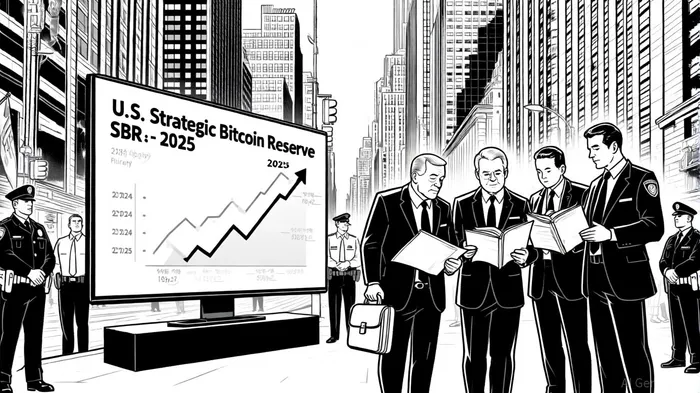
Strategic Rationale: From Hedge to Geopolitical Tool
The SBR's design avoids direct market purchases, relying instead on criminal asset forfeitures and tariff revenues collected in Bitcoin[4]. This approach mitigates political backlash over using taxpayer funds for a volatile asset while aligning with historical precedents like gold reserves. According to a report by Forbes, the SBR aims to hold 5% of the global Bitcoin supply-approximately 1 million BTC-by 2030, mirroring the U.S. gold reserves' role in the 20th century[5].
The economic logic is twofold: Bitcoin's fixed supply of 21 million coins makes it a deflationary counterweight to fiat inflation, while its digital nature enhances resilience against geopolitical shocks[6]. Treasury Secretary Scott Bessent has emphasized that the SBR is not a speculative bet but a long-term asset to "future-proof" the U.S. economy[7]. This strategy has already triggered market reactions, with Bitcoin surging 40% in the weeks following the executive order and the global crypto market cap expanding by $300 billion[8].
State-Level Adoption: A Fragmented but Growing Trend
At the state level, the SBR movement is gaining traction. Texas, the first state to fund a Bitcoin reserve with $10 million in June 2025, now holds 12,000 BTCBTC--, managed as a special fund outside the state treasury[9]. New Hampshire and Arizona have enacted laws allowing reserves to be funded by seized digital assets, while Michigan's HB 4087 proposes allocating up to 10% of state reserves to Bitcoin[10]. However, not all states are on board: Pennsylvania and South Dakota have rejected similar proposals, citing volatility risks[11].
This fragmentation reflects broader debates about Bitcoin's role in public finance. Proponents argue that states can use reserves to hedge against inflation and attract crypto-friendly businesses, while critics warn of regulatory uncertainty and the potential for market manipulation[12].
Retail Investor Behavior: Caution Amid Institutional Optimism
For retail investors, the SBR's implications are mixed. Institutional adoption has surged, with 75% of institutional investors planning to increase Bitcoin holdings in 2025[13]. However, retail participation has stagnated. Data from JPMorgan Chase shows that first-time crypto investors accounted for only 12% of total crypto transfers in 2024, down from 35% in 2021. Exchange activity and social media sentiment further indicate a "neutral phase" for retail demand, with many investors waiting for clearer regulatory signals.
The SBR's market impact has also created a divide between retail and institutional behavior. While the government's removal of 198,000 BTC from circulation has reduced selling pressure, retail investors have shown a tendency to liquidate during volatility. For example, in January 2025, retail investors sold 6,000 BTC amid price fluctuations, while institutional "whales" held firm[16]. This dynamic has led to a shift in retail strategies, with many opting for crypto-tracking ETFs or AI-driven analytics platforms like DeepSnitch AI to mitigate direct exposure[17].
Future Outlook: A New Era for Digital Assets?
The SBR and state-level initiatives signal a paradigm shift in how governments view Bitcoin. By treating it as a strategic asset rather than a speculative commodity, the U.S. is positioning itself to lead the next phase of digital finance. However, challenges remain. The BITCOIN Act of 2025, which aims to formalize transparent management of reserves, is still pending in Congress[18]. Meanwhile, global competition is intensifying, with countries like Germany and Singapore exploring similar strategies[19].
For retail investors, the key takeaway is patience. While institutional confidence is growing, the SBR's long-term success will depend on regulatory clarity and market stability. As FBS analysts note, Bitcoin could reach $125,000–$200,000 by late 2025 if the SBR's momentum continues[20]. Yet, for now, the focus remains on institutional adoption and policy evolution-a trend that may eventually trickle down to retail markets.






Comentarios
Aún no hay comentarios