
State Bitcoin Reserves and Their Macroeconomic Implications
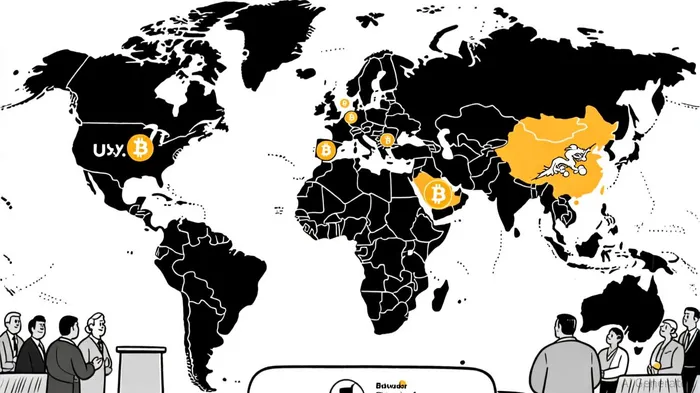
The world of public finance is undergoing a quiet revolution. Governments are no longer just confiscating BitcoinBTC-- from cybercriminals or using it to fund wars—they're treating it as a strategic asset. From the U.S. Department of Justice's 207,189 BTC hoard to Bhutan's state-backed mining operations, Bitcoin is becoming a tool for macroeconomic policy. This shift raises critical questions: Can Bitcoin truly diversify national reserves? Does it hedge against inflation, or is it just a speculative gamble? And what does this mean for global financial systems?
Strategic Reserves as a New Asset Class
The U.S. has taken the lead in institutionalizing Bitcoin as a reserve asset. Under the Trump administration, the BITCOIN Act proposed acquiring up to 1 million BTC over five years, to be stored in cold storage for 20 years[1]. This mirrors historical strategic reserves like gold and oil, but with a twist: Bitcoin's finite supply and decentralized nature make it a unique hedge against economic volatility[2]. States like Texas and New Hampshire have already adopted similar policies, using Bitcoin to attract crypto-friendly businesses and professionals[3].
Bhutan, meanwhile, has leveraged its hydroelectric surplus to mine 13,029 BTC, accounting for a significant portion of its GDP[4]. This isn't just about diversification—it's about economic sovereignty. By converting renewable energy into a globally recognized store of value, Bhutan is mitigating brain drain and creating a new revenue stream[5].
Other nations are following suit. Brazil's RESBit program aims to allocate 5% of international reserves to Bitcoin, while Russia explores using it to bypass Western sanctions[6]. Even the Swiss National Bank is considering constitutional amendments to hold Bitcoin alongside gold[7]. These moves signal a broader acceptance of digital assets as tools for financial resilience.
Macroeconomic Implications: Hedging or Hype?
Bitcoin's role as an inflation hedge remains contentious. Studies using Vector Autoregression (VAR) models show that Bitcoin appreciates in response to inflation and inflation expectation shocks[8]. However, unlike gold, it lacks safe-haven status—it plummets during financial uncertainty[9]. For countries like Argentina and Venezuela, where hyperinflation erodes trust in fiat, Bitcoin offers a lifeline. Yet its volatility complicates its utility.
El Salvador's experiment with Bitcoin as legal tender provides a cautionary tale. While remittances surged initially, adoption stagnated, and capital flows declined[10]. The country's 6,105 BTC reserve now serves more as a political statement than an economic tool. Still, its integration into tourism and humanitarian aid highlights Bitcoin's potential to stabilize economies in crisis[11].
Globally, Bitcoin's correlation with traditional assets is evolving. Spot ETF approvals in 2024–2025 have increased its link to the Nasdaq, challenging its original thesis as a non-correlated asset[12]. Yet its inverse relationship with the U.S. Dollar Index (DXY) persists, suggesting it could still act as a counterbalance to dollar dominance[13].
Challenges and Risks
Volatility remains the elephant in the room. A 50% drop in Bitcoin's price could erase billions from national reserves overnight. The U.S. Treasury's credit rating faces scrutiny if Bitcoin holdings underperform[14]. Regulatory fragmentation also complicates adoption. While the U.S. and Brazil push forward, the UK and Japan remain cautious, citing governance risks[15].
Security is another concern. Ukraine's 46,351 BTC, largely from crypto donations, requires robust custody solutions to prevent theft or loss[16]. And then there's the question of legitimacy: Can a speculative asset truly replace gold in the eyes of central banks?
The Road Ahead
Bitcoin's journey as a reserve asset is just beginning. The U.S. Strategic Bitcoin Reserve, if implemented, could redefine global financial norms. Bhutan's energy-driven model and El Salvador's resilience-focused approach offer blueprints for other nations. Yet success hinges on infrastructure—cold storage, regulatory clarity, and institutional-grade custodians.
For now, Bitcoin remains a double-edged sword. It's a hedge against inflation for some, a geopolitical tool for others, and a speculative gamble for skeptics. But one thing is clear: the age of digital reserves is here, and it's reshaping the macroeconomic landscape.






Comentarios
Aún no hay comentarios