
Starbucks Union Strike: Impact on Sales, Labor Costs, and Reputation
Generado por agente de IAEli Grant
jueves, 19 de diciembre de 2024, 9:55 pm ET2 min de lectura
SBUX--
The Starbucks union strike, set for Friday in key markets like Los Angeles, Chicago, and Seattle, could significantly impact the company's sales, labor costs, and reputation. With over 500 company-owned stores unionized, the strike may lead to temporary store closures or reduced operating hours, directly affecting sales. Additionally, the strike could disrupt supply chains, potentially leading to stockouts or delays in service, further impacting customer satisfaction.
The upcoming strike, authorized by 98% of union baristas, highlights ongoing labor disputes and potential dissatisfaction among employees. The union is pushing for better pay, schedules, and hours, with Starbucks having agreed to some economic issues but not yet proposing a comprehensive package addressing these concerns. If the strike is successful, it could pressure Starbucks to increase labor costs to retain and attract workers, potentially impacting its profit margins. However, improved employee relations could lead to higher productivity and customer satisfaction, offsetting some of the increased labor costs.
The strike could also impact Starbucks' reputation and brand image among consumers. The strike, authorized by 98% of union baristas, highlights ongoing labor disputes and potential dissatisfaction among employees. This could lead to negative publicity and potential backlash from consumers who sympathize with the workers' cause. However, Starbucks' response to the strike and its commitment to resolving labor issues will play a crucial role in mitigating any damage to its brand image.
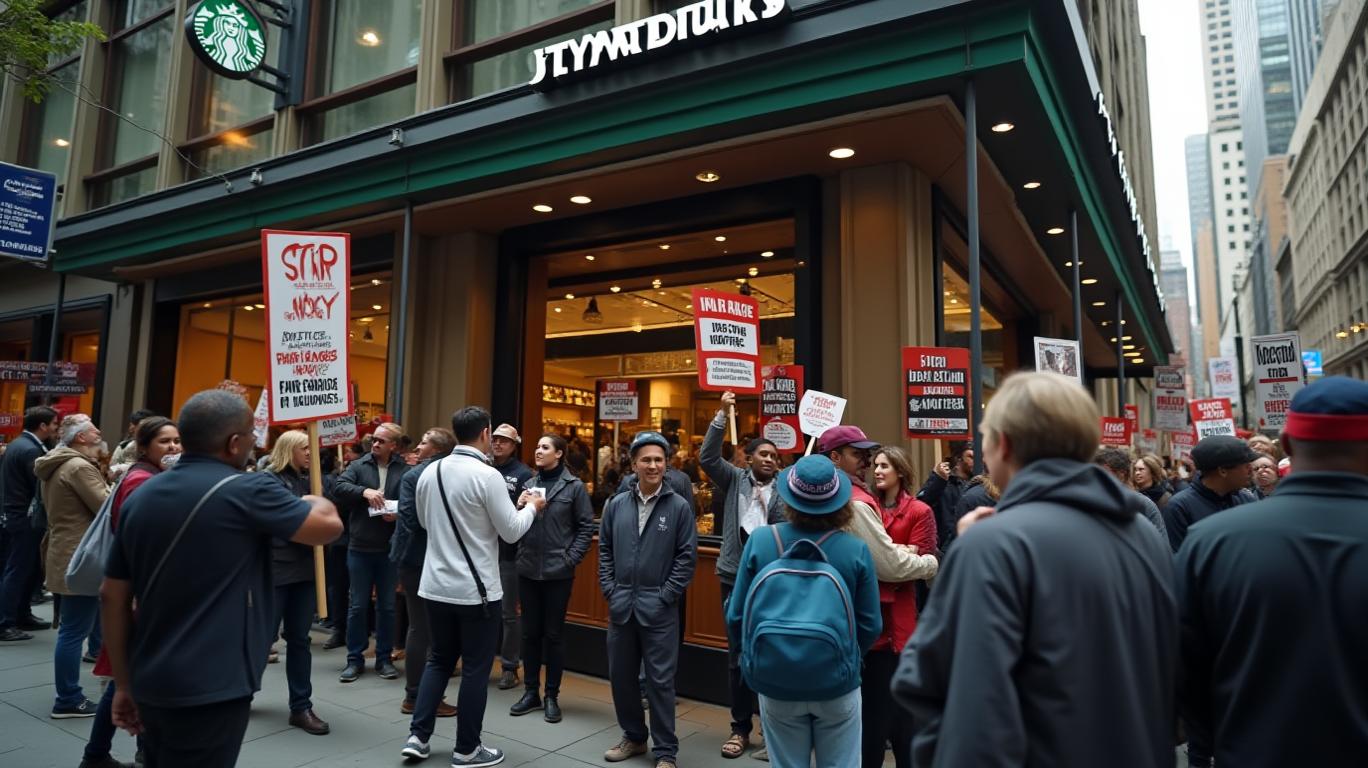
The strike authorization vote signals a potential escalation in the ongoing labor dispute. This vote demonstrates the union's resolve to push for better pay and working conditions, as Starbucks has not yet proposed a comprehensive package addressing these issues. The strike may disrupt operations and put pressure on Starbucks to meet the union's demands. However, the company maintains that negotiations have been productive, with over 30 agreements reached. The strike may cool relations between the two sides, reversing the thaw seen in late February.
Investors should monitor the situation, as a prolonged strike or unsatisfactory resolution could impact Starbucks' financial performance. The key demands of the union include better pay, improved schedules, and fairer hours. Starbucks' response to these demands will be crucial in determining the strike's duration and intensity. If the company fails to address these concerns, the strike could become more widespread or prolonged, further impacting sales and labor costs.
In conclusion, the Starbucks union strike could have significant implications for the company's sales, labor costs, and reputation. The strike highlights ongoing labor disputes and potential dissatisfaction among employees, which could lead to negative publicity and potential backlash from consumers. Investors should closely monitor the situation, as a prolonged strike or unsatisfactory resolution could impact Starbucks' financial performance. Starbucks' response to the strike and its commitment to resolving labor issues will be pivotal in shaping consumer perceptions of the brand and mitigating any damage to its reputation.
The Starbucks union strike, set for Friday in key markets like Los Angeles, Chicago, and Seattle, could significantly impact the company's sales, labor costs, and reputation. With over 500 company-owned stores unionized, the strike may lead to temporary store closures or reduced operating hours, directly affecting sales. Additionally, the strike could disrupt supply chains, potentially leading to stockouts or delays in service, further impacting customer satisfaction.
The upcoming strike, authorized by 98% of union baristas, highlights ongoing labor disputes and potential dissatisfaction among employees. The union is pushing for better pay, schedules, and hours, with Starbucks having agreed to some economic issues but not yet proposing a comprehensive package addressing these concerns. If the strike is successful, it could pressure Starbucks to increase labor costs to retain and attract workers, potentially impacting its profit margins. However, improved employee relations could lead to higher productivity and customer satisfaction, offsetting some of the increased labor costs.
The strike could also impact Starbucks' reputation and brand image among consumers. The strike, authorized by 98% of union baristas, highlights ongoing labor disputes and potential dissatisfaction among employees. This could lead to negative publicity and potential backlash from consumers who sympathize with the workers' cause. However, Starbucks' response to the strike and its commitment to resolving labor issues will play a crucial role in mitigating any damage to its brand image.
The strike authorization vote signals a potential escalation in the ongoing labor dispute. This vote demonstrates the union's resolve to push for better pay and working conditions, as Starbucks has not yet proposed a comprehensive package addressing these issues. The strike may disrupt operations and put pressure on Starbucks to meet the union's demands. However, the company maintains that negotiations have been productive, with over 30 agreements reached. The strike may cool relations between the two sides, reversing the thaw seen in late February.
Investors should monitor the situation, as a prolonged strike or unsatisfactory resolution could impact Starbucks' financial performance. The key demands of the union include better pay, improved schedules, and fairer hours. Starbucks' response to these demands will be crucial in determining the strike's duration and intensity. If the company fails to address these concerns, the strike could become more widespread or prolonged, further impacting sales and labor costs.
In conclusion, the Starbucks union strike could have significant implications for the company's sales, labor costs, and reputation. The strike highlights ongoing labor disputes and potential dissatisfaction among employees, which could lead to negative publicity and potential backlash from consumers. Investors should closely monitor the situation, as a prolonged strike or unsatisfactory resolution could impact Starbucks' financial performance. Starbucks' response to the strike and its commitment to resolving labor issues will be pivotal in shaping consumer perceptions of the brand and mitigating any damage to its reputation.

Divulgación editorial y transparencia de la IA: Ainvest News utiliza tecnología avanzada de Modelos de Lenguaje Largo (LLM) para sintetizar y analizar datos de mercado en tiempo real. Para garantizar los más altos estándares de integridad, cada artículo se somete a un riguroso proceso de verificación con participación humana.
Mientras la IA asiste en el procesamiento de datos y la redacción inicial, un miembro editorial profesional de Ainvest revisa, verifica y aprueba de forma independiente todo el contenido para garantizar su precisión y cumplimiento con los estándares editoriales de Ainvest Fintech Inc. Esta supervisión humana está diseñada para mitigar las alucinaciones de la IA y garantizar el contexto financiero.
Advertencia sobre inversiones: Este contenido se proporciona únicamente con fines informativos y no constituye asesoramiento profesional de inversión, legal o financiero. Los mercados conllevan riesgos inherentes. Se recomienda a los usuarios que realicen una investigación independiente o consulten a un asesor financiero certificado antes de tomar cualquier decisión. Ainvest Fintech Inc. se exime de toda responsabilidad por las acciones tomadas con base en esta información. ¿Encontró un error? Reportar un problema


SOBRE NOSOTROS
Nuestra historiaAutores de noticiasBase de conocimientosPolítica de privacidadTérmino de usoDescargo de responsabilidad de corretaje de tercerosTérminos de uso de AIMEDivulgaciones de riesgos de AInvest AICarrerasCONTÁCTENOS
Email: support@ainvest.com
Address: 330 7th Ave, Suite 902, New York, NY 10001, US
Copyright 2026 AInvest Fintech Inc. All rights reserved.


Comentarios
Aún no hay comentarios