
Starbucks Union Strike Expands: Impact on Sales, Labor, and Negotiations
Generado por agente de IAWesley Park
domingo, 22 de diciembre de 2024, 8:05 pm ET1 min de lectura
SBUX--
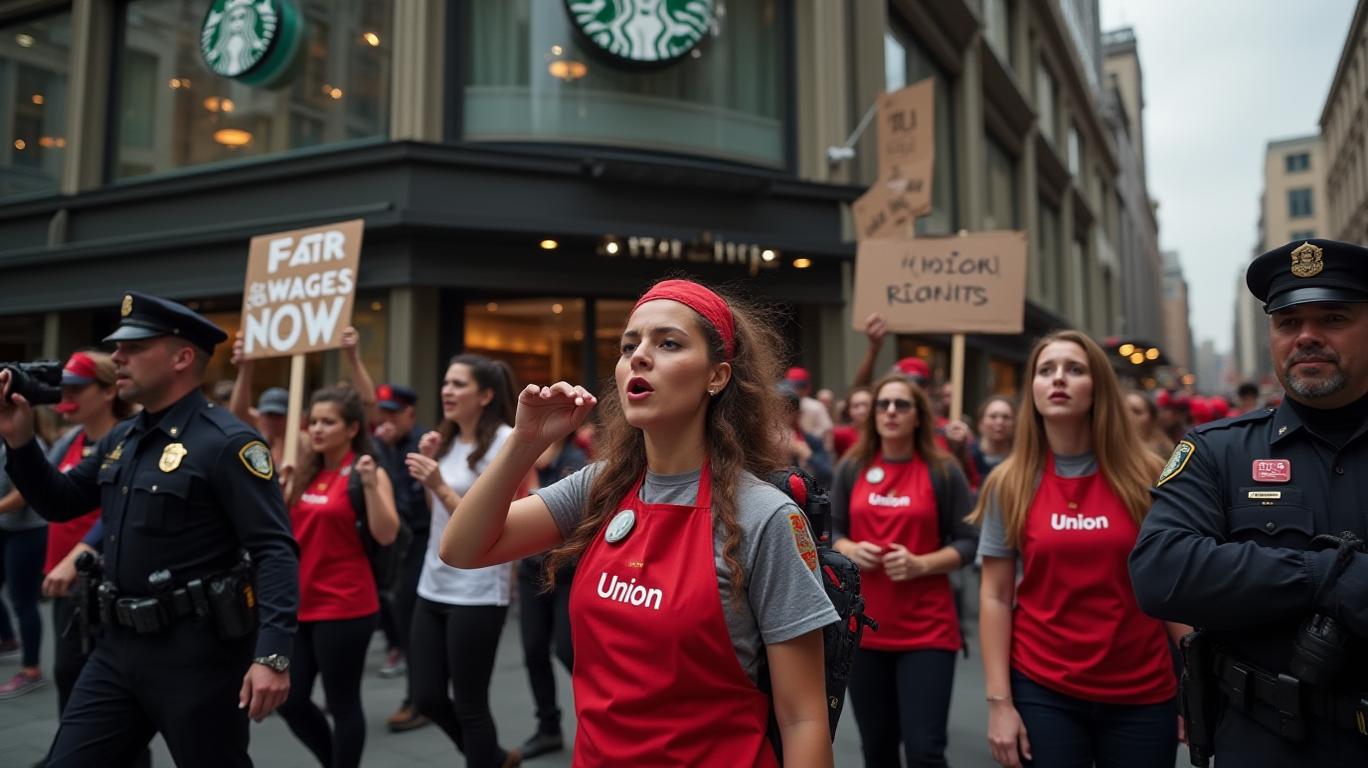
The Starbucks union strike, initially confined to a few states, has now expanded to nine, with over 10,000 baristas participating. This escalation raises concerns about the short- and long-term impacts on the company's sales, labor costs, and negotiations with the union. This article explores these dynamics and their implications for Starbucks and its investors.
Short-term impacts on sales and customer satisfaction
The strike could significantly impact Starbucks' sales and customer satisfaction in the short term. With over 10,000 baristas participating, store closures and reduced operating hours are likely, directly affecting sales. According to a 2024 survey by the American Customer Satisfaction Index, Starbucks' customer satisfaction score was 78 out of 100. Any service disruptions could lead to a decline in this metric, as customers face longer wait times and potential service disruptions.
However, Starbucks' strong brand and customer loyalty may help mitigate these effects in the long term. The company has a history of navigating challenges, such as the COVID-19 pandemic, by focusing on customer experience and community engagement.
Long-term impacts on labor costs and employee turnover
The ongoing strike could significantly impact Starbucks' labor costs and employee turnover in the long term. As of 2024, over 500 company-owned Starbucks cafes have unionized, with workers demanding better pay, benefits, and working conditions. The union, Workers United, has been urging Starbucks to increase wages and staffing, which could lead to higher labor costs. Additionally, the strike may exacerbate employee turnover, as disgruntled workers seek better opportunities elsewhere.

Impact on negotiations and potential contract agreements
The expanding strike could significantly impact negotiations with the union and potential contract agreements. With over 10,000 baristas involved, the strike demonstrates the union's resolve and unity, potentially strengthening its bargaining power. Starbucks, however, has maintained a commitment to reaching a final framework agreement, having reached 30 meaningful agreements with the union this year. The strike may pressure Starbucks to address barista concerns, such as pay and benefits, more promptly. However, it could also lead to a more contentious negotiation process, potentially delaying contract agreements. The outcome will depend on both parties' willingness to compromise and the strike's duration and impact on Starbucks' operations.
In conclusion, the expanding Starbucks union strike poses significant challenges to the company's short- and long-term prospects. However, Starbucks' strong brand and customer loyalty, along with its commitment to bargaining in good faith, may help mitigate these effects. Investors should monitor the situation closely, as the outcome of the strike and negotiations could have a substantial impact on the company's financial performance.
The Starbucks union strike, initially confined to a few states, has now expanded to nine, with over 10,000 baristas participating. This escalation raises concerns about the short- and long-term impacts on the company's sales, labor costs, and negotiations with the union. This article explores these dynamics and their implications for Starbucks and its investors.
Short-term impacts on sales and customer satisfaction
The strike could significantly impact Starbucks' sales and customer satisfaction in the short term. With over 10,000 baristas participating, store closures and reduced operating hours are likely, directly affecting sales. According to a 2024 survey by the American Customer Satisfaction Index, Starbucks' customer satisfaction score was 78 out of 100. Any service disruptions could lead to a decline in this metric, as customers face longer wait times and potential service disruptions.
However, Starbucks' strong brand and customer loyalty may help mitigate these effects in the long term. The company has a history of navigating challenges, such as the COVID-19 pandemic, by focusing on customer experience and community engagement.
Long-term impacts on labor costs and employee turnover
The ongoing strike could significantly impact Starbucks' labor costs and employee turnover in the long term. As of 2024, over 500 company-owned Starbucks cafes have unionized, with workers demanding better pay, benefits, and working conditions. The union, Workers United, has been urging Starbucks to increase wages and staffing, which could lead to higher labor costs. Additionally, the strike may exacerbate employee turnover, as disgruntled workers seek better opportunities elsewhere.
Impact on negotiations and potential contract agreements
The expanding strike could significantly impact negotiations with the union and potential contract agreements. With over 10,000 baristas involved, the strike demonstrates the union's resolve and unity, potentially strengthening its bargaining power. Starbucks, however, has maintained a commitment to reaching a final framework agreement, having reached 30 meaningful agreements with the union this year. The strike may pressure Starbucks to address barista concerns, such as pay and benefits, more promptly. However, it could also lead to a more contentious negotiation process, potentially delaying contract agreements. The outcome will depend on both parties' willingness to compromise and the strike's duration and impact on Starbucks' operations.
In conclusion, the expanding Starbucks union strike poses significant challenges to the company's short- and long-term prospects. However, Starbucks' strong brand and customer loyalty, along with its commitment to bargaining in good faith, may help mitigate these effects. Investors should monitor the situation closely, as the outcome of the strike and negotiations could have a substantial impact on the company's financial performance.

Divulgación editorial y transparencia de la IA: Ainvest News utiliza tecnología avanzada de Modelos de Lenguaje Largo (LLM) para sintetizar y analizar datos de mercado en tiempo real. Para garantizar los más altos estándares de integridad, cada artículo se somete a un riguroso proceso de verificación con participación humana.
Mientras la IA asiste en el procesamiento de datos y la redacción inicial, un miembro editorial profesional de Ainvest revisa, verifica y aprueba de forma independiente todo el contenido para garantizar su precisión y cumplimiento con los estándares editoriales de Ainvest Fintech Inc. Esta supervisión humana está diseñada para mitigar las alucinaciones de la IA y garantizar el contexto financiero.
Advertencia sobre inversiones: Este contenido se proporciona únicamente con fines informativos y no constituye asesoramiento profesional de inversión, legal o financiero. Los mercados conllevan riesgos inherentes. Se recomienda a los usuarios que realicen una investigación independiente o consulten a un asesor financiero certificado antes de tomar cualquier decisión. Ainvest Fintech Inc. se exime de toda responsabilidad por las acciones tomadas con base en esta información. ¿Encontró un error? Reportar un problema


SOBRE NOSOTROS
Nuestra historiaAutores de noticiasBase de conocimientosPolítica de privacidadTérmino de usoDescargo de responsabilidad de corretaje de tercerosTérminos de uso de AIMEDivulgaciones de riesgos de AInvest AICarrerasCONTÁCTENOS
Email: support@ainvest.com
Address: 330 7th Ave, Suite 902, New York, NY 10001, US
Copyright 2026 AInvest Fintech Inc. All rights reserved.


Comentarios
Aún no hay comentarios