
Starbucks' Turnaround Strategy: A Catalyst for Long-Term Value?
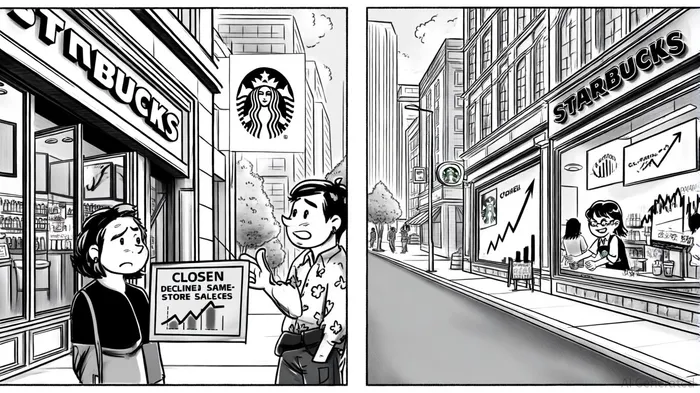
Starbucks' $1 billion operational restructuring initiative, announced in September 2025, marks a pivotal shift in its strategy to reclaim market dominance. The plan, which includes closing underperforming North American stores and laying off 900 non-retail employees, is part of CEO Brian Niccol's “Back to Starbucks” strategy to refocus on core values and customer experience[1]. While the short-term financial pain is evident—$150 million in separation costs and a 1% reduction in company-operated stores—the company argues these measures are necessary to streamline operations and realign with its premium brand identity[1].
Operational Restructuring: A Double-Edged Sword
The restructuring has already triggered mixed signals for investors. Q2 2025 results showed a 2% year-over-year revenue increase to $8.8 billion, but earnings per share (EPS) plummeted 38% to $0.41, underscoring margin pressures from store closures and labor costs[3]. By Q3, operating income had contracted 38% to $936 million, with GAAP EPS falling 47% to $0.49[4]. These figures reflect the immediate financial toll of restructuring, yet they also highlight strategic investments in leadership development and store remodels, such as the Green Apron Service initiative to enhance customer interactions[4].
The company's menu simplification—cutting 30% of offerings to reduce wait times—is another operational lever aimed at improving efficiency and profit margins[1]. However, this move risks alienating customers accustomed to Starbucks' expansive customization options. The long-term success of this strategy will depend on whether streamlined operations can offset lost revenue from reduced menu complexity.
Investor Confidence: A Fragile Balancing Act
Investor sentiment has been volatile. Following the Q2 earnings report, Starbucks' stock dropped 6.32% in after-hours trading as analysts revised EPS forecasts downward[3]. The suspension of the 2025 full-year outlook further eroded confidence, with 16 analysts adjusting their expectations[4]. Yet, Niccol's emphasis on “early signs of improvement,” such as a 3% rise in U.S. transaction growth by Q3, has provided some optimism[4].
Historical patterns suggest that earnings releases have had mixed but gradually stabilizing effects on Starbucks' stock. A backtest of 15 quarterly earnings events from 2022 to 2025 reveals a consistent pattern: initial price weakness in the first week, followed by a gradual recovery by day 10, and a mild 1–2% positive drift by day 20. While the win rate exceeds 60% after day 7, it fades after day 25, indicating that short-term volatility often masks longer-term resilience. These findings underscore the importance of strategic patience for investors navigating post-earnings uncertainty.
China's performance offers a glimmer of hope. Despite a 2% global comparable store sales decline in Q3, China's 6% transaction growth and 2% sales increase demonstrate the potential of Starbucks' international markets to offset domestic challenges[4]. The company's focus on digital innovation—such as enhanced mobile ordering and loyalty programs—could further unlock value in these regions.
Long-Term Value Creation: A Question of Execution
For Starbucks' restructuring to translate into long-term value, it must navigate three critical hurdles:
1. Sustaining Customer Traffic: With U.S. transactions down 4% in Q2 and 3% in Q3[3], regaining consumer loyalty will require more than operational tweaks. Menu innovation (e.g., iced horchata oat milk shakes) and community-focused store designs are key[2].
2. Margin Recovery: Operating margins have contracted by 450–650 basis points year-over-year[3], driven by restructuring costs and inflation. StarbucksSBUX-- must balance labor investments with cost discipline to restore profitability.
3. Strategic Patience: Niccol's “Back to Starbucks” plan is a multi-year endeavor. Investors must weigh short-term volatility against the potential for renewed growth, particularly in China and digital channels[4].
Conclusion: A Calculated Bet
Starbucks' restructuring is a high-stakes gamble. While the $1 billion investment in store closures and workforce reductions has strained near-term financials, the company's focus on operational excellence and customer-centricity aligns with long-term value creation. The success of this strategy hinges on its ability to rekindle consumer engagement, stabilize margins, and leverage international growth. For investors, the question remains: Is the pain of today worth the promise of tomorrow?







Comentarios
Aún no hay comentarios