
Starbucks Strike: A Brewing Storm for the Coffee Giant
Generado por agente de IAEli Grant
lunes, 23 de diciembre de 2024, 3:31 pm ET2 min de lectura
SBUX--
The ongoing Starbucks strike, now in its fifth day, has closed nearly 60 U.S. stores, with workers protesting a lack of progress in contract negotiations and outstanding legal issues. The union, Starbucks Workers United, alleges that the company has failed to honor a commitment made in February to reach a labor agreement this year. Workers are also demanding the resolution of hundreds of unfair labor practice charges filed with the National Labor Relations Board. Since 2021, baristas at 535 company-owned U.S. Starbucks stores have voted to join the union.
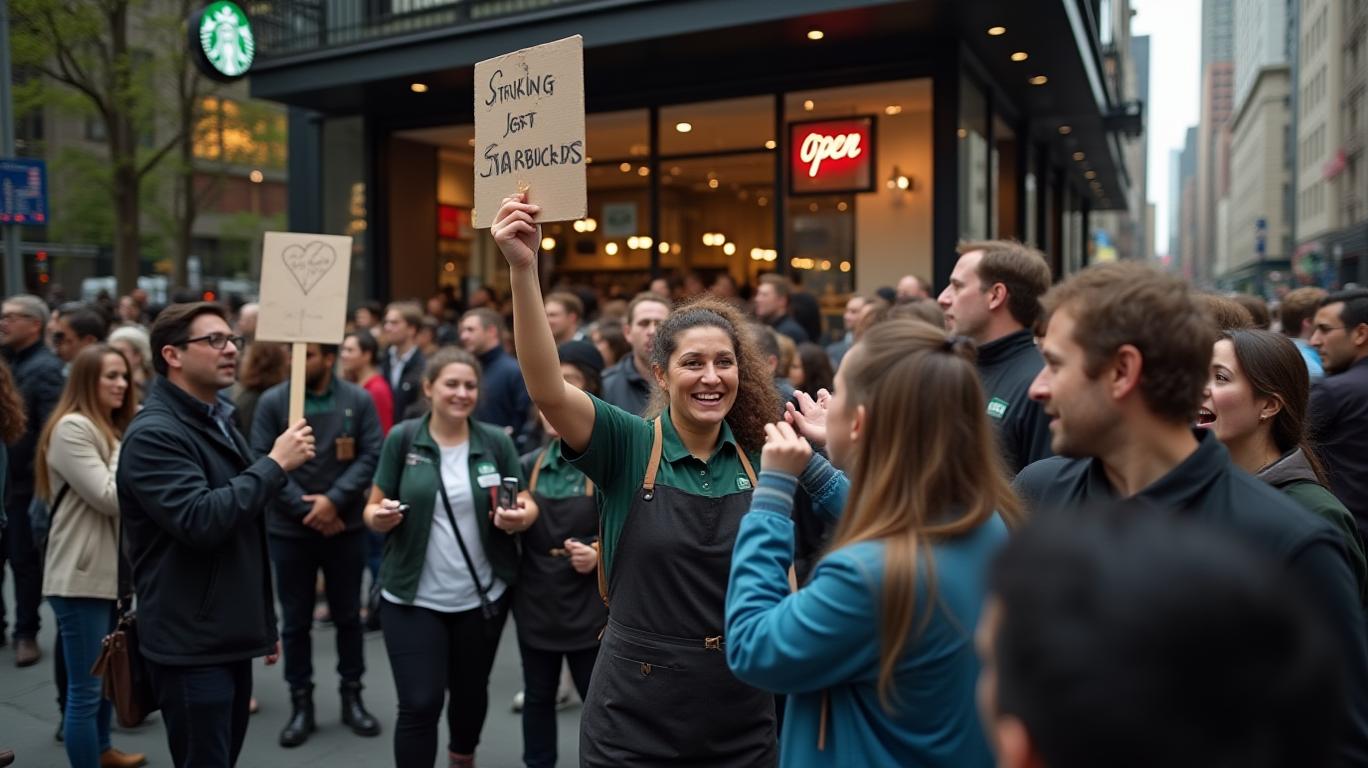
The strike comes at one of the busiest times of the year for Starbucks, but the company maintains that it has had "no significant impact" to its store operations. Starbucks has around 10,000 company-operated stores in the U.S. The two sides have been bargaining since the spring but appear to have reached an impasse over economic issues. Starbucks said it has committed to an annual pay increase of 1.5% or more for unionized workers. If the company gave a lower increase to non-union workers in any given year, it still would give union workers a 1.5% increase.
Starbucks said its U.S. baristas make an average of $18 per hour. With benefits — including health care, free college tuition and paid family leave — Starbucks’ pay package is worth an average of $30 per hour for baristas who work at least 20 hours per week, the company said. Workers say they deserve more, and note that Starbucks’ new Chairman and CEO Brian Niccol, who started in September, could make more than $100 million in his first year on the job.
The ongoing Starbucks strike has sparked concern among consumers and investors alike. According to a survey by YouGov, Starbucks' brand perception has dipped slightly, with 28% of Americans now having a negative view of the company, up from 24% in October. This decline is likely due to the high-profile nature of the strike and the media attention it has received.
To mitigate the negative impact, Starbucks should focus on open communication with its customers and employees. The company should clearly articulate its position on the labor dispute and emphasize its commitment to fair compensation and benefits. Additionally, Starbucks could offer incentives to its employees, such as bonuses or increased benefits, to demonstrate its support for their well-being and career growth.
Moreover, Starbucks should leverage its strong brand equity to reassure customers that the strike will not affect the quality of its products or services. The company could highlight its commitment to sustainability and social responsibility, which have long been key pillars of its brand identity. By emphasizing these values, Starbucks can help to restore consumer confidence and maintain its reputation as a trusted and beloved brand.
In conclusion, the Starbucks strike highlights the growing discontent among workers in the gig economy and the need for companies to address their concerns. As the strike continues to gain momentum, Starbucks must engage in constructive dialogue with its employees and address their demands to avoid further damage to its brand and reputation. By doing so, Starbucks can help to ensure a more positive work environment and maintain the loyalty of its customers.
The ongoing Starbucks strike, now in its fifth day, has closed nearly 60 U.S. stores, with workers protesting a lack of progress in contract negotiations and outstanding legal issues. The union, Starbucks Workers United, alleges that the company has failed to honor a commitment made in February to reach a labor agreement this year. Workers are also demanding the resolution of hundreds of unfair labor practice charges filed with the National Labor Relations Board. Since 2021, baristas at 535 company-owned U.S. Starbucks stores have voted to join the union.
The strike comes at one of the busiest times of the year for Starbucks, but the company maintains that it has had "no significant impact" to its store operations. Starbucks has around 10,000 company-operated stores in the U.S. The two sides have been bargaining since the spring but appear to have reached an impasse over economic issues. Starbucks said it has committed to an annual pay increase of 1.5% or more for unionized workers. If the company gave a lower increase to non-union workers in any given year, it still would give union workers a 1.5% increase.
Starbucks said its U.S. baristas make an average of $18 per hour. With benefits — including health care, free college tuition and paid family leave — Starbucks’ pay package is worth an average of $30 per hour for baristas who work at least 20 hours per week, the company said. Workers say they deserve more, and note that Starbucks’ new Chairman and CEO Brian Niccol, who started in September, could make more than $100 million in his first year on the job.
The ongoing Starbucks strike has sparked concern among consumers and investors alike. According to a survey by YouGov, Starbucks' brand perception has dipped slightly, with 28% of Americans now having a negative view of the company, up from 24% in October. This decline is likely due to the high-profile nature of the strike and the media attention it has received.
To mitigate the negative impact, Starbucks should focus on open communication with its customers and employees. The company should clearly articulate its position on the labor dispute and emphasize its commitment to fair compensation and benefits. Additionally, Starbucks could offer incentives to its employees, such as bonuses or increased benefits, to demonstrate its support for their well-being and career growth.
Moreover, Starbucks should leverage its strong brand equity to reassure customers that the strike will not affect the quality of its products or services. The company could highlight its commitment to sustainability and social responsibility, which have long been key pillars of its brand identity. By emphasizing these values, Starbucks can help to restore consumer confidence and maintain its reputation as a trusted and beloved brand.
In conclusion, the Starbucks strike highlights the growing discontent among workers in the gig economy and the need for companies to address their concerns. As the strike continues to gain momentum, Starbucks must engage in constructive dialogue with its employees and address their demands to avoid further damage to its brand and reputation. By doing so, Starbucks can help to ensure a more positive work environment and maintain the loyalty of its customers.

Divulgación editorial y transparencia de la IA: Ainvest News utiliza tecnología avanzada de Modelos de Lenguaje Largo (LLM) para sintetizar y analizar datos de mercado en tiempo real. Para garantizar los más altos estándares de integridad, cada artículo se somete a un riguroso proceso de verificación con participación humana.
Mientras la IA asiste en el procesamiento de datos y la redacción inicial, un miembro editorial profesional de Ainvest revisa, verifica y aprueba de forma independiente todo el contenido para garantizar su precisión y cumplimiento con los estándares editoriales de Ainvest Fintech Inc. Esta supervisión humana está diseñada para mitigar las alucinaciones de la IA y garantizar el contexto financiero.
Advertencia sobre inversiones: Este contenido se proporciona únicamente con fines informativos y no constituye asesoramiento profesional de inversión, legal o financiero. Los mercados conllevan riesgos inherentes. Se recomienda a los usuarios que realicen una investigación independiente o consulten a un asesor financiero certificado antes de tomar cualquier decisión. Ainvest Fintech Inc. se exime de toda responsabilidad por las acciones tomadas con base en esta información. ¿Encontró un error? Reportar un problema




Comentarios
Aún no hay comentarios