
Starbucks' Strategic Retreat from Urban Saturation and the Shift to Suburban Growth
The coffee giant's pivot from urban overreach to suburban expansion is not just a tactical move-it's a lifeline for long-term value creation. As StarbucksSBUX-- grapples with declining foot traffic in high-cost urban centers, its "Back to Starbucks" strategy is reshaping the company's financial DNA. Let's break down how this restructuring could redefine its investment potential.
The Urban Dilemma: Saturation and Shrinking Margins
Urban markets, once the bedrock of Starbucks' growth, are now a drag on profitability. In Q3 2025, U.S. same-store sales fell 2%, driven by a 4% drop in transactions, despite a 2% rise in average ticket prices. The culprit? Urban saturation. With over 17,000 U.S. stores, many in densely populated areas, Starbucks faces diminishing returns. High rent, labor costs, and competition from local rivals have eroded margins. For instance, urban stores in cities like New York and Chicago now operate with rent and labor expenses 1.5–2 times higher than suburban locations.
The numbers don't lie: North America's profit margin plummeted from 19.83% in 2024 to 11.53% in 2025. Closing 627 underperforming stores-mostly in urban areas-is a blunt but necessary fix. As CEO Brian Niccol stated, this is a "re-balancing" of the store portfolio to prioritize locations with stronger unit economics.
Suburban Surge: A New Growth Engine
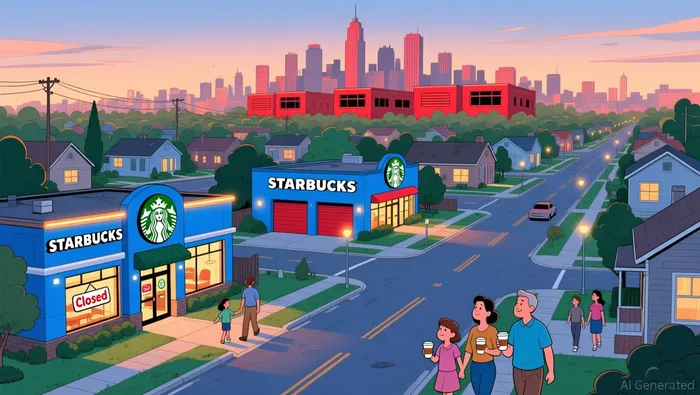 While urban markets struggle, suburban locations are becoming a haven for Starbucks' revival. In Q4 2025, drive-thru stores-concentrated in suburban areas-generated 35% more revenue than non-drive-thru locations. With 65% of U.S. stores now offering drive-thru service, the company is tapping into convenience-driven demand, particularly in residential and highway corridors.
Suburban stores also benefit from lower operational costs. For example, Starbucks' location-based pricing strategy-raising prices by 4–6% in urban airports and city centers helps offset higher costs in those areas. Meanwhile, suburban locations maintain stable pricing, preserving affordability for daily customers. This duality allows Starbucks to maximize margins without alienating price-sensitive consumers.
The "Back to Starbucks" Playbook: Premiumization and Efficiency
Starbucks isn't just closing doors-it's reinvesting in what works. The $500 million "Green Apron Service" program, aimed at improving labor and customer service, is a bet on restoring the "third place" experience. In suburban markets, where customers often prioritize convenience and comfort, this could drive loyalty.
Premiumization is another lever. By reducing discounting and focusing on higher-margin products (like seasonal offerings), Starbucks has managed a 1% average ticket increase in North America despite transaction declines. This shift is critical in suburban areas, where households with higher disposable incomes are more receptive to premium pricing.
Risks and Rewards for Investors
The short-term pain is undeniable. Store closures and restructuring costs hit GAAP earnings per share by 47% in Q3 2025. However, the long-term calculus is more promising. By trimming underperforming urban locations and optimizing suburban footprints, Starbucks is positioning itself for margin expansion.
Analysts are split, but the data leans bullish. The International segment, which includes suburban and rural markets in China and other regions, saw a 9% revenue jump in Q4 2025. China's 2% same-store sales growth, driven by a 6% rise in transactions, shows that Starbucks' playbook can work in diverse markets.
Verdict: A Strategic Rebirth
Starbucks' retreat from urban saturation isn't a retreat-it's a recalibration. By focusing on suburban efficiency, premium pricing, and customer experience, the company is laying the groundwork for sustainable growth. For investors, the key is patience: the restructuring costs are real, but the long-term value of a leaner, more profitable Starbucks could justify the wait.







Comentarios
Aún no hay comentarios