
Starbucks Stock: A Dividend Buy Amid Nasdaq Correction?
Generado por agente de IAMarcus Lee
sábado, 5 de abril de 2025, 4:27 am ET2 min de lectura
SBUX--
The Nasdaq Composite has tumbled 14.1% from its 52-week high, putting it in correction territory. This decline has investors on edge, but it also presents opportunities for those looking to add dividend stocks to their portfolios. One such stock that has seen a significant drop is StarbucksSBUX-- (NASDAQ: SBUX), which has fallen 14.6% in the last month. Is this a buying opportunity, or should investors be wary of the risks?
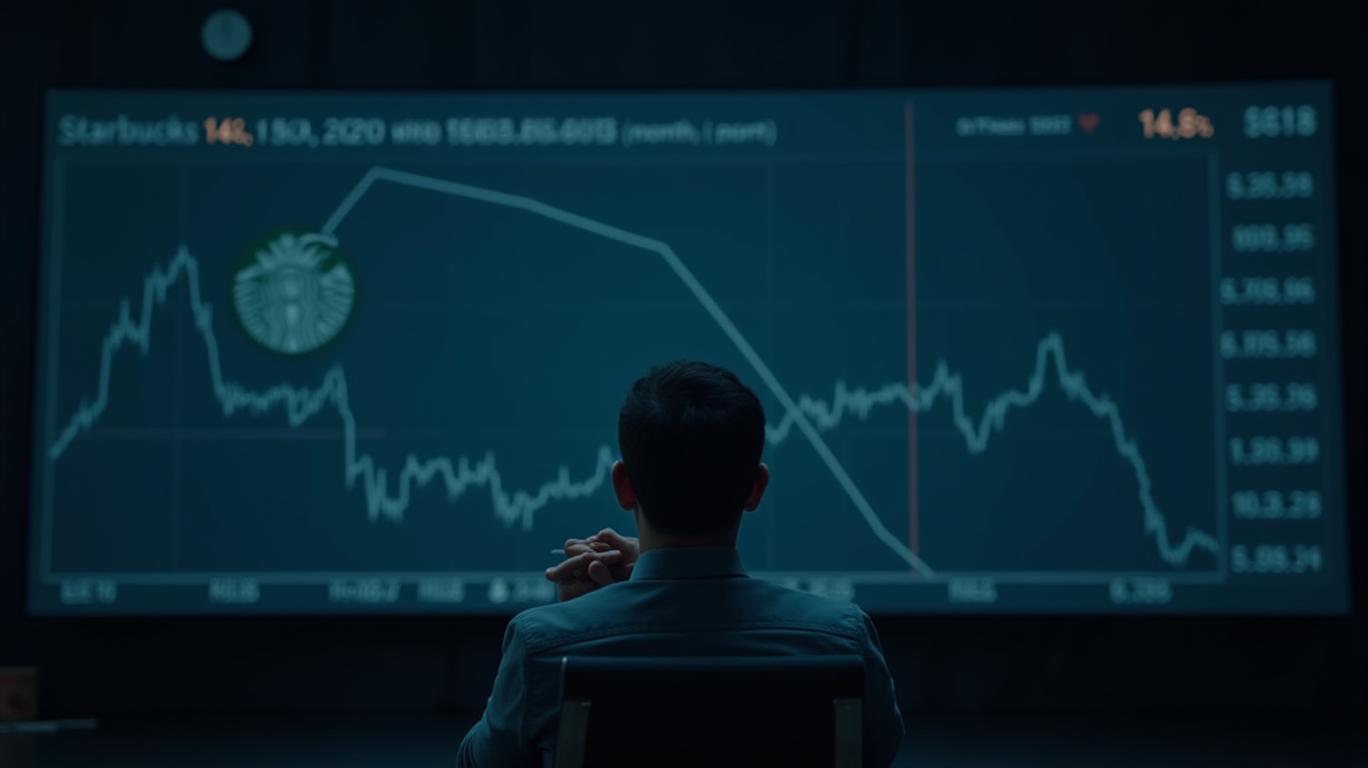
Starbucks has been facing significant challenges in recent years. Growth has stalled in China, and inflation has taken a toll on its profitability. In March 2023, Laxman Narasimhan took over as CEO, replacing Howard Schultz, who had stepped in temporarily. Despite a bold turnaround plan, the company's performance has continued to struggle. In August 2024, Chipotle MexicanCMG-- Grill CEO Brian Niccol was announced as the new head of Starbucks, causing the stock to surge by 24.5% on the news. However, the stock has since declined, reflecting ongoing concerns about the company's performance.
Niccol's new plan includes revamping Mobile Order and Pay to reduce customer wait times, eliminating excessive upcharges for non-dairy milk, and pausing price increases. However, these initiatives come at a cost. Starbucks' margins could be strained in the near term due to higher input costs from rising coffee bean prices and inflationary pressures. In its latest quarter, Starbucks saw an 180-basis-point hit to its North American margins due to higher hours, wages, and employee benefits. Removing the non-daily upcharge resulted in a 60-basis-point effect on margins, and an uptick in marketing spending also led to higher costs.
Despite these challenges, there are reasons to be optimistic about Starbucks' future. The company's new strategies could drive volume and lower its dependence on price increases. Additionally, the rollback of environmental regulations and permitting rules could benefit oil and natural gas providers, which could in turn benefit Starbucks' supply chain. As a publicly traded master limited partnership, Energy Transfer is designed to pass its steadily rising profits on to investors via large cash distributions. This passive income-producing stalwart yields 7% at its current share price. With the AI boom and deregulation set to fuel its expansion, Energy Transfer expects to grow its cash payout by as much as 5% annually.
However, investors should be cautious about jumping into Starbucks stock without considering the risks. The company's business fundamentals have not been performing well, and its high dividend yield could be a sign of potential risks. Investors should also consider the broader market context. The Nasdaq's correction is driven by fears of a potential recession, which could impact Starbucks' performance. Additionally, the company's high dividend yield could be a sign of potential risks associated with its financial health and future prospects.
In conclusion, while Starbucks' recent decline could present a buying opportunity for dividend investors, it is important to consider the risks and the broader market context. Investors should do their own research and consider their risk tolerance before making an investment decision.
The Nasdaq Composite has tumbled 14.1% from its 52-week high, putting it in correction territory. This decline has investors on edge, but it also presents opportunities for those looking to add dividend stocks to their portfolios. One such stock that has seen a significant drop is StarbucksSBUX-- (NASDAQ: SBUX), which has fallen 14.6% in the last month. Is this a buying opportunity, or should investors be wary of the risks?
Starbucks has been facing significant challenges in recent years. Growth has stalled in China, and inflation has taken a toll on its profitability. In March 2023, Laxman Narasimhan took over as CEO, replacing Howard Schultz, who had stepped in temporarily. Despite a bold turnaround plan, the company's performance has continued to struggle. In August 2024, Chipotle MexicanCMG-- Grill CEO Brian Niccol was announced as the new head of Starbucks, causing the stock to surge by 24.5% on the news. However, the stock has since declined, reflecting ongoing concerns about the company's performance.
Niccol's new plan includes revamping Mobile Order and Pay to reduce customer wait times, eliminating excessive upcharges for non-dairy milk, and pausing price increases. However, these initiatives come at a cost. Starbucks' margins could be strained in the near term due to higher input costs from rising coffee bean prices and inflationary pressures. In its latest quarter, Starbucks saw an 180-basis-point hit to its North American margins due to higher hours, wages, and employee benefits. Removing the non-daily upcharge resulted in a 60-basis-point effect on margins, and an uptick in marketing spending also led to higher costs.
Despite these challenges, there are reasons to be optimistic about Starbucks' future. The company's new strategies could drive volume and lower its dependence on price increases. Additionally, the rollback of environmental regulations and permitting rules could benefit oil and natural gas providers, which could in turn benefit Starbucks' supply chain. As a publicly traded master limited partnership, Energy Transfer is designed to pass its steadily rising profits on to investors via large cash distributions. This passive income-producing stalwart yields 7% at its current share price. With the AI boom and deregulation set to fuel its expansion, Energy Transfer expects to grow its cash payout by as much as 5% annually.
However, investors should be cautious about jumping into Starbucks stock without considering the risks. The company's business fundamentals have not been performing well, and its high dividend yield could be a sign of potential risks. Investors should also consider the broader market context. The Nasdaq's correction is driven by fears of a potential recession, which could impact Starbucks' performance. Additionally, the company's high dividend yield could be a sign of potential risks associated with its financial health and future prospects.
In conclusion, while Starbucks' recent decline could present a buying opportunity for dividend investors, it is important to consider the risks and the broader market context. Investors should do their own research and consider their risk tolerance before making an investment decision.

Divulgación editorial y transparencia de la IA: Ainvest News utiliza tecnología avanzada de Modelos de Lenguaje Largo (LLM) para sintetizar y analizar datos de mercado en tiempo real. Para garantizar los más altos estándares de integridad, cada artículo se somete a un riguroso proceso de verificación con participación humana.
Mientras la IA asiste en el procesamiento de datos y la redacción inicial, un miembro editorial profesional de Ainvest revisa, verifica y aprueba de forma independiente todo el contenido para garantizar su precisión y cumplimiento con los estándares editoriales de Ainvest Fintech Inc. Esta supervisión humana está diseñada para mitigar las alucinaciones de la IA y garantizar el contexto financiero.
Advertencia sobre inversiones: Este contenido se proporciona únicamente con fines informativos y no constituye asesoramiento profesional de inversión, legal o financiero. Los mercados conllevan riesgos inherentes. Se recomienda a los usuarios que realicen una investigación independiente o consulten a un asesor financiero certificado antes de tomar cualquier decisión. Ainvest Fintech Inc. se exime de toda responsabilidad por las acciones tomadas con base en esta información. ¿Encontró un error? Reportar un problema


SOBRE NOSOTROS
Nuestra historiaAutores de noticiasBase de conocimientosPolítica de privacidadTérmino de usoDescargo de responsabilidad de corretaje de tercerosTérminos de uso de AIMEDivulgaciones de riesgos de AInvest AICarrerasCONTÁCTENOS
Email: support@ainvest.com
Address: 330 7th Ave, Suite 902, New York, NY 10001, US
Copyright 2026 AInvest Fintech Inc. All rights reserved.


Comentarios
Aún no hay comentarios