
Starbucks' China Challenge: Local Rivals Lead the Way
Generado por agente de IAEli Grant
jueves, 28 de noviembre de 2024, 12:20 pm ET1 min de lectura
SBUX--
Starbucks, the global coffee giant, faces a significant challenge in the Chinese market, where local rivals have outpaced it in terms of growth and market share. This article explores the competitive landscape in China, the strategies employed by local coffee chains, and the implications for Starbucks' future in the region.
The Chinese coffee market has experienced rapid growth, driven by increasing consumer sophistication and a growing appreciation for high-quality coffee. However, this promising scenario is tempered by intense competition and rapidly evolving consumer preferences. Local players, particularly Luckin Coffee, have emerged as formidable rivals, challenging Starbucks' once-dominant position.
Luckin Coffee, in particular, has outpaced Starbucks by leveraging technology and affordability. Its mobile ordering and grab-and-go model, coupled with competitive pricing ($1.40-$2.75 per cup), have attracted urban professionals. Cotti, another local chain, offers a 9.9 RMB coffee, undercutting Starbucks' 30 RMB average. Tech integration and aggressive discounting have enabled local chains to gain market share, as seen in Luckin's 41% y-o-y sales growth in Q3 2024.
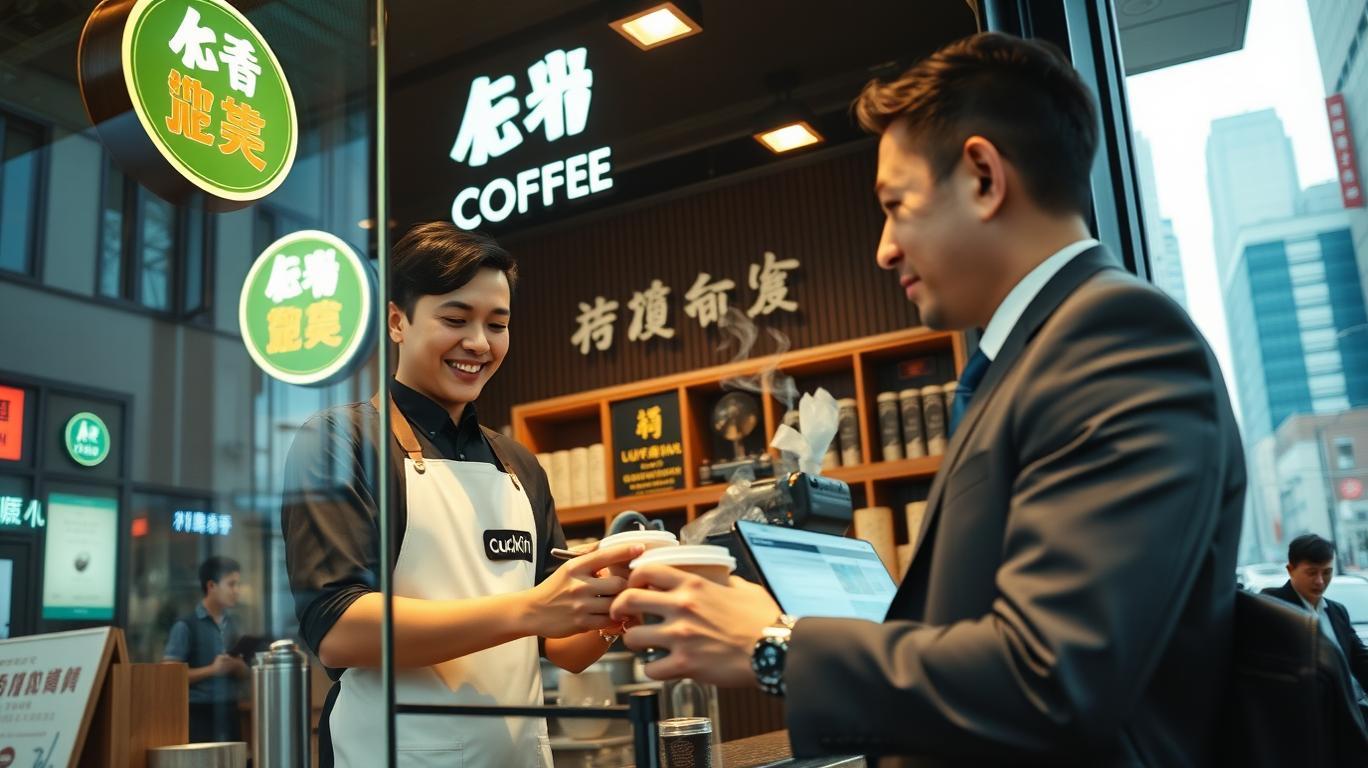
Starbucks' high pricing strategy in China, with coffee prices starting from at least $4.10, has contributed to its market share decline. Local competitors like Luckin Coffee offer significantly lower prices, attracting price-sensitive consumers. This pricing differential, coupled with local rivals' aggressive expansion and innovative strategies, has led to Starbucks' market share erosion in China.
Starbucks' struggle in China reflects a shift in consumer preferences towards more affordable, high-quality alternatives, as evident in Luckin Coffee's impressive growth. This is driven by increasing demand for specialty coffee and evolving consumer behaviors, with younger generations preferring local, lower-priced options. Starbucks' high pricing strategy, once a differentiator, now limits its broader market appeal.
To adapt, Starbucks should consider a multi-pronged approach combining competitive pricing, local tailored offerings, and digital innovation. First, Starbucks could introduce tiered pricing options, following local rivals' lead, to cater to budget-conscious consumers without compromising its premium image. Second, Starbucks could leverage its global brand recognition to offer unique, locally-inspired products, such as regional coffee blends or traditional Chinese snacks, to differentiate itself from local competitors. Lastly, Starbucks should invest in digital platforms and mobile ordering to enhance convenience and customer experience, aligning with Chinese consumers' preference for technological advancements.
In conclusion, Starbucks' future in China depends on its ability to adapt to the competitive landscape and evolving consumer preferences. By embracing a more locally-focused strategy, investing in digital innovation, and adjusting its pricing model, Starbucks can better compete with local rivals and regain market share in the Chinese market. The challenge is clear, but with the right strategies, Starbucks can continue to thrive in this crucial market.
The Chinese coffee market has experienced rapid growth, driven by increasing consumer sophistication and a growing appreciation for high-quality coffee. However, this promising scenario is tempered by intense competition and rapidly evolving consumer preferences. Local players, particularly Luckin Coffee, have emerged as formidable rivals, challenging Starbucks' once-dominant position.
Luckin Coffee, in particular, has outpaced Starbucks by leveraging technology and affordability. Its mobile ordering and grab-and-go model, coupled with competitive pricing ($1.40-$2.75 per cup), have attracted urban professionals. Cotti, another local chain, offers a 9.9 RMB coffee, undercutting Starbucks' 30 RMB average. Tech integration and aggressive discounting have enabled local chains to gain market share, as seen in Luckin's 41% y-o-y sales growth in Q3 2024.
Starbucks' high pricing strategy in China, with coffee prices starting from at least $4.10, has contributed to its market share decline. Local competitors like Luckin Coffee offer significantly lower prices, attracting price-sensitive consumers. This pricing differential, coupled with local rivals' aggressive expansion and innovative strategies, has led to Starbucks' market share erosion in China.
Starbucks' struggle in China reflects a shift in consumer preferences towards more affordable, high-quality alternatives, as evident in Luckin Coffee's impressive growth. This is driven by increasing demand for specialty coffee and evolving consumer behaviors, with younger generations preferring local, lower-priced options. Starbucks' high pricing strategy, once a differentiator, now limits its broader market appeal.
To adapt, Starbucks should consider a multi-pronged approach combining competitive pricing, local tailored offerings, and digital innovation. First, Starbucks could introduce tiered pricing options, following local rivals' lead, to cater to budget-conscious consumers without compromising its premium image. Second, Starbucks could leverage its global brand recognition to offer unique, locally-inspired products, such as regional coffee blends or traditional Chinese snacks, to differentiate itself from local competitors. Lastly, Starbucks should invest in digital platforms and mobile ordering to enhance convenience and customer experience, aligning with Chinese consumers' preference for technological advancements.
In conclusion, Starbucks' future in China depends on its ability to adapt to the competitive landscape and evolving consumer preferences. By embracing a more locally-focused strategy, investing in digital innovation, and adjusting its pricing model, Starbucks can better compete with local rivals and regain market share in the Chinese market. The challenge is clear, but with the right strategies, Starbucks can continue to thrive in this crucial market.

Divulgación editorial y transparencia de la IA: Ainvest News utiliza tecnología avanzada de Modelos de Lenguaje Largo (LLM) para sintetizar y analizar datos de mercado en tiempo real. Para garantizar los más altos estándares de integridad, cada artículo se somete a un riguroso proceso de verificación con participación humana.
Mientras la IA asiste en el procesamiento de datos y la redacción inicial, un miembro editorial profesional de Ainvest revisa, verifica y aprueba de forma independiente todo el contenido para garantizar su precisión y cumplimiento con los estándares editoriales de Ainvest Fintech Inc. Esta supervisión humana está diseñada para mitigar las alucinaciones de la IA y garantizar el contexto financiero.
Advertencia sobre inversiones: Este contenido se proporciona únicamente con fines informativos y no constituye asesoramiento profesional de inversión, legal o financiero. Los mercados conllevan riesgos inherentes. Se recomienda a los usuarios que realicen una investigación independiente o consulten a un asesor financiero certificado antes de tomar cualquier decisión. Ainvest Fintech Inc. se exime de toda responsabilidad por las acciones tomadas con base en esta información. ¿Encontró un error? Reportar un problema


SOBRE NOSOTROS
Nuestra historiaAutores de noticiasBase de conocimientosPolítica de privacidadTérmino de usoDescargo de responsabilidad de corretaje de tercerosTérminos de uso de AIMEDivulgaciones de riesgos de AInvest AICarrerasCONTÁCTENOS
Email: support@ainvest.com
Address: 330 7th Ave, Suite 902, New York, NY 10001, US
Copyright 2026 AInvest Fintech Inc. All rights reserved.


Comentarios
Aún no hay comentarios