
Starbase Texas: A New Era in Space Commerce, but at What Cost?
The incorporation of Starbase, Texas, as a city on May 3, 2025, and its simultaneous certification by the FAA as a commercial spaceport, marks a pivotal moment in the privatization of space exploration. For investors, this dual milestone raises critical questions: How will SpaceX’s corporate control of the town’s governance intersect with its ambitions for orbital launches? And can the risks of environmental backlash and regulatory scrutiny be managed?
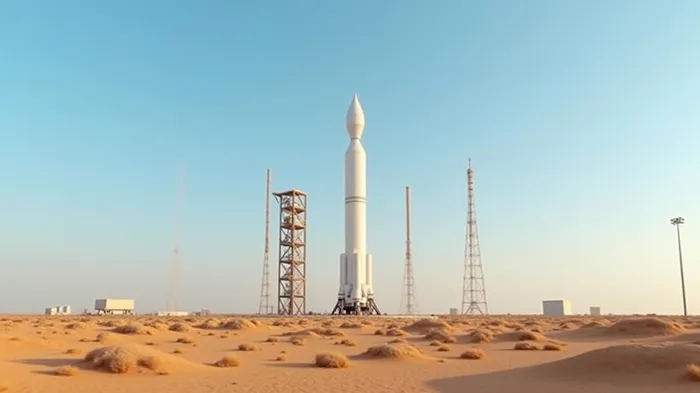
The Regulatory Breakthrough
The FAA’s certification on May 3, 2025, was a landmarkLARK-- achievement. It authorized Starbase to conduct crewed orbital launches, a first for a Texas-based commercial spaceport. This opens the door to lucrative contracts for satellite deployments, lunar missions, and even tourism. “The certification validates Starbase’s role as a hub for next-generation space infrastructure,” said a spokesperson, noting the 14-month review process involved 12 environmental studies and 70 safety audits.
The immediate payoff is tangible. On May 4, Starbase announced a partnership with NASA to develop lunar payload capabilities, with a test launch slated for December 2025. This aligns with SpaceX’s broader strategy to dominate both commercial and government space markets. Yet the FAA’s approval comes with conditions: Starbase must adhere to strict environmental monitoring protocols, including real-time tracking of rocket debris and noise pollution levels.
Corporate Governance and Local Tensions
Starbase’s incorporation as a Type C municipality, with SpaceX employees holding nearly all elected offices, underscores the risks of conflating corporate and civic interests. Bobby Peden, SpaceX’s test operations VP, won the mayoral race unopposed, while both commissioners are current SpaceX staff. This raises red flags for critics. “When a company governs a town, conflicts of interest are inevitable,” said Tino Villarreal of Brownsville, citing concerns over restricted beach access and environmental oversight.
The environmental opposition is fierce. The South Texas Environmental Justice Network highlighted SpaceX’s 2024 pollution violations, including waterway contamination and habitat destruction. Meanwhile, the Carrizo/Comecrudo Tribe continues to challenge SpaceX’s encroachment on sacred lands. These disputes could delay future projects. For instance, a May 2 court ruling temporarily halted construction on a new propulsion facility due to unresolved air quality concerns—a setback that delayed job creation and infrastructure spending.
Market Opportunities and Risks
The FAA certification has already spurred investment optimism. Starbase’s job fair on May 3 drew 500 applicants for roles in engineering and sustainability—a sign of local labor market engagement. The $5 million pledge to solar and water projects aims to address environmental criticism, though critics argue this pales against the $3.6 billion reportedly spent on Starbase’s infrastructure.
Yet the May 4 drone incident—a security breach during a high-profile event—spotlights operational vulnerabilities. Such risks could deter insurers or institutional investors wary of liability exposure. Meanwhile, the $200,000 community grant from Brownsville’s mayor highlights the balancing act required to placate local stakeholders.
Conclusion: A Balancing Act for Long-Term Value
Starbase’s trajectory hinges on its ability to navigate regulatory and environmental hurdles while maintaining investor confidence. The FAA certification and NASA partnership are clear positives, with potential for exponential revenue growth if Starbase becomes the go-to site for orbital launches. However, the legal battles, community tensions, and operational risks (e.g., the drone incident) could constrain growth.
Investors should monitor two key metrics: the resolution of the May 2 lawsuit (due for a June hearing) and the success of Starbase’s first lunar payload test in December. A favorable outcome on either front could propel SpaceX’s valuation further upward. Conversely, a regulatory setback or public backlash over environmental damage might trigger a reassessment of the firm’s risk profile.
In the end, Starbase exemplifies the promise—and perils—of private space ventures. For investors, the question is whether the company’s ambitions can outpace the costs of its unchecked growth.







Comentarios
Aún no hay comentarios