
Star Copper's Strategic Expansion in Copperline: Positioning for the Electrification-Driven Commodity Supercycle
The global copper market is undergoing a seismic shift, driven by the electrification revolution and the urgent need for clean energy infrastructure. As electric vehicles (EVs), renewable energy systems, and AI-driven technologies redefine global demand, copper has emerged as the linchpin of the energy transition. For investors, this has created a unique opportunity to back companies positioned to capitalize on the commodity supercycle—a period of sustained demand outpacing supply, supported by structural tailwinds. Star Copper (CSE:STCU) is one such company, leveraging its strategic acquisition of the Copperline Property in British Columbia to tap into this high-growth narrative.
Copperline: A Low-Cost, High-Potential Catalyst
In July 2025, Star Copper finalized the acquisition of the Copperline Property, a 4,502-hectare portfolio of mineral claims in the Golden Triangle region of British Columbia. This acquisition, structured with a $350,000 cash payment, 500,000 share issuance, and a 2% net smelter royalty (with a repurchase option), underscores the company's disciplined approach to capital allocation. The property's geological setting—hosting volcanic redbed copper-silver mineralization with historical drill results like 25.0 meters of 2.54% Cu and 50.4 g/t Ag—positions it as a high-impact asset with minimal upfront costs.
Star Copper's strategy is to build on legacy data while deploying modern exploration techniques. The company has already compiled historical drilling results from the 1930s to 2003, including high-grade zones like the West Zone and Dave's Zone, and is now integrating this with 3D geological modeling and geophysical surveys (IP and magnetics). This approach not only reduces exploration risk but also accelerates the path to a NI 43-101 resource estimate—a critical milestone for attracting institutional capital.
Aligning with the Electrification Megatrend
The electrification-driven copper supercycle is not a distant possibility but an unfolding reality. According to BloombergNEF, copper demand in a net-zero scenario will exceed all historical production by 2050. EVs alone require 2.4 times more copper than internal combustion vehicles, while solar and wind infrastructure demand surges as nations decarbonize. Star Copper's focus on copper-silver assets in the Golden Triangle—a region historically known for large porphyry deposits—aligns perfectly with this demand surge.
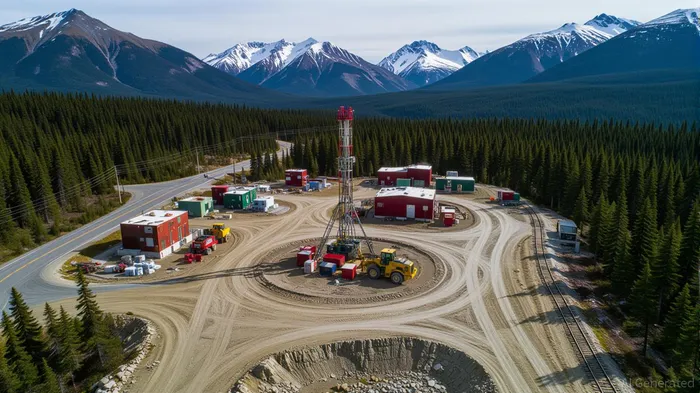
Moreover, the company's exploration targets, such as Star North and Star East, mirror the geological footprint of the Star Main deposit, suggesting the potential for a multi-kilometer porphyry cluster. These targets are fully permitted and prioritized for fall 2025 drilling, with Star North's 500m x 500m chargeability anomaly and Star East's 250m x 500m soil anomaly offering clear vectors for expansion. The proximity of these targets to existing infrastructure (logging roads within 5 km and the BC Rail line within 11 km) further reduces development timelines and costs.
Strategic Positioning in a Fragmenting Supply Chain
Geopolitical and policy shifts are amplifying the supercycle's momentum. Governments in the U.S. and EU are prioritizing domestic copper production to reduce reliance on foreign suppliers, while tariffs on Chinese imports and bans on materials from adversarial states are fragmenting global supply chains. Star Copper's Canadian jurisdiction—a mining-friendly region with stable regulatory frameworks—positions it to benefit from these protectionist trends.
The company's acquisition of Copperline also includes a $1.5 million bonus contingent on a resource estimate exceeding 500 million pounds of copper or 15 million ounces of silver. This incentive structure aligns with the supercycle's demand trajectory, as larger resource bases are essential for attracting the capital needed to advance projects to production.
Investment Thesis: Timing the Supercycle
Star Copper's strategic expansion in Copperline is a textbook example of leveraging low-cost, high-potential assets to capitalize on structural demand. With a fully funded Phase 2 drill campaign in the works and a clear pathway to resource estimation, the company is well-positioned to deliver near-term catalysts. The pending assay results from Phase 1 drilling, combined with the potential for a multi-kilometer porphyry cluster, could significantly de-risk the project and unlock value for shareholders.
For investors, the key risks include exploration uncertainty and capital allocation discipline. However, Star Copper's disciplined acquisition terms, infrastructure advantages, and alignment with the electrification megatrend mitigate these risks. As copper prices continue to climb on the back of supply constraints and demand surges, companies like Star Copper that can advance large-scale, low-cost projects will outperform.
Conclusion: Star Copper's Copperline acquisition represents a strategic bet on the electrification-driven commodity supercycle. By combining historical data with modern exploration techniques, the company is positioning itself to unlock a high-grade copper-silver asset in a geopolitically favorable jurisdiction. For investors seeking exposure to the energy transition's critical metalsCRML--, Star Copper offers a compelling case of disciplined growth and long-term value creation.







Comentarios
Aún no hay comentarios