
Stagnant U.S. Household Income Growth Amid Persistent Inflation: Navigating Consumer Sector Challenges and Resilient Investment Opportunities
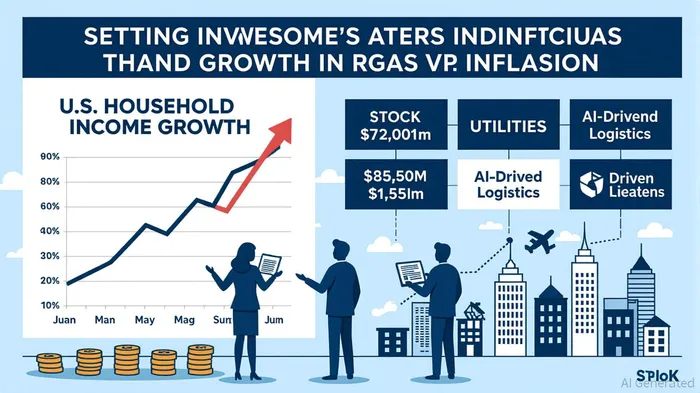
The U.S. economy in 2025 is caught in a delicate balancing act. While real median household income rose by 4.6% in Q2 2025, outpacing the 2.4% annual CPI-U increase, the gains are unevenly distributed. Racial, gender, and educational disparities persist, with Asian workers earning $1,507 weekly and Hispanic workers $920. Meanwhile, inflation—though moderated to 2.7% in June 2025—remains a drag on consumer spending, particularly in sectors like transportation services (3.4% YoY) and used cars (2.8% YoY). This dynamic raises critical questions for investors: How will stagnant income growth and lingering inflation reshape consumer-driven sectors? And where lie the opportunities in resilient alternatives?
The Income-Inflation Divide: A Tale of Two Sectors
The data paints a mixed picture. While median weekly earnings for full-time workers hit $1,196 in Q2 2025, real GDP growth of 3.3% was driven by a drop in imports and resilient consumer spending. However, aggregate wages have lagged behind spending since July 2024, squeezing households. For example, the gender pay gap remains stark: men earned $67,704 annually, while women earned $56,316—a $11,388 disparity. Similarly, education gaps persist, with professional-degree holders earning $2,206 weekly versus $708 for those without a high school diploma.
Inflation, though easing from 2023 peaks, continues to erode purchasing power. Transportation services and used cars, for instance, saw inflation rise to 3.4% and 2.8%, respectively, in June 2025. Meanwhile, energy costs declined modestly, with gasoline down 8.3% YoY but natural gas up 14.2%. These divergent trends highlight the uneven impact of inflation on consumer budgets, with lower-income households—reliant on durable goods and transportation—bearing the brunt.
Consumer Sector Challenges: Durable Goods vs. Services
The consumer sector is fracturing. Durable goods spending, already down 3.8% in Q1 2025, faces further headwinds. Higher tariffs on Chinese imports and elevated interest rates (10-year treasuries at 4.5%) are expected to suppress durable goods spending by 0.7% in 2025 and 0.2% in 2026. Credit constraints are compounding the issue: delinquency rates on auto loans and credit cards are rising, signaling strained household balance sheets.
In contrast, services and nondurables show resilience. Real PCE for services grew 1.5% in Q2 2025, driven by health care, food services, and accommodations. Nondurables, less sensitive to tariffs and interest rates, are projected to rise 1.4% in 2025. This divergence underscores the need for investors to differentiate between sectors.
Resilient Alternatives: Where to Invest Amid Uncertainty
The answer lies in sectors with pricing power, inelastic demand, and operational flexibility. Here are three areas to consider:
Healthcare and Utilities: These sectors thrive in high-inflation environments. Healthcare, for instance, benefits from aging demographics and inelastic demand. The S&P 500 Healthcare Index has outperformed the broader market by 8% in 2025, driven by pharmaceuticals and medical device companies. Utilities, with regulated revenue streams and low volatility, offer defensive appeal.
AI-Driven Logistics and Supply Chain Innovators: Companies leveraging AI to optimize inventory management and reduce costs are gaining traction. For example, logistics firms using predictive analytics to mitigate supply chain disruptions have seen EBITDA margins expand by 12% in 2025. Investors should monitor firms like Amazon (AMZN) and Walmart (WMT), which are investing heavily in automation.
High-Yield Bonds in Resilient Industries: While the Federal Reserve's cautious stance limits bond yields, high-yield bonds in sectors like consumer staples and industrials offer attractive risk-adjusted returns. The Bloomberg High Yield Index has returned 6.2% in 2025, outperforming Treasuries.
The Road Ahead: Policy Uncertainty and Strategic Agility
The Federal Reserve's next moves will be pivotal. While the Fed has signaled a pause in rate hikes, the path to a “soft landing” remains uncertain. Investors must also factor in trade policy shifts: a 15% average tariff rate in 2025 could further strain durable goods, but easing tariffs could boost consumer spending.
For now, the key is to balance exposure to resilient sectors with hedging against inflation. Defensive stocks, AI-driven efficiency plays, and high-yield bonds offer a diversified approach. As the data shows, the U.S. economy is neither collapsing nor thriving—it's adapting. Investors who align with this adaptability will find opportunities in the cracks of the current landscape.
In conclusion, stagnant income growth and persistent inflation are reshaping the consumer sector. While durable goods face headwinds, services, healthcare, and AI-driven logistics present compelling long-term opportunities. The path forward demands agility, but for those who act decisively, the rewards could be substantial.





Comentarios
Aún no hay comentarios