
Stablecoin Supply Chain Risks and DeFi Resilience: Lessons from Circle's 55M USDC Burn
The recent 55 million USDCUSDC-- burn by Circle on EthereumETH-- underscores the delicate balance between stablecoin governance and systemic risk in decentralized finance (DeFi). While the event was framed as routine supply management to maintain the $1 peg[1], it raises critical questions about the fragility of stablecoin ecosystems and the resilience of DeFi protocols in the face of centralized interventions.
The Mechanics of the Burn: A Proactive Move or a Reactive Necessity?
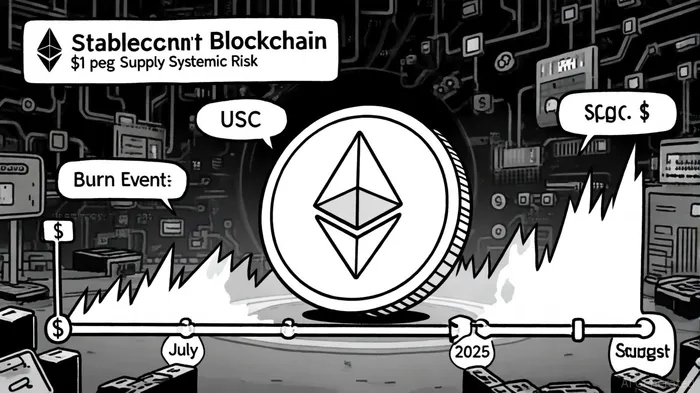
Circle's Treasury executed the burn at 13:52 Beijing time[1], removing $55 million from circulation. This action aligns with its strategy to adjust supply in response to demand, a practice reinforced by prior burns in July and August 2025[2]. According to a report by The Currency Analytics, such burns are standard unless paired with large redemptions or off-peg events[3]. However, the scale of the burn—nearly 0.05% of USDC's total supply—highlights the growing pressure on stablecoin issuers to manage liquidity amid regulatory scrutiny and market volatility[4].
The immediate impact on DeFi was minimal, with no significant disruptions observed in liquidity pools or lending platforms[1]. Yet, this outcome masks deeper vulnerabilities. As noted in a 2025 risk assessment by Elliptic, stablecoin stability is not inherent but “an emergent and fragile state” reliant on sustained market confidence[5]. Technical risks—such as smart contract failures or oracle manipulation—and economic risks like liquidity crunches remain ever-present[5].
Systemic Implications: The Domino Effect of Stablecoin Adjustments
The USDC burn event, while routine, reveals systemic interdependencies within the crypto-asset ecosystem. A study published in MDPI maps how adverse tail events—such as the Terra/Luna collapse or USDC depegging—can propagate risks across interconnected assets[6]. For instance, Ethereum (ETH), ChainlinkLINK-- (LINK), and UniswapUNI-- (UNI) often act as “systemic risk transmitters” during downturns, while stablecoins like DAIDAI-- may absorb stress[6].
The Stablecoin LEGO framework, a 2025 academic analysis, further illustrates this fragility. It argues that stablecoin designs incorporating lessons from past crises (e.g., algorithmic mechanisms, reserve transparency) correlate with lower assessed risk[7]. Circle's burns, by reinforcing the $1 peg through supply adjustments, exemplify this proactive approach. Yet, the framework also warns that systemic risk intensifies during macroeconomic shocks, such as the September 2025 crypto crash, where leverage-driven liquidations cascaded across markets[8].
Regulatory Overhang: Tariffs, Compliance, and the Future of Stablecoin Sovereignty
Regulatory responses to stablecoin supply chain adjustments are reshaping the landscape. The U.S. government's 2025 tariff policies—targeting imports from China, Canada, and Mexico—reflect a broader push to strengthen domestic supply chains[9]. While these policies primarily affect traditional trade, they signal a regulatory environment increasingly focused on systemic resilience. For stablecoins, this means heightened scrutiny over reserve transparency and cross-border compliance[10].
Circle's burns, though transparent, must now navigate a regulatory maze. As The Standard notes, the “battle for stablecoin sovereignty” in 2025 hinges on balancing innovation with compliance. Stricter rules could force stablecoin issuers to adopt more conservative supply management strategies, potentially limiting DeFi's liquidity and flexibility.
Conclusion: Building Resilience in a Fractured Ecosystem
Circle's 55 million USDC burn is a microcosm of the broader challenges facing stablecoins and DeFi. While the event reinforced the $1 peg and demonstrated DeFi's adaptability[3], it also exposed the ecosystem's reliance on centralized governance and regulatory goodwill. Investors must weigh these risks against the potential for innovation.
The path forward lies in hybrid models that combine algorithmic mechanisms with transparent reserves, as well as regulatory frameworks that address cross-sectoral dependencies[7]. As the crypto market matures, the line between stablecoin stability and systemic risk will blur further—forcing both issuers and users to prioritize resilience over short-term gains.






Comentarios
Aún no hay comentarios