
Stablecoin Rewards Spark Washington Power Struggle Over Future of Dollar
The U.S. stablecoin market is under scrutiny as regulators, banks, and crypto companies clash over the incentives offered to users through yield-based rewards. A coalition of community banks has urged Congress to amend the GENIUS Act, arguing that indirect yield incentives from digital asset exchanges undermine the intent of the law according to reports. The provision, designed to prevent stablecoin issuers from paying interest directly, has been circumvented by platforms like CoinbaseCOIN-- and Kraken, which offer rewards to tokenholders through third-party services as reported.
Banks warn that this practice could draw deposits away from traditional institutions, weakening local lending and community banking. The Community Bankers Council of the American Bankers Association emphasized that exchanges are not equipped to replace banks in lending or offer federally insured accounts according to the council.
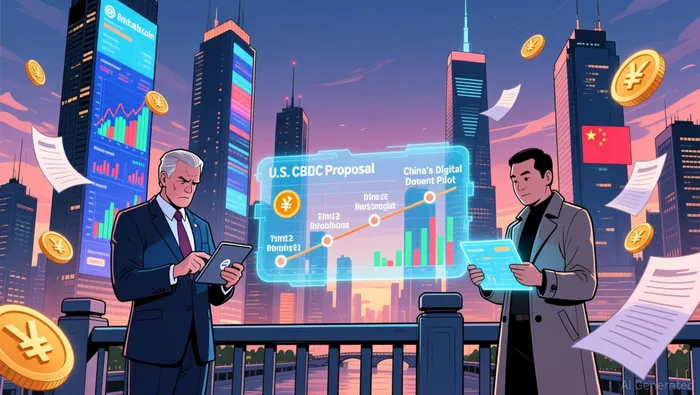
Meanwhile, crypto firms and their allies argue that these restrictions threaten the U.S. dollar's dominance in global finance. Coinbase policy chief Faryar Shirzad warned that limiting rewards could give non-U.S. stablecoins and CBDCs an edge, especially as China introduces interest-bearing features for its digital yuan as analysis shows. The move comes as the U.S. seeks to solidify its digital asset framework through the GENIUS Act and broader market structure legislation according to reports.
Why Did This Happen?
The debate centers on the GENIUS Act's ban on direct interest payments to stablecoin holders. While the law explicitly prohibits this, it allows third-party platforms to offer rewards tied to stablecoin usage. This loophole has been exploited by crypto exchanges to attract and retain users as observed.
Community banks, however, argue that these rewards erode the competitive position of traditional financial institutions. They warn that as more users shift to high-yield stablecoin options, the ability of local banks to lend and support small businesses and households will diminish according to community bankers.
How Did Markets React?
Crypto platforms, particularly Coinbase and Kraken, have positioned themselves as champions of financial innovation, arguing that rewards are essential for onchain adoption and user growth as reported. Coinbase CEO Brian Armstrong outlined ambitious plans for 2026, including scaling stablecoin usage and expanding infrastructure for global payments according to CEO statements.
At the same time, traditional banks and industry groups have pushed back. The Community Bankers Council has called for tighter restrictions, urging lawmakers to close the loophole in the GENIUS Act to prevent exchanges from offering yield incentives as stated.
The People's Bank of China's decision to pay interest on digital yuan holdings has added urgency to the U.S. policy debate. As global competitors refine their CBDC strategies, U.S. policymakers face pressure to ensure the dollar's continued primacy in the digital economy according to analysis.
What Are Analysts Watching Next?
Industry observers are closely monitoring how the Senate's market structure bill will address the issue. Some crypto advocates have warned that overly restrictive measures could weaken the U.S. position in the global stablecoin race and stifle innovation as reported.
Meanwhile, banks argue that the current framework puts them at risk. They fear that without stronger regulations, they will struggle to compete with high-yield stablecoin options that offer faster access to returns according to industry analysis.
The outcome of these debates could shape the future of digital finance in the U.S. and beyond. With regulatory clarity still evolving, market participants are watching for signals on whether Washington will prioritize innovation, competition, or stability as noted.
In the meantime, crypto platforms like Coinbase continue to push forward with expansion plans, while banks and policymakers work to define the boundaries of a new financial ecosystem.





Comentarios
Aún no hay comentarios