
Stablecoin Resilience and the Tether-S&P Ratings Saga: Assessing Liquidity Risk and Market Stability in a Post-Downgrade Era
The Tether-S&P Downgrade: A Closer Look
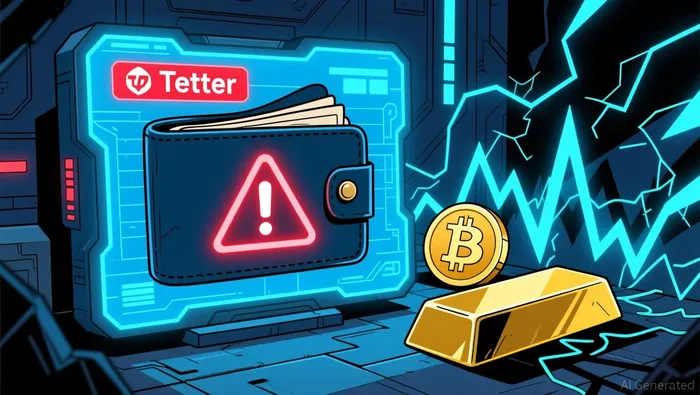 S&P's downgrade of USDT to "5 (weak)" underscores a critical shift in risk perception. The agency cited Tether's growing exposure to high-risk assets, including BitcoinBTC-- (now 5.6% of reserves), gold, secured loans, and corporate bonds. These assets, unlike cash or U.S. Treasuries, introduce market and credit risks that could destabilize the stablecoin's 1:1 peg to the dollar if their values decline. Notably, Bitcoin's exposure exceeds the 3.9% overcollateralization threshold, meaning USDT's reserves may no longer fully absorb potential losses. S&P also highlighted persistent gaps in Tether's disclosure practices, including limited transparency about the creditworthiness of custodians and liquidity providers.
Tether has pushed back, emphasizing its historical resilience during financial crises and asserting that it has never refused a redemption request from verified users. CEO Paolo Ardoino criticized S&P's rating model as outdated for digital assets, while the company highlighted its gold holdings-now the largest independent gold reserve globally-as a buffer against volatility. However, these arguments may not fully address the systemic risks posed by opaque reserve management and the lack of asset segregation, which S&P explicitly flagged as vulnerabilities.
Liquidity Risk and the Stablecoin Hierarchy
The downgrade has intensified scrutiny of stablecoin liquidity risk, particularly in comparison to peers like USDCUSDC-- (issued by Circle) and Binance USD (BUSD). USDC, for instance, maintains a stronger regulatory profile, with monthly audits and full reserve backing by cash and U.S. Treasuries. This transparency has positioned USDC as a safer alternative for investors wary of Tether's opaque practices. Conversely, Binance USD faces regulatory headwinds due to its association with Binance and limited disclosure about its reserves.
The divergence in risk profiles highlights a broader trend: stablecoins with robust governance and compliance frameworks are gaining traction amid heightened regulatory expectations. For example, the European Union's Markets in Crypto-Assets (MiCA) regulations and the U.S. SEC's enforcement actions increasingly demand 1:1 reserve backing and real-time transparency. These standards, while costly for smaller issuers, may accelerate consolidation in the stablecoin market, favoring entities that align with traditional financial norms.
Regulatory Responses and Systemic Implications
The downgrade has also amplified calls for stricter stablecoin oversight. In the U.S., the Treasury's implementation of the GENIUS Act-aimed at treating stablecoins as regulated payment instruments-has closed its public comment period, signaling a legislative push to close regulatory arbitrage. The act's prohibition on interest payments and emphasis on consumer protections reflect concerns about stablecoin misuse and systemic risk. Similarly, the European Banking Authority (EBA) has reiterated that existing MiCA rules provide liquidity buffers to manage redemption risks, but the European Systemic Risk Board (ESRB) has warned of potential instability from multi-issuance models.
These regulatory efforts are not without challenges. For instance, the ESRB has noted that a redemption rush by non-EU holders of EU-issued stablecoins could strain liquidity buffers, particularly if reserves are not geographically diversified. Meanwhile, the SEC's focus on collateral standards has forced issuers to reevaluate reserve composition, with some shifting toward safer assets like short-term Treasuries.
Investor Behavior and Market Stability
According to Reuters, capital is flowing toward compliant stablecoins as market participants seek safer assets amid volatility. However, the stablecoin market cap has declined by $4.54 billion in November 2025, marking its first monthly drop in over two years. This decline, while modest, raises questions about the sustainability of the "flight to safety" narrative, particularly as stablecoins remain integral to 80% of crypto trading volume.
Regulatory clarity, such as MiCA's rulebook and the GENIUS Act, has bolstered investor confidence to some extent. Yet, the rapid expansion of stablecoins-now exceeding $300 billion in market capitalization-has drawn warnings from central banks about their potential to disrupt traditional financial systems. The ECB, for instance, has flagged rising risks from stablecoin integration with legacy markets, including contagion effects during periods of stress.
Conclusion: A New Era for Stablecoin Governance
The Tether-S&P downgrade marks a pivotal moment in the evolution of stablecoin governance. While Tether's market dominance remains intact, the downgrade has exposed vulnerabilities in its reserve management and transparency practices. For investors, the incident underscores the importance of due diligence in assessing stablecoin risk profiles. For regulators, it highlights the urgency of harmonizing global standards to mitigate systemic threats.
As the industry navigates this transition, the coming months will likely see a bifurcation in the stablecoin market: those adhering to stringent regulatory and transparency benchmarks will thrive, while those lagging in compliance may face declining adoption. In this context, the resilience of stablecoins will not be measured by their market capitalization alone but by their ability to align with the evolving demands of a post-downgrade era.






Comentarios
Aún no hay comentarios