
Stablecoin Regulatory Risk and Investment Implications: Tether's $300M Celsius Settlement as a Case Study
The Tether-Celsius legal saga, culminating in a $299.5 million settlement in October 2025, has crystallized a pivotal moment for the stablecoin sector. This resolution, while a fraction of the $4.5 billion in claims originally sought by Celsius, underscores the growing legal and regulatory exposure faced by stablecoin issuers. For investors, the case raises critical questions about liability frameworks, compliance costs, and the long-term viability of stablecoins in a rapidly evolving regulatory landscape.
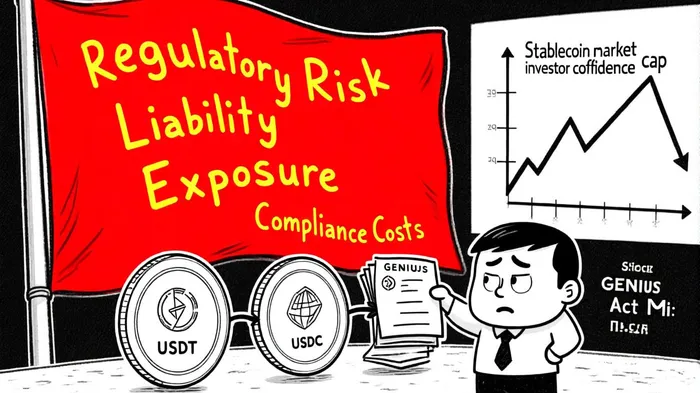
The Legal Dispute: A Blueprint for Liability?
The core of the Tether-Celsius dispute centered on the liquidation of 39,542 BitcoinBTC-- units in late 2022. Celsius argued that TetherUSDT-- violated a lending agreement by failing to provide the required 10-hour notice before liquidating collateral, a breach that exacerbated Celsius's insolvency[1]. Tether countered that it acted lawfully under a 2022 agreement requiring Celsius to post additional collateral as Bitcoin prices fell[2]. The settlement, facilitated by the Blockchain Recovery Investment Consortium (BRIC), resolved these claims without an admission of wrongdoing but signaled a shift in how courts might assess stablecoin behavior in insolvency scenarios[3].
This case highlights a broader tension: stablecoin issuers like Tether have long positioned themselves as neutral intermediaries, but the settlement suggests courts may now scrutinize their actions as active counterparties in distressed markets. Legal experts warn that this precedent could expand liability beyond transactional neutrality, requiring issuers to adopt fiduciary-like obligations[4].
Regulatory Frameworks: From GENIUS to Global Coordination
The U.S. GENIUS Act, enacted in July 2025, represents a watershed for stablecoin regulation. By mandating 1:1 reserves in safe assets like U.S. Treasuries and imposing stringent audit requirements, the law aims to mitigate systemic risks[5]. However, the Tether-Celsius settlement reveals gaps in these frameworks. For instance, the GENIUS Act focuses on reserve composition but does not explicitly address liability for collateral management practices in insolvency. This omission leaves room for regulatory arbitrage, particularly for issuers operating in jurisdictions with weaker oversight[6].
Globally, the EU's Markets in Crypto-Assets (MiCA) regulation and Hong Kong's Stablecoin Ordinance have introduced similar reserve and transparency requirements[7]. Yet, the lack of harmonization across jurisdictions creates compliance challenges for cross-border stablecoin projects. For investors, this fragmentation increases operational risk, as issuers may prioritize jurisdictions with laxer rules to minimize costs-a dynamic that could undermine market stability[8].
Investment Implications: Balancing Risk and Resilience
The Tether-Celsius settlement has immediate and long-term implications for stablecoin investors. In the short term, the resolution removes a significant legal overhang for Tether, potentially stabilizing confidence in USDTUSDT--. However, the settlement also signals a broader trend: regulators and courts are increasingly treating stablecoin issuers as systemically important entities. This shift could drive up compliance costs, reducing profit margins for smaller players and consolidating market share among well-capitalized issuers like Tether and Circle[9].
For institutional investors, the case underscores the need to reassess stablecoin risk profiles. While fiat-backed stablecoins (e.g., USDC) remain relatively safe under current regulations, crypto-collateralized models (e.g., DAI) face heightened scrutiny due to their exposure to volatile assets[10]. Additionally, the settlement highlights the importance of liquidity management. Investors should prioritize stablecoins with transparent reserve audits and diversified collateral pools to mitigate insolvency risks.
Strategic Adjustments in the Sector
The settlement has already prompted strategic shifts in the stablecoin sector. Issuers are accelerating transparency initiatives, such as real-time reserve disclosures and third-party audits, to preempt regulatory action. Meanwhile, the rise of interest-bearing stablecoins (e.g., sUSD) reflects a push to generate yield while complying with reserve requirements-a trend that could reshape the sector's economics.
However, challenges persist. The privatization of seigniorage through stablecoins risks destabilizing traditional banking systems, as noted by the IMF. For investors, this dynamic raises concerns about regulatory backlash, particularly if stablecoins are perceived as undermining monetary policy. The Federal Reserve's acknowledgment of stablecoins as a tool for financial inclusion in high-inflation regions offers a counterpoint, but systemic risks remain.
Conclusion: A New Era of Accountability
The Tether-Celsius settlement is more than a legal resolution-it is a harbinger of a new era for stablecoin regulation. As courts and regulators grapple with the sector's systemic importance, investors must navigate a landscape where compliance costs, liability exposure, and market dynamics are inextricably linked. While the GENIUS Act and similar frameworks provide a foundation for stability, the Tether-Celsius case demonstrates that regulatory clarity is still evolving. For now, investors should adopt a cautious, diversified approach, prioritizing stablecoins with robust governance and transparent operations.






Comentarios
Aún no hay comentarios