
Stablecoin Growth and Systemic Risk: Implications for Global Interest Rates and Inflation
The Unstoppable Rise of Stablecoins
Stablecoins, particularly those pegged to the U.S. dollar, have become the backbone of the crypto ecosystem. By Q4 2025, they accounted for 30% of on-chain transaction volume, with an annualized transaction value exceeding $4 trillion. TetherUSDT-- (USDT) and USD Coin (USDC) dominate 93% of market capitalization, their growth fueled by regulatory clarity in the U.S. (GENIUS Act), Hong Kong, and the EU's MiCA framework. Meanwhile, tokenized cash and blockchain infrastructure have made stablecoins a preferred medium for remittances and liquidity management, even as they process less than 1% of global daily money transfers.
This expansion is notNOT-- merely speculative. McKinsey notes that stablecoin transaction volumes have grown by an order of magnitude over four years. If this trajectory continues, stablecoins could surpass legacy payment systems in less than a decade. Yet, their rise has outpaced the regulatory and policy frameworks designed to manage their risks.
Systemic Risks: A New Transmission Channel
The Reserve Bank of India (RBI) has sounded the alarm, warning that stablecoins could undermine monetary policy, circumvent capital controls, and destabilize global financial systems. The interconnectedness of DeFi and traditional finance has introduced vulnerabilities such as liquidity mismatches, leverage risks, and operational fragilities. For instance, stablecoin issuers now hold significant short-dated U.S. Treasuries to maintain their dollar peg. This creates a feedback loop: inflows drive down Treasury bill yields, while redemptions during crises could trigger volatility in short-term funding markets.
The Bank of England has taken a proactive stance, imposing temporary holding caps (e.g., £20,000 for individuals, £10 million for businesses) and requiring stablecoin reserves to include 60% in UK government debt. These measures aim to mitigate liquidity risks during financial stress but also signal a broader recognition of stablecoins as a systemic threat. Meanwhile, the G20 has emphasized the need for global standards to monitor crypto risks, particularly in developing economies where dollar-backed tokens could bypass local financial systems.
Central Banks on the Brink of Policy Pivots
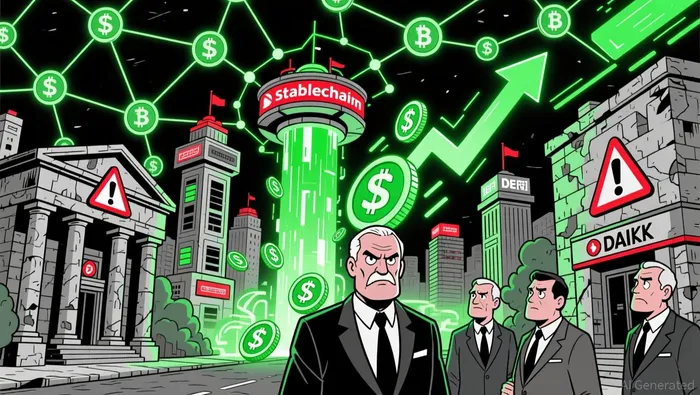 The Federal Reserve's recent caution reflects the growing tension between stablecoin-driven market shifts and traditional monetary policy. Despite inflation remaining above 2%, Fed officials like Susan Collins argue that the current "mildly restrictive" policy stance is appropriate, even as stablecoin adoption complicates the transmission of rate changes. The Fed's dual mandate-price stability and maximum employment-is now strained by the reality that stablecoins could erode the effectiveness of interest rate adjustments. For example, if dollar-backed stablecoins become a dominant medium for cross-border transactions, central banks in other jurisdictions may lose control over their own monetary policies.
This dynamic is not hypothetical. Brookings highlights how stablecoin demand for U.S. Treasuries could reshape Treasury markets, introducing currency substitution effects and regulatory arbitrage. In emerging markets, where stablecoins might replace local currencies for remittances or savings, central banks could face abrupt capital outflows, forcing emergency rate hikes or currency interventions. Egypt's recent decision to hold interest rates amid inflationary pressures illustrates the global trend of central banks adopting a "wait-and-see" approach.
The Unseen Cost of Stability
For investors, the implications are clear: stablecoins are not just a technological innovation but a macroeconomic wildcard. Their growth has created a new transmission mechanism for systemic risk-one that could force central banks into abrupt policy pivots. The Bank of England's holding caps and reserve requirements and the Fed's reluctance to cut rates are early signals of this reality. However, as TD Economics notes, regulatory frameworks remain untested in crisis scenarios. If trust in stablecoins falters, redemptions could trigger liquidity crises akin to bank runs, compounding the need for emergency policy responses.
Conclusion
The U.S. dollar stablecoin boom has outpaced the ability of policymakers to manage its risks. While these tokens offer efficiency and scalability, their systemic implications-ranging from Treasury market distortions to policy incoherence-pose a growing threat to global financial stability. For investors, the key takeaway is that stablecoins are not immune to macroeconomic forces; rather, they amplify them. As central banks grapple with the need for agility in an increasingly tokenized world, the risk of abrupt policy pivots-whether through rate hikes, regulatory crackdowns, or liquidity interventions-will only intensify. The question is no longer whether stablecoins matter, but how quickly the world will adapt to their disruptive potential.






Comentarios
Aún no hay comentarios