
Stablecoin Governance and Systemic Risk: Navigating the Digital Asset Ecosystem's Crossroads
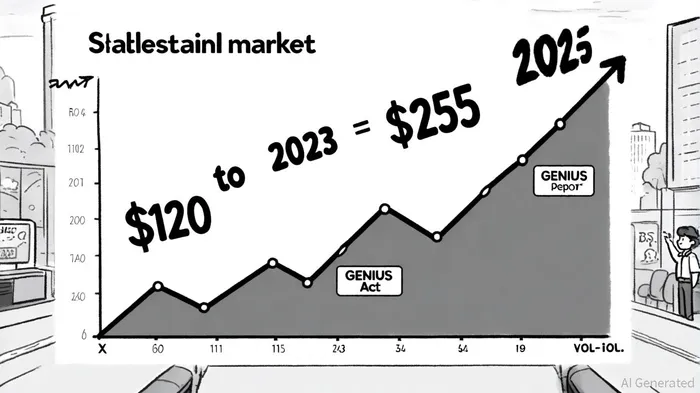
The digital asset ecosystem has reached a critical inflection point. Stablecoins, now valued at over $255 billion, according to an Elliptic guide, are no longer niche instruments but foundational pillars of global finance. Yet their rapid growth has exposed systemic vulnerabilities that threaten to destabilize both crypto and traditional markets. From the 2023 depeg of USDCUSDC-- to the collapse of algorithmic stablecoins like TerraUSD (UST), the risks of poor governance and inadequate oversight are stark. This article examines how stablecoin governance models-reserve-backed versus algorithmic-shape systemic risk and evaluates the evolving regulatory landscape aimed at mitigating these threats.
Systemic Risks: From "Bank Runs" to Monetary Substitution
Stablecoins operate in a gray space between money and technology, inheriting risks from both domains. The 2023 USDC crisis, where the tokenAUCTION-- dropped to 81.5 cents after Circle's $3.3 billion in reserves were tied to the failing Silicon Valley Bank, exemplifies the fragility of reserve management, as highlighted in a Bloomberg analysis. This event mirrored traditional bank runs, where sudden redemptions force liquidation of illiquid assets, creating cascading effects across financial markets. Bloomberg also warned that such scenarios could destabilize Treasury markets if repeated, given stablecoins' growing scale.
Beyond liquidity risks, stablecoins pose structural challenges to monetary policy. In economies with weak macroeconomic fundamentals, dollar-pegged stablecoins enable currency substitution, bypassing local central banks' control over interest rates, a point underscored in a CryptoNews article. The IMF has warned that this could erode monetary sovereignty, while the Bank for International Settlements (BIS) argues stablecoins fail key tests of "sound money," including elasticity and integrity. These risks are compounded by the potential for "credit disintermediation," where users shift deposits from banks to stablecoins, reducing credit availability and undermining traditional financial systems.
Governance Models: Reserve-Backed vs. Algorithmic
The governance structure of a stablecoin determines its resilience to systemic shocks. Reserve-backed models, such as TetherUSDT-- (USDT) and USD Coin (USDC), maintain value by holding assets like cash or Treasuries. However, transparency in reserve composition remains a contentious issue. The Wolfsberg Group, a consortium of global banks, has emphasized the need for consistent oversight to ensure reserves are both liquid and risk-managed, as noted in an SEC statement.
Algorithmic stablecoins, by contrast, rely on smart contracts to adjust supply and maintain pegs without equivalent reserves. The 2022 collapse of UST-a purely algorithmic model-highlighted the dangers of this approach. Post-crisis innovations, such as hybrid models (e.g., Frax's partial collateralization), aim to balance decentralization with stability; the Elliptic guide likewise emphasizes that hybrid systems require robust governance frameworks, including liquidity buffers and conservative algorithmic parameters, to avoid depegs during market stress.
Regulatory Tailwinds: The GENIUS Act and Global Frameworks
The U.S. response to these risks crystallized in 2025 with the passage of the GENIUS Act, mandating 1:1 reserve backing in high-quality assets, monthly audits, and strict AML/KYC compliance, according to a Skadden analysis. This legislation, coupled with the SEC's clarification that utility-focused stablecoins are notNOT-- securities (per the SEC statement), has provided much-needed clarity for issuers. Globally, the EU's MiCA framework and Asia's pilot programs (e.g., Singapore, Hong Kong) have further legitimized stablecoins as mainstream financial tools.
However, regulatory gaps persist. The BIS cautions that state-issued stablecoins, like Wyoming's Frontier Stable Token (FRNT), could fragment oversight if not aligned with federal standards. Meanwhile, the exclusion of interest-bearing stablecoins from the GENIUS Act raises questions about long-term stability, as yield-generating models may reintroduce systemic risks through complex derivatives or leverage, a point raised in the Elliptic guide.
Conclusion: Governance as a Systemic Safeguard
Stablecoins are here to stay, but their role in the global financial system hinges on governance. Reserve-backed models, when transparently managed, offer a path to stability, while algorithmic designs require stringent risk controls to avoid repeating past failures. Regulators have made strides in closing loopholes, yet challenges remain in harmonizing cross-border frameworks and addressing monetary sovereignty concerns. For investors, the lesson is clear: stablecoins are not risk-free. Their systemic impact demands continuous scrutiny, robust audits, and a governance-first approach to ensure they serve as bridges-rather than cracks-in the financial ecosystem.







Comentarios
Aún no hay comentarios