
Stablecoin-Centric Blockchains: Pioneering a New Era in Payments and DeFi
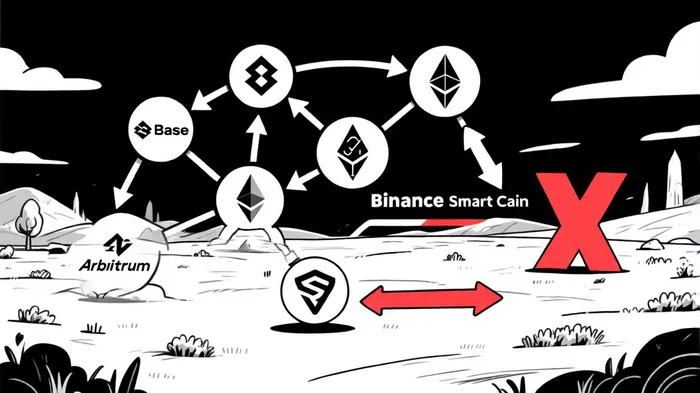
In 2025, stablecoin-centric blockchains are no longer a niche experiment but a transformative force in global finance. These networks, anchored by dollar-pegged tokens like USDCUSDC-- and USDTUSDT--, are redefining how value is transferred, stored, and utilized. With EthereumETH-- maintaining a 70% share of the stablecoin market cap and Base surging to 5.6% through rapid USDC adoption, according to a CoinLaw report, the infrastructure for programmable money is maturing. This shift is notNOT-- merely speculative-it is driven by concrete demand for faster, cheaper, and more flexible financial tools, particularly in cross-border payments and decentralized finance (DeFi).
Disrupting Traditional Payment Systems: Speed, Cost, and Scalability
Stablecoins are outpacing legacy systems in critical metrics. For cross-border transactions, stablecoins settle in 2–5 minutes, compared to SWIFT's average 2.3 days, as shown in Demystifying Global Payouts. Transaction fees are equally compelling: stablecoins average 0.2–0.5%, versus 3–3.4% for traditional retail transfers, findings also highlighted in that study. These advantages are most pronounced in emerging markets, where platforms like Bitso and Conduit leverage stablecoins to deliver near-instant remittances at a fraction of the cost, according to USDC use cases.
Traditional payment giants are taking notice. VisaV-- and MastercardMA-- have integrated stablecoin capabilities, enabling users to spend digital assets like cash according to a Cryptowisser guide. Meanwhile, JPMorgan and Deutsche Bank are experimenting with blockchain-based solutions to bridge stablecoins with legacy systems, as reported in a Forbes piece. Despite this, stablecoins still represent less than 1% of global money flows, but their growth trajectory is staggering. Transaction volumes hit $29.4 billion in 2024 and are projected to exceed $78.6 billion by 2028, according to the Demystifying Global Payouts study.
Building the DeFi Infrastructure of Tomorrow
Stablecoins are the backbone of DeFi's evolution. In 2025, decentralized protocols like KernelDAOKERNEL-- and dYdXDYDX-- have leveraged stablecoins to automate lending, trading, and yield generation. KernelDAO, with $2 billion in TVL, allows staked assets to be repurposed for multiple reward streams, while dYdX's trustless trading platform supports perpetual contracts and liquid staking, as noted in a BeinCrypto list.
Programmable stablecoins, enabled by frameworks like the U.S. GENIUS Act, are unlocking new use cases. Smart contracts now automate interest distribution, conditional payments, and escrow services, reducing operational overhead for businesses. For instance, e-commerce platforms are adopting stablecoin APIs to cut fraud risks and transaction costs, as described in a TransFi blog, while payroll systems use them for real-time cross-border settlements per USDC use cases.
The data is clear: stablecoin-powered DeFi activity reached $60 billion in 2025, with Ethereum hosting $161 billion in stablecoin transactions, according to a Transak report. USDC, with a 56.7% institutional adoption rate, has become the preferred asset for yield generation, outpacing even USDT in regulatory clarity, according to a Stablecoin Insider report.
Regulatory Clarity and the Road Ahead
The U.S. GENIUS Act has been pivotal in legitimizing stablecoins as infrastructure. By providing a federal framework, it has spurred institutional participation, with JPMorgan and BlackRock expanding stablecoin offerings, as noted in a PANews report. However, challenges persist. Transparency concerns, particularly around Tether's reserves, and competition from CBDCs remain hurdles highlighted by PANews.
Emerging chains like SolanaSOL-- and Base are also reshaping the landscape. Solana's low fees and high throughput attract stablecoin deployments, while Base's Ethereum compatibility and rapid USDC growth position it as a key player, according to a CoinDesk report. Together, these chains highlight the scalability and interoperability needed for mass adoption.
Conclusion: A Paradigm Shift in Financial Infrastructure
Stablecoin-centric blockchains are not just competing with traditional systems-they are redefining them. By 2025, they have proven their ability to deliver real-time settlements, programmable money, and institutional-grade security. As transaction volumes surge and regulatory frameworks solidify, the next decade will likely see stablecoins become a cornerstone of global finance. For investors, the opportunity lies not in the tokens themselves but in the infrastructure-blockchains, protocols, and APIs-that enable this transformation.





Comentarios
Aún no hay comentarios