
Stablecoin Adoption in Southeast Asia: A Fintech Gold Rush for Retail Payments
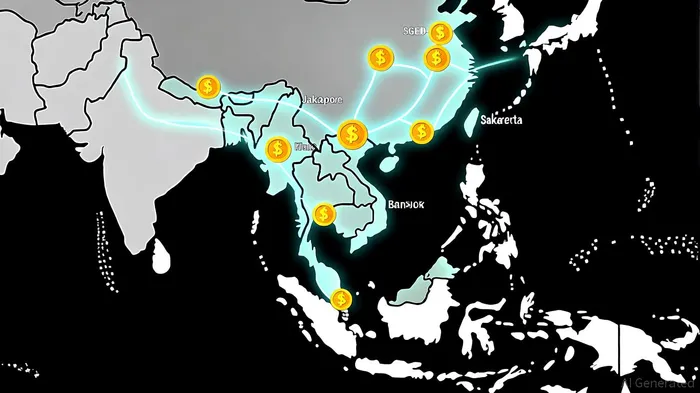
The fintech revolution in Southeast Asia is accelerating, and stablecoins are at its core. As of Q3 2025, 56% of regional businesses are already leveraging stablecoins for payments, with another 46% planning adoption within two years, according to a Stripe report. This surge is driven by a unique confluence of regulatory innovation, cross-border trade demands, and financial inclusion imperatives. For investors, the region's stablecoin ecosystem represents a high-conviction opportunity in the global digital asset landscape.
Regulatory Frameworks: A Tale of Two Approaches
Singapore has emerged as the gold standard for stablecoin regulation. The Monetary Authority of Singapore (MAS) enforces a 100% reserve requirement for SGD-pegged stablecoins, mandates redemption at par within five business days, and requires stringent audits, according to a Linklaters update. These rules have created a trusted environment for projects like XSGD, which dominates 70.1% of non-USD stablecoin transaction volume in the region, according to a Gate report. By contrast, Hong Kong's licensing regime, effective since August 2025, prioritizes controlled innovation, limiting licenses to a small cohort of issuers while enforcing anti-money laundering (AML) compliance, per a Linklaters September update.
Meanwhile, China and India remain outliers. Beijing's Digital Currency Electronic Payment (DCEP) system has marginalized private stablecoins, while India's central bank advocates for a ban on foreign-pegged stablecoins, according to a Fintech News report. This regulatory fragmentation creates both risks and opportunities: investors must navigate divergent policies but can capitalize on innovation in Singapore and Hong Kong while monitoring sandboxes in Indonesia and Malaysia, the Gate report notes.
Use Cases: Beyond Cross-Border Payments
Stablecoins are no longer just a tool for speculative trading. In Southeast Asia, they are reshaping retail payments. For instance, 43% of B2B cross-border transactions now use stablecoins, with the Singapore-China corridor leading in volume, Fintech News reports. The programmability of stablecoins also enables novel applications: remittances via super-app wallets like GoPay and MoMo now cost less than 1% of transaction value, compared to traditional remittance services averaging 6–7%, Gate's Q2 2025 report shows.
Financial inclusion is another driver. With 260 million unbanked individuals in the region, stablecoins integrated into mobile wallets are enabling microtransactions and low-cost access to credit, the Gate report finds. For example, Polygon and Binance Smart Chain host over 10,000 active transacting addresses in Q2 2025, demonstrating grassroots adoption, the Linklaters update notes.
Challenges and Risks
Despite the optimism, hurdles persist. Regulatory fragmentation could stifle interoperability, while currency volatility in emerging markets like Indonesia (IDR-pegged stablecoins account for 20.3% of transactions, the Linklaters update reports) introduces macroeconomic risks. Additionally, the decline in decentralized exchange (DEX) trading volume by 66% in Q2 2025 suggests caution among retail investors, according to the Linklaters update.
However, these challenges are not insurmountable. Singapore's Project Guardian, which explores tokenizing financial assets, and Japan's classification of stablecoins as “digital money” under strict licensing rules, the Gate report indicates, point to a path toward institutional adoption. For investors, the key is to focus on projects with robust reserve backing and regulatory alignment.
Investment Thesis
Southeast Asia's stablecoin market is a $100 billion+ opportunity. With transaction volumes exceeding $1 million annually since 2020, the Gate report finds, and 8 active projects in 2025 (up from 2 in 2020, per the same report), the region is outpacing global peers. Investors should prioritize:
1. Regulated Issuers: XSGD and other SGD-pegged stablecoins with MAS approval.
2. Infrastructure Providers: Blockchain platforms like AvalancheAVAX-- and Binance Smart Chain, which host 70% of the region's stablecoin activity, the Linklaters update estimates.
3. Cross-Border Payment Firms: Startups leveraging stablecoins for B2B and remittance services.
The risks are real, but so is the potential. As stablecoins bridge the gap between traditional finance and Web3, Southeast Asia's fintech ecosystem offers a rare combination of regulatory clarity, technological innovation, and unmet demand. For those willing to navigate the complexities, the rewards could be transformative.







Comentarios
Aún no hay comentarios