
SQM's Layoffs Signal a New Era in Lithium: Navigating the Storm or Heading for a Crash?
The lithium market is in turmoil, and SQMSQM--, one of the world's largest lithium producers, is making drastic moves to survive. Earlier this year, the Chilean miner announced layoffs of 5% of its local workforce, a stark acknowledgment of the structural challenges plaguing the sector. As lithium prices plummet to four-year lows—now hovering around $35,000 per ton—SQM's strategy of cutting costs while doubling down on production expansion has raised critical questions: Can the company navigate this oversupply crisis? And is its stock a contrarian buy, or a trap for the unwary?
The Layoff Trade-Off: Cost Cuts vs. Capacity Risks
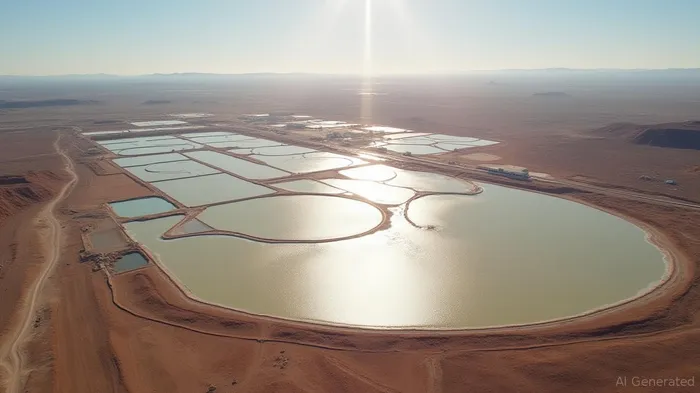
SQM's layoffs are part of a broader cost-cutting push to offset the 90% lithium price collapse since late 2022. CEO Ricardo Ramos has emphasized that slashing expenses is essential to weather the storm, but this comes with risks. While trimming 5% of its workforce may lower operational costs, it could also delay critical projects or compromise the efficiency of its sprawling operations in Chile's Atacama Desert, the world's lithium breadbasket.
The company's operational costs are already a key competitive advantage, but sustaining them amid further price declines hinges on two factors:
1. Execution of the $750M Capex Plan: SQM is investing heavily in infrastructure, including a seawater pipeline in Chile and the Mount Holland hydroxide refinery in Australia. These projects aim to cut reliance on brine reserves and boost production to 240,000 metric tons of lithium carbonate and 100,000 of hydroxide by .
2. Lithium Demand Growth: SQM is betting on 17% annual EV demand growth to eventually outpace oversupply. However, with competitors like AlbemarleALB-- and Pilbara Minerals also ramping up capacity, the market could remain flooded well into 2026.
The Lithium Market's Structural Crisis
The lithium sector's woes are systemic. A surge in global production—from Australia's Greenbushes mine to Africa's new brine projects—has created a supply glut, overwhelming demand growth. SQM's Q1 2025 lithium sales volumes rose 27% year-on-year to 55,000 metric tons, but stagnant prices compressed margins to 29.4%, down from 34% in 2024.
The problem? Demand is not keeping pace. EV adoption in China, the sector's engine, slowed in early 2025 due to price wars and battery supply chain bottlenecks. Meanwhile, energy storage demand, once seen as a lithium lifeline, faces cost-conscious buyers and competing battery chemistries.
Iodine: SQM's Hidden Anchor
While lithium's volatility dominates headlines, SQM's iodine division provides a critical buffer. Iodine, used in healthcare, agriculture, and industrial applications, accounts for ~30% of global supply. Q1 2025 sales hit $255 million—a 6.2% rise—thanks to record prices of $71.4/kg, driven by constrained supply and steady 1-2% annual demand growth.
This stability is vital. Iodine's margins remain robust even as lithium struggles, and its seawater pipeline project—set to boost iodine production by 2026—will further lock in SQM's dominance. Yet investors must ask: Can iodine's steady cash flow offset lithium's long tail of oversupply?
The Investment Case: Contrarian Play or Fool's Gold?
SQM's stock trades at a 13.5x forward EV/EBITDA, a discount to its five-year average of 16.2x. This valuation reflects near-term lithium headwinds but also a bet on a 2026 price rebound, as Ramos predicts. Key triggers for a buy signal include:
- Lithium prices stabilizing above $40,000/ton, signaling demand-supply balance.
- Q2 earnings beats due to cost savings and iodine's strong performance.
- Regulatory green lights for its Codelco partnership in Atacama, unlocking access to the world's richest lithium brines.
However, risks loom large. A prolonged lithium slump—driven by EV adoption delays or further supply shocks—could force SQM to slash capex or dilute shareholders. Competitors may also undercut prices to survive, squeezing SQM's margins further.
Historically, SQM has shown a strong response to positive earnings surprises, averaging 7.5% returns over 60 trading days following such events. This suggests that earnings beats could be a reliable signal for short-term gains, though investors should note potential post-earnings volatility and broader market headwinds.
Final Verdict: A Long-Term Bet on Lithium's Future
SQM is playing a high-stakes game of endurance. Its cost discipline and production expansion aim to lock in dominance when lithium's cycle turns, but the path is littered with potholes. For investors, this is not a short-term trade—it's a multi-year bet on EV adoption outpacing oversupply and SQM's ability to execute its strategy.
Buy Signal: Consider SQM if lithium prices stabilize above $40,000/ton by year-end and iodine's cash flow remains resilient.
Hold: Wait for clearer signs of demand recovery or cost-cutting success before committing capital.
Avoid: If SQM's capex projects face delays, or lithium prices dip further below $30,000/ton.
In a sector where structural challenges outweigh near-term optimism, SQM's fate hinges on whether its gamble on lithium's long-term growth can outweigh today's pain. The jury is still out—but the stakes couldn't be higher.





Comentarios
Aún no hay comentarios