
Sportsman's Warehouse: Can a 300% Rally Survive Overvaluation and Outdoor Retail Headwinds?
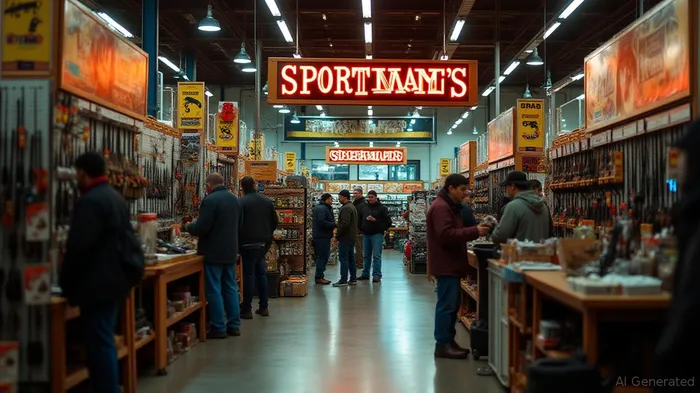
Sportsman's Warehouse Holdings (SPWH) has become one of the most polarizing stocks in the retail sector, surging 300% since early 2024 on hopes of a retail recovery. Yet beneath the rally lies a company grappling with declining sales, mounting losses, and a valuation that defies its fundamentals. Is this a contrarian opportunity or a trap for investors? Let's dissect the numbers.
The Valuation Conundrum: A Premium for Turnaround Hope?
The stock's meteoric rise has pushed its enterprise value/EBITDA (EV/EBITDA) ratio to 29.68, nearly triple the 10.21 industry median for cyclical retailers. This premium seems detached from SPWH's financial reality.
- Profitability Woes: SPWH reported a net loss of $18.1 million in Q1 2024, widening from $15.6 million in the prior year. Its trailing twelve-month EBITDA sits at just $22 million, while enterprise value is $657 million.
- Sales Slump: Net sales fell 8% year-over-year in Q1 2024, with same-store sales plunging 13.5%. Even category bright spots, like fishing gear (+10.3% in Q4 2024), couldn't offset declines in firearms and apparel.
- Cost Pressures: SG&A expenses remain stubbornly high at 38.7% of sales, despite cost-cutting measures.
The price-to-sales (P/S) ratio of 0.33 hints at skepticism about future revenue growth, but the EV/EBITDA spike suggests investors are pricing in a turnaround. GuruFocus's $4.53 “fair value” estimate (vs. a $3.69 stock price) leans bullish, but analysts' average $2.90 target reflects caution.
Competitive Positioning: Stuck in the Middle?
SPWH operates in a fragmented outdoor retail market dominated by giants like Academy Sports (ASO) and YETI (YETI). Its niche—specializing in firearms, camping, and fishing—faces two critical challenges:
- Category-Specific Risks:
- Firearms sales have been hit by trade-down effects as buyers opt for cheaper options amid inflation.
Apparel and footwear categories are shrinking, mirroring broader retail trends toward practicality over luxury.
Competitor Benchmarks:
- YETI's EV/EBITDA of 17.45 (as of 2024) and Academy's 9.47 reflect healthier profit margins and sales growth.
- SPWH's reliance on physical stores—compared to YETI's premium, brand-driven model—leaves it vulnerable to rising occupancy and labor costs.
SPWH's liquidity ($131 million) and reduced debt ($27 million paid down in 2024) offer a buffer, but its debt-to-equity ratio of 2.55 remains a liability.
Macro Risks: The Outdoor Retail Dilemma
The broader outdoor sector faces crosscurrents:
- Consumer Shifts: Casual products (e.g., camping gear) are outperforming technical gear, but SPWH's inventory focus on firearms and apparel risks misalignment.
- Inflation Lingering: Input costs for outdoor equipment remain elevated, squeezing margins.
- Recession Risks: Discretionary spending on hunting or camping gear could drop if unemployment rises.
The data shows footwear/accessories growth (+5% in 2024) but stagnation elsewhere. SPWH's inability to capitalize on this trend—due to weak apparel sales—highlights execution risks.
Investment Takeaways: Proceed with Caution
- Valuation Caution: The EV/EBITDA of 29.68 is unsustainable unless SPWH achieves a dramatic turnaround in profitability. Even a 20% sales rebound would need to coincide with cost discipline to justify this multiple.
- Bull Case: If the company can stabilize same-store sales, reduce SG&A, and pivot toward high-margin categories like fishing and camping, the stock could hold value.
- Bear Case: A prolonged sales slump, rising debt costs, or further margin erosion could force a reckoning.
Actionable Advice:
- Hold for now: The stock's 300% rally has priced in optimism, but short-term volatility is likely.
- Avoid buying above $4.50: The GuruFocus “fair value” acts as a ceiling; breaches may signal overextension.
- Watch EBITDA margins: A return to 10%+ EBITDA (from current ~2%) would be a bullish sign.
Final Verdict
Sportsman's Warehouse is a high-risk bet on a retail rebound and operational turnaround. While its valuation reflects investor hope, the path to profitability remains fraught with execution risks and a challenging macro backdrop. For now, this is a stock to observe—not chase—until fundamentals catch up with the price.





Comentarios
Aún no hay comentarios