
Sports Economy & Market Volatility: How Major Sporting Events Influence Pre-Market Sentiment and Investor Behavior
The Olympics: A Double-Edged Sword for Markets
The economic impact of hosting the Olympics is profound but complex. The Paris 2024 Games, for instance, are projected to generate $7.3 billion to $12.1 billion in economic activity, driven by tourism, infrastructure, and event-related spending, according to an S&P analysis. Sponsors like VisaV-- and AirbnbABNB-- have already seen increased engagement tied to the event, per an NMIMS analysis. However, the financial benefits are not guaranteed. A 2025 study found that while the announcement of hosting the Olympics typically triggers a 0.22% positive reaction in national stock exchanges, the long-term fiscal burden of underutilized infrastructure-evident in past host cities like Rio-can outweigh short-term gains, as argued in an academic paper.
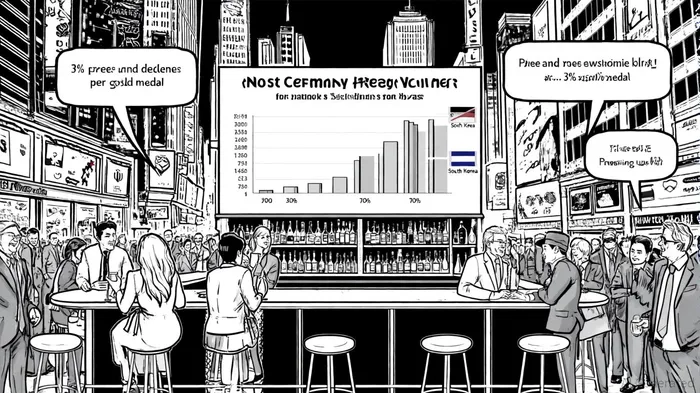
Investor behavior during the Olympics also reveals intriguing patterns. Research indicates that trading volume declines by nearly 3% per gold medal won by a nation, as investors become distracted by the event, according to a ScienceDaily report. For example, U.S. firms saw reduced S&P 500 trading activity following American medal wins, while German and South Korean markets experienced even sharper declines. This suggests that major sporting events act as psychological anchors, diverting attention from financial markets and dampening liquidity.
The Super Bowl: Sentiment, Sectors, and the "Indicator"
The Super Bowl's influence on markets is both cultural and economic. The whimsical "Super Bowl Indicator"-which claims NFC victories predict market gains while AFC wins signal declines-has historically shown a 68–80% accuracy rate, according to CXO Advisory data. While correlation does not imply causation, the event's psychological impact is undeniable. The week before the Super Bowl tends to have weaker market returns (0.03%) compared to the week after (+0.52%), as reported in the 2025 study. This "Super Bowl rally" is attributed to heightened optimism and risk-taking as investors shift focus to the game (CXO Advisory).
Sector-specific effects are equally notable. Media and advertising firms benefit from increased ad revenue, while consumer discretionary stocks see volatility tied to viewing habits. For instance, companies airing high-profile commercials during the Super Bowl often experience short-term stock price appreciation (CXO Advisory). The "Taylor Swift effect"-where her cultural influence amplified NFL viewership-further underscores how sports events can drive consumer and investor behavior (the 2025 study).
Wimbledon: Media, Metaphors, and Market Narratives
Wimbledon's economic footprint is less direct but no less significant. Media rights for the 2025 tournament were valued at $253.42 million, with the BBC and ESPN securing long-term deals, according to the S&P analysis. These partnerships drive global viewership, indirectly influencing investor sentiment through the "Wimbledon Effect"-a metaphor for the UK's openness to global competition (the ScienceDaily report). While no direct market correlations exist, the tournament's branding reinforces London's status as a financial hub, shaping perceptions of economic stability (S&P analysis).
Academic studies on investor psychology highlight how media exposure to major events can create feedback loops. For example, heightened Wimbledon coverage may amplify risk tolerance in UK-based investors, indirectly affecting equity markets (S&P analysis). However, unlike the Olympics or Super Bowl, Wimbledon's impact remains more symbolic than transactional, reflecting broader economic narratives rather than immediate trading behavior.
Investor Psychology: Biases and Behavioral Finance
The influence of sports on markets is rooted in behavioral finance. Cognitive biases-such as overconfidence, herding, and loss aversion-intensify during high-profile events. For instance, national team defeats in tournaments like the FIFA World Cup have been linked to risk-averse investor behavior and market volatility (an academic paper). Similarly, the "Wimbledon Effect" metaphor illustrates how cultural events can shape perceptions of economic competitiveness, indirectly influencing investment decisions (the ScienceDaily report).
Pre-market trading data further underscores this dynamic. The 2025 study also found that investor sentiment extracted from social media platforms like Seeking Alpha outperforms traditional media in predicting short-term market returns. This suggests that real-time sentiment analysis-particularly around major sporting events-could offer valuable insights for traders.
Conclusion: Navigating the Sports-Economy Nexus
For investors, the key lies in distinguishing between correlation and causation. While major sporting events can amplify market sentiment and sector-specific volatility, they are not standalone predictors of economic outcomes. The Paris Olympics' infrastructure legacy, the Super Bowl's advertising-driven rallies, and Wimbledon's symbolic branding all highlight the nuanced relationship between sports and finance.
As 2025 unfolds with events like the UEFA Women's Euro and Abu Dhabi Grand Prix, investors must remain vigilant to the psychological undercurrents shaping markets. By integrating behavioral insights with traditional economic analysis, they can better navigate the unpredictable terrain where sports and finance collide.





Comentarios
Aún no hay comentarios