
SPLV in Volatile Markets: A Risk-Managed Approach Amid Rising Rates
In an era marked by unpredictable macroeconomic shifts, investors are increasingly seeking tools to navigate the dual challenges of market volatility and rising interest rates. The InvescoIVZ-- S&P 500 Low Volatility ETF (SPLV) has emerged as a focal point for those prioritizing risk-managed portfolio positioning. Designed to reduce exposure to market swings by emphasizing defensive, low-volatility stocks, SPLV's performance during turbulent periods offers critical insights for investors navigating today's complex landscape.
The SPLVSPLV-- Strategy: Balancing Defense and Resilience
SPLV's construction is rooted in a systematic approach to mitigate downside risk. By underweighting high-beta stocks and overrepresenting sectors like utilities, consumer staples, and healthcare, the ETF aims to dampen portfolio volatility[1]. This structure theoretically positions it to outperform during market corrections, as defensive sectors often retain value when growth-oriented equities falter. However, its effectiveness as a hedge is not universal—it hinges on the interplay between macroeconomic conditions and portfolio composition.
Historical Performance: Mixed Outcomes in Rising-Rate Environments
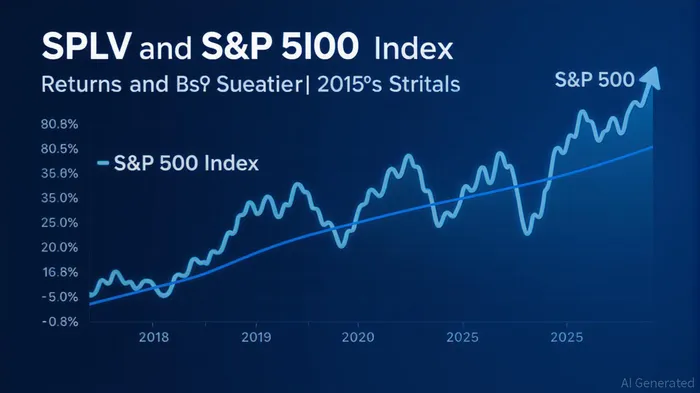
During the 2018 market selloff, SPLV underperformed broad-market indices like the Vanguard S&P 500 ETF (VOO). This was attributed to its exclusion of high-growth, high-beta stocks that drove the S&P 500's rally amid accommodative monetary policy[2]. Conversely, in 2025, SPLV demonstrated resilience amid record volatility and a prolonged period of uncertainty, including one of the worst drops since 1932[1]. The ETF's emphasis on low-volatility equities helped cushion losses compared to the broader market, particularly as rising interest rates pressured growth stocks. This duality underscores a key takeaway: SPLV's utility as a hedge is contingent on the specific drivers of market stress.
Portfolio Positioning: When Does SPLV Excel?
SPLV's effectiveness shines brightest in environments characterized by:
1. Macro Risk Events: Trade wars, inflation spikes, or geopolitical crises often trigger risk-off sentiment, favoring defensive positioning[1].
2. Interest Rate Uncertainty: While rising rates typically depress equity valuations, SPLV's focus on stable cash-flow generators (e.g., utilities) can mitigate this drag[1].
3. Extended Downturns: During protracted bear markets, low-volatility strategies tend to preserve capital better than market-cap-weighted benchmarks[2].
However, in strong bull markets fueled by accommodative monetary policy, SPLV's underperformance becomes pronounced. Its exclusion of high-growth stocks limits upside potential when investor sentiment is overwhelmingly positive[2].
Strategic Implications for Investors
For risk-managed portfolios, SPLV should not be viewed as a standalone solution but as a complementary tool. A tactical allocation to SPLV during periods of elevated volatility or tightening monetary policy can enhance risk-adjusted returns. Conversely, during sustained bull markets, investors may need to rebalance toward higher-beta exposures to avoid underperformance.
Critically, SPLV's performance highlights the importance of dynamic portfolio positioning. As noted by a report from Pacere ETFs, low-volatility strategies require active management to adapt to shifting macroeconomic cycles[2]. Rigid, long-term buy-and-hold approaches may fail to capitalize on their defensive benefits.
Conclusion
SPLV's role in volatile markets is nuanced. While it offers a degree of protection during periods of rising rates and market stress, its limitations in bull markets necessitate a balanced, context-aware strategy. For investors prioritizing downside risk mitigation, SPLV remains a valuable component of a diversified portfolio—provided it is deployed with an understanding of its cyclical strengths and constraints.





Comentarios
Aún no hay comentarios