
Spirit Airlines Rejects Frontier's Bid, Eyes Bankruptcy Exit in Q1
Generado por agente de IAHarrison Brooks
miércoles, 29 de enero de 2025, 7:56 am ET2 min de lectura
SPR--
Spirit Airlines (SAVE) has rejected Frontier Airlines' bid to merge, opting instead to pursue a standalone restructuring plan that aims to position the ultra-low-cost carrier for long-term success. The decision comes as Spirit expects to exit bankruptcy in the first quarter of 2025, following a comprehensive agreement with a supermajority of its bondholders.
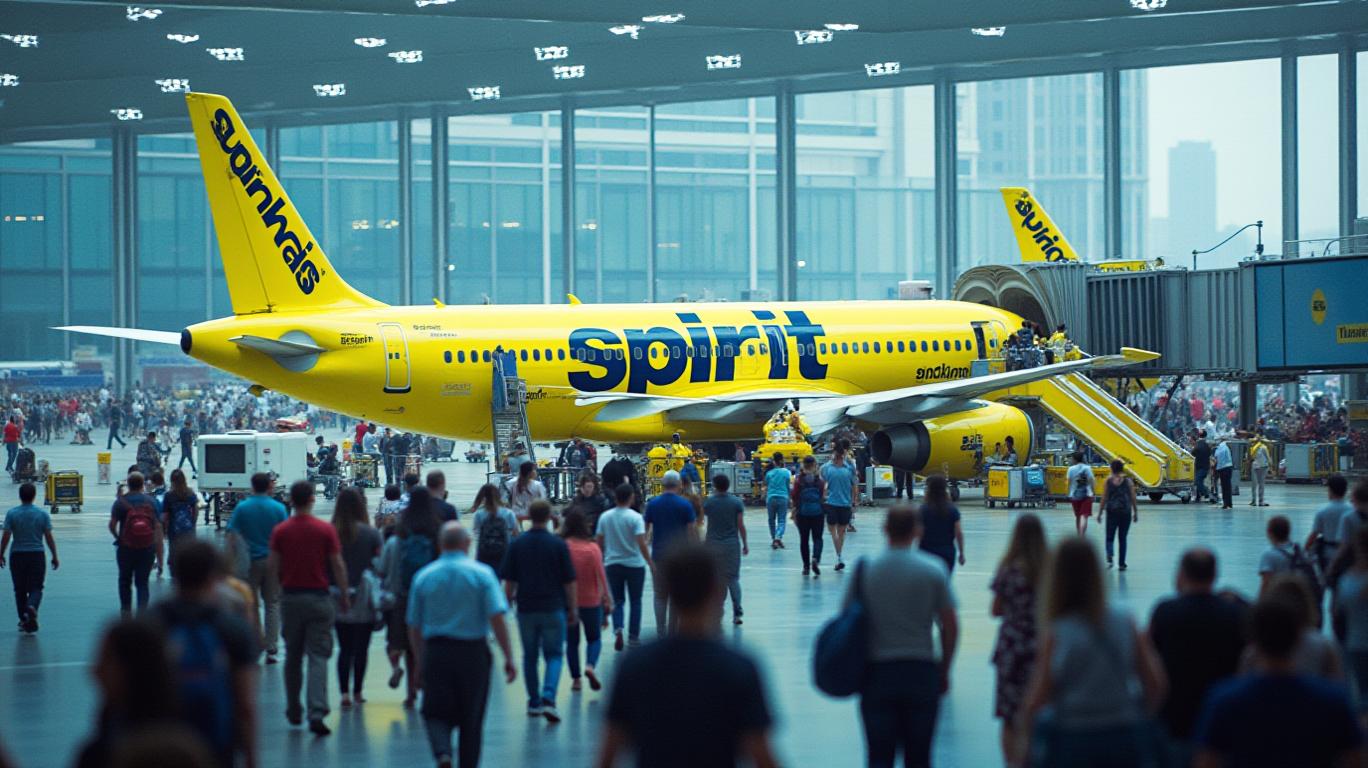
Spirit's board of directors took a disciplined approach to the negotiations with Frontier, prioritizing the interests of the airline, its employees, and shareholders. The board ultimately decided that the Frontier bid did not provide the anticipated shareholder value and raised concerns about the timing and successful completion of the deal. Instead, Spirit is focusing on its ongoing discussions with JetBlue, which could potentially lead to a merger that better aligns with the airline's long-term goals.
Spirit's expectation of exiting bankruptcy in the first quarter is a significant milestone in its financial restructuring plan. The airline has already signed a restructuring support agreement (RSA) with a supermajority of its bondholders, outlining a comprehensive balance sheet restructuring. This agreement provides a framework for reducing Spirit's debt and increasing financial flexibility, allowing the airline to emerge from the Chapter 11 process with a stronger financial position.
Spirit has received backstopped commitments for a $350 million equity investment and $300 million in debtor-in-possession (DIP) financing from existing bondholders. These funds will support the airline through the Chapter 11 process and help it emerge with a stronger financial position. Additionally, Spirit is filing a proposed Plan of Reorganization that incorporates the agreed terms of the RSA, subject to confirmation by the Court and approval by a supermajority of Spirit's loyalty and convertible bondholders.
The potential implications of Spirit Airlines' decision to reject Frontier's bid and potentially merge with JetBlue are far-reaching for the broader ultra-low-cost carrier (ULCC) market and competition among other airlines. If the JetBlue-Spirit merger goes through, it would create the fifth-largest airline in the U.S., with a significant market share in the ULCC segment. This consolidation could lead to reduced competition in certain markets, potentially resulting in higher fares and fewer options for consumers. The combined JetBlue-Spirit entity would have a substantial presence in the ULCC market, potentially putting pressure on other ULCCs like Frontier, Allegiant, and Sun Country. These airlines might need to adjust their strategies to compete with the new, larger player.
Regulatory scrutiny of the proposed JetBlue-Spirit merger is likely to be intense, as the Department of Justice has previously expressed concerns about the potential impact on competition and consumer welfare. If the merger is approved with conditions, it could lead to divestments or other restrictions that might affect the competitive landscape. The outcome of this merger, as well as the regulatory response, will play a crucial role in shaping the future of the U.S. airline industry.
In conclusion, Spirit Airlines' decision to reject Frontier's bid and potentially merge with JetBlue could have significant implications for the broader ULCC market and competition among other airlines. The outcome of this merger, as well as the regulatory response, will play a crucial role in shaping the future of the U.S. airline industry. As Spirit expects to exit bankruptcy in the first quarter, the airline is well-positioned to emerge from the process with a stronger financial position and a clear path to long-term success as a leading low-fare carrier.
ULCC--
Spirit Airlines (SAVE) has rejected Frontier Airlines' bid to merge, opting instead to pursue a standalone restructuring plan that aims to position the ultra-low-cost carrier for long-term success. The decision comes as Spirit expects to exit bankruptcy in the first quarter of 2025, following a comprehensive agreement with a supermajority of its bondholders.
Spirit's board of directors took a disciplined approach to the negotiations with Frontier, prioritizing the interests of the airline, its employees, and shareholders. The board ultimately decided that the Frontier bid did not provide the anticipated shareholder value and raised concerns about the timing and successful completion of the deal. Instead, Spirit is focusing on its ongoing discussions with JetBlue, which could potentially lead to a merger that better aligns with the airline's long-term goals.
Spirit's expectation of exiting bankruptcy in the first quarter is a significant milestone in its financial restructuring plan. The airline has already signed a restructuring support agreement (RSA) with a supermajority of its bondholders, outlining a comprehensive balance sheet restructuring. This agreement provides a framework for reducing Spirit's debt and increasing financial flexibility, allowing the airline to emerge from the Chapter 11 process with a stronger financial position.
Spirit has received backstopped commitments for a $350 million equity investment and $300 million in debtor-in-possession (DIP) financing from existing bondholders. These funds will support the airline through the Chapter 11 process and help it emerge with a stronger financial position. Additionally, Spirit is filing a proposed Plan of Reorganization that incorporates the agreed terms of the RSA, subject to confirmation by the Court and approval by a supermajority of Spirit's loyalty and convertible bondholders.
The potential implications of Spirit Airlines' decision to reject Frontier's bid and potentially merge with JetBlue are far-reaching for the broader ultra-low-cost carrier (ULCC) market and competition among other airlines. If the JetBlue-Spirit merger goes through, it would create the fifth-largest airline in the U.S., with a significant market share in the ULCC segment. This consolidation could lead to reduced competition in certain markets, potentially resulting in higher fares and fewer options for consumers. The combined JetBlue-Spirit entity would have a substantial presence in the ULCC market, potentially putting pressure on other ULCCs like Frontier, Allegiant, and Sun Country. These airlines might need to adjust their strategies to compete with the new, larger player.
Regulatory scrutiny of the proposed JetBlue-Spirit merger is likely to be intense, as the Department of Justice has previously expressed concerns about the potential impact on competition and consumer welfare. If the merger is approved with conditions, it could lead to divestments or other restrictions that might affect the competitive landscape. The outcome of this merger, as well as the regulatory response, will play a crucial role in shaping the future of the U.S. airline industry.
In conclusion, Spirit Airlines' decision to reject Frontier's bid and potentially merge with JetBlue could have significant implications for the broader ULCC market and competition among other airlines. The outcome of this merger, as well as the regulatory response, will play a crucial role in shaping the future of the U.S. airline industry. As Spirit expects to exit bankruptcy in the first quarter, the airline is well-positioned to emerge from the process with a stronger financial position and a clear path to long-term success as a leading low-fare carrier.

Divulgación editorial y transparencia de la IA: Ainvest News utiliza tecnología avanzada de Modelos de Lenguaje Largo (LLM) para sintetizar y analizar datos de mercado en tiempo real. Para garantizar los más altos estándares de integridad, cada artículo se somete a un riguroso proceso de verificación con participación humana.
Mientras la IA asiste en el procesamiento de datos y la redacción inicial, un miembro editorial profesional de Ainvest revisa, verifica y aprueba de forma independiente todo el contenido para garantizar su precisión y cumplimiento con los estándares editoriales de Ainvest Fintech Inc. Esta supervisión humana está diseñada para mitigar las alucinaciones de la IA y garantizar el contexto financiero.
Advertencia sobre inversiones: Este contenido se proporciona únicamente con fines informativos y no constituye asesoramiento profesional de inversión, legal o financiero. Los mercados conllevan riesgos inherentes. Se recomienda a los usuarios que realicen una investigación independiente o consulten a un asesor financiero certificado antes de tomar cualquier decisión. Ainvest Fintech Inc. se exime de toda responsabilidad por las acciones tomadas con base en esta información. ¿Encontró un error? Reportar un problema


SOBRE NOSOTROS
Nuestra historiaAutores de noticiasBase de conocimientosPolítica de privacidadTérmino de usoDescargo de responsabilidad de corretaje de tercerosTérminos de uso de AIMEDivulgaciones de riesgos de AInvest AICarrerasCONTÁCTENOS
Email: support@ainvest.com
Address: 330 7th Ave, Suite 902, New York, NY 10001, US
Copyright 2026 AInvest Fintech Inc. All rights reserved.


Comentarios
Aún no hay comentarios