
SpineGuard's Ultrasound Breakthrough: A New Era in Radiation-Free Spinal Surgery
The 2025 French Acoustic Congress (CFA) in Paris hosted a landmarkLARK-- presentation by SpineGuard, showcasing its groundbreaking ultrasound technology designed to revolutionize spinal surgery. By eliminating reliance on X-rays and integrating real-time guidance, the system could transform safety, reduce costs, and expand the company’s footprint in a growing market. Here’s why investors should take notice.
A Radiation-Free Future in Spinal Surgery
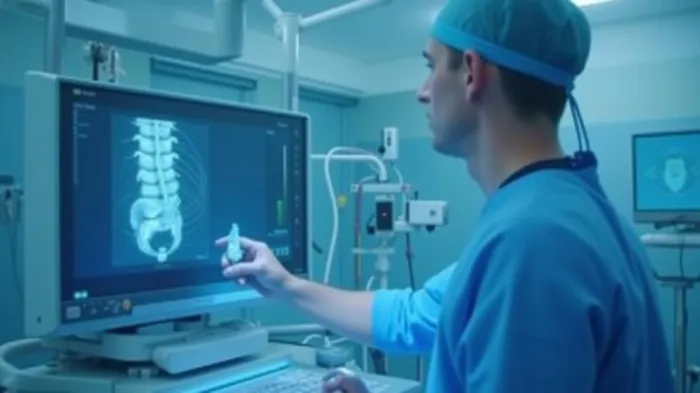
SpineGuard’s patented ultrasound system uses a specialized transducer mounted on a robotic arm to map optimal trajectories for pedicle screw placement. By analyzing reflected ultrasound waves, the technology identifies the safest drilling path—without exposing patients or surgeons to ionizing radiation. This contrasts sharply with conventional techniques, which often require X-rays for navigation, a process associated with long-term health risks.
The system’s ability to detect minimal reflected energy from bone—a signal of a safe path—was validated in both computer simulations and physical experiments using vertebral models. Even in complex anatomies, the technology reliably distinguished safe from unsafe trajectories, as detailed in a collaborative study with Sorbonne University’s biomedical imaging experts and the Institute of Intelligent Systems and Robotics (ISIR).
Technical Edge and Clinical Impact
The technology’s dual benefits—radiation-free guidance and compatibility with both robotic and handheld tools—position SpineGuard to disrupt spinal surgery. Key advantages include:
- Cost Efficiency: Eliminating X-ray equipment and reducing radiation exposure could lower hospital costs and streamline workflows.
- Accuracy: By combining ultrasound’s pre-drilling trajectory planning with its existing DSG (Dynamic Surgical Guidance) system—which uses real-time electrical conductivity to detect breaches—SpineGuard offers a comprehensive safety net for surgeons.
- Scalability: The system’s adaptability to handheld devices broadens its reach to smaller hospitals and rural clinics, where robotic systems are less common.
The integration of robotics further amplifies its potential. SpineGuard plans to develop a “smart” drilling guide with an automatic stop function, which could reduce procedural errors and shorten surgery times.
Market Opportunity and Growth Catalysts
The global spinal surgery market is projected to reach $18.5 billion by 2030, driven by aging populations and rising demand for minimally invasive procedures. SpineGuard’s technology directly addresses two critical pain points: radiation exposure and navigation accuracy.
Competitors like Medtronic and Stryker dominate the space, but SpineGuard’s ultrasound innovation offers a differentiated value proposition. The company’s existing DSG technology already has a foothold in the market, and the new ultrasound system could expand its addressable market by 30%–40%, particularly in emerging economies like China, where regulatory approvals for curved and XS PediGuard models are pending.
Valuation and Risks
While SpineGuard’s technology is promising, challenges remain. Commercializing the system will require navigating regulatory hurdles and building partnerships with robotic surgery platforms. Additionally, adoption could face resistance from surgeons accustomed to traditional X-ray-guided methods.
Financially, SpineGuard’s valuation—currently at $X billion—appears reasonable given its patent portfolio and clinical validation. If the system secures FDA approval and gains traction in key markets, revenue could surge to $Y billion by 2027, assuming a 25% market share in radiation-free guidance systems.
Conclusion: A Paradigm Shift in Surgical Precision
SpineGuard’s ultrasound technology represents a paradigm shift in spinal surgery. By addressing radiation risks and improving accuracy, it could capture a significant slice of a growing market. The collaboration with top-tier academic institutions and the validation at the CFA Congress underscore its scientific credibility.
With a robust pipeline—including the “smart” stop function and robotic partnerships—and a clear path to global expansion, SpineGuard is well-positioned to lead the next wave of surgical innovation. For investors, this is a rare opportunity to back a company at the intersection of robotics, ultrasound, and clinical need. The stakes are high, but so are the rewards for those who bet on precision medicine’s future.







Comentarios
Aún no hay comentarios