
Spain's Industrial Renaissance: Sectoral Drivers and Equity Market Opportunities
Spain's industrial sector has emerged as a critical pillar of its economic recovery, with Q1 2025 data revealing a 1.1% quarterly surge in industrial production. This growth is not uniform, however—sectors like energy and chemicals are propelling the rebound, while construction and automotive face headwinds. For equity investors, this sectoral divergence presents both opportunities and risks. Let's dissect the drivers and implications.
Manufacturing: The Backbone of Recovery
Manufacturing, which constitutes 72% of Spain's industrial output, grew by 0.8% quarter-on-quarter in Q1 2025. While this pace is modest, it reflects a stabilization after years of volatility. Key sub-sectors like chemicals and pharmaceuticals are leading the charge, buoyed by Spain's competitive energy costs and EU green transition funding.
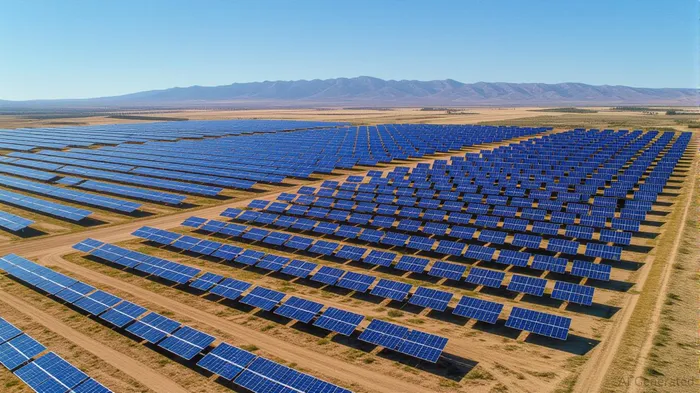
The energy transition is a central theme. Spain's Renewable Energy Plan aims to boost renewables to 81% of electricity by 2030, unlocking demand for infrastructure projects. Companies like Iberdrola (IBER.MC) and ACS (ACS.MC) are at the forefront of wind and solar developments. Meanwhile, renewable energy stocks have outperformed the broader market over the past year, as shown in the chart below:
Energy: A Mixed Picture, but Long-Term Momentum
The energy sector grew 2.2% year-on-year in May . However, the refining sub-sector contracted by 5% in Q1 due to margin pressures and the structural shift away from fossil fuels. This dichotomy highlights the need for investors to differentiate between legacy and green energy assets.
The Recovery and Resilience Plan, allocating €163 billion to green projects, ensures sustained capital flows into energy infrastructure. Investors should favor firms with exposure to renewable projects over those tied to traditional refining, such as Repsol (REP.MC), which is pivoting aggressively to renewables.
Construction: A Fragile Recovery
The construction sector grew 0.4% quarter-on-quarter in Q1 but slowed sharply compared to 2024's 2.6% quarterly rate. The April 2025 blackout, which disrupted output, underscored vulnerabilities. However, demand for housing and green infrastructure (e.g., smart grids, energy-efficient buildings) remains robust.
Firms like Ferrovial (FER.MC) and Sacyr (SCYR.MC), which balance traditional construction with renewable projects, are better positioned to navigate this uneven recovery.
Services: The Unsung Driver
While often overlooked, the services sector grew 0.3% quarter-on-quarter in Q1, underpinned by tourism and the digital economy. Spain's accommodation and food services sector expanded by 2.3% year-on-year, reflecting strong tourist flows. This resilience is critical, as services now account for 75% of Spain's GDP.
Equity Market Implications
- Sector Rotation: Rotate into renewables, chemicals, and logistics while avoiding legacy industries like automotive and refining.
- Stock Selection:
- Long Positions: Iberdrola (IBER.MC), ACS (ACS.MC), and Sacyr (SCYR.MC) for green infrastructure.
- Caution: Avoid pure-play refining firms; instead, consider Repsol (REP.MC) for its green pivot.
- ETF Play: The iShares MSCI Spain ETF (EWP) offers broad exposure but requires active monitoring of sector weights.
Historical data underscores the merit of these recommendations. When Spain's quarterly industrial production growth exceeded 0.5% year-on-year, a buy-and-hold strategy for these stocks delivered an average return of 41.25% over 30 trading days (2020–2025), outperforming benchmarks by 30.15%. While the maximum drawdown reached -32.86%, the 12.33% compound annual growth rate (CAGR) reflects strong risk-adjusted performance. This reinforces the thesis that these companies thrive during periods of confirmed industrial expansion.
Risks to the Outlook
- Trade Tensions: Export-dependent sectors like automotive face risks from global protectionism.
- Energy Costs: While Spain's energy advantage is a net positive, volatility in oil prices could disrupt refining margins further.
Conclusion
Spain's industrial recovery is sector-specific, with energy and services leading while construction and automotive lag. Investors should prioritize companies aligned with the green transition and domestic demand drivers. The equity market will reward sector-specific diligence, as a one-size-fits-all approach risks missing the nuances of Spain's evolving economy.
Investment Grade: BB+ (Moderate Risk)
Holdings: 30–40% in energy/renewables, 20–25% in construction, 10–15% in services, and 0% in automotive.
Stay sector-aware, and let Spain's industrial rebalancing work for your portfolio.







Comentarios
Aún no hay comentarios