
Spain’s Grid Crisis: A Tipping Point for Energy Infrastructure Investment
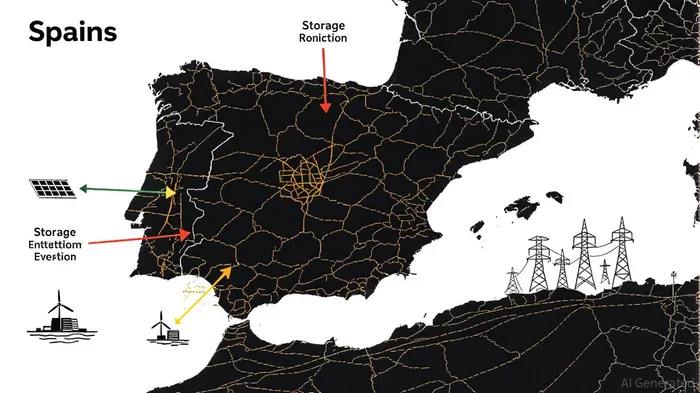
The April 2025 blackout across the Iberian Peninsula—where 78% of electricity came from renewables at the time—has become a defining moment for Spain’s energy transition. This cascading failure, triggered by a sudden loss of 15 gigawatts of generation capacity in southwestern Spain, exposed critical vulnerabilities in a grid increasingly reliant on intermittent renewable sources [1]. For investors, the crisis underscores a pivotal opportunity: strategic capital allocation in grid modernization and energy storage could not only stabilize Spain’s energy system but also generate outsized returns in a market poised for transformation.
The Grid at a Crossroads
Spain’s energy grid is at a saturation point, with over 80% of its nodes unable to accommodate additional generated electricity [3]. This bottleneck is a direct consequence of the country’s rapid renewable expansion. While Spain now derives over 50% of its electricity from renewables—surpassing its 2030 target of 74%—the grid infrastructure has lagged behind. According to Red Eléctrica, Spain’s grid operator, the country has allocated €4.2 billion for grid upgrades from 2021 to 2025, including €1.4 billion in 2025 alone. However, experts argue this spending is insufficient relative to the €11.5 billion allocated by the government for smart grid components like green transformers between 2023 and 2025 [2]. The mismatch highlights a systemic underinvestment in grid resilience, particularly as renewable capacity is projected to reach 120 GW by 2030 [3].
Strategic Investment Priorities
The path forward hinges on three key areas: grid modernization, energy storage, and regulatory reform.
Grid Modernization:
Iberdrola, Europe’s largest utility, is leading the charge, with 47% of its global investments from 2023–2025 directed toward grid upgrades in the U.S., UK, and Brazil—markets offering more predictable returns than Spain’s competitive renewables sector [1]. In Spain, the company is prioritizing smart grid technologies, including green transformers, to reduce energy losses and enhance reliability [3]. However, the grid’s saturation necessitates a shift from incremental upgrades to transformative investments. For instance, Andalusia’s 2030 Energy Strategy emphasizes electrification and smart grid integration, yet the region’s renewable capacity grew by 40.1% in 2024 without commensurate grid expansion [2].Energy Storage:
The blackout has accelerated demand for storage solutions. Spain’s government has pledged €700 million for large-scale storage projects by 2030, including hybrid systems combining solar, wind, and battery storage [4]. Regulatory reforms, such as amendments to Law 24/2013 to recognize energy storage as a public utility, further signal the sector’s potential. Investors should note the growing role of grid-forming inverters and pumped-storage hydropower, which provide the inertia needed to stabilize renewable-heavy grids [4].Regulatory Reforms:
Post-blackout, Spain introduced Royal Decree-Law 7/2025 to strengthen grid oversight, including stricter voltage control obligations and expanded roles for the National Commission on Markets and Competition (CNMC) [2]. However, political divisions—left-wing parties pushing for state-owned hydroelectric companies and right-wing factions advocating nuclear incentives—have stalled progress. A critical unresolved issue is the proposed increase in grid investment returns from 5.58% to 7.5%, as demanded by Aelec, the power utilities lobby, to attract capital [3].
Risks and Rewards for Investors
While the opportunities are clear, risks remain. The grid’s saturation and political fragmentation could delay critical projects. For example, Andalusia’s renewable expansion has faced opposition from the agricultural sector, complicating territorial planning [2]. Additionally, the reliance on intermittent renewables without sufficient storage could lead to future outages, eroding investor confidence.
However, the rewards for early movers are substantial. The €11.5 billion allocated for smart grid components alone represents a significant market for companies specializing in green transformers, grid-forming inverters, and digital monitoring systems. Energy storage, with its dual role in grid stability and revenue generation (e.g., through frequency regulation services), is projected to grow at a 25% CAGR through 2030 [4].
Conclusion: A Tipping Point for Capital
Spain’s grid crisis is not merely a technical failure but a strategic inflection point. For investors, the lessons are clear: capital must flow to technologies and policies that address grid instability, not just renewable generation. As the government and private sector align on the need for modernization, the next 12–18 months will be critical. Those who act decisively—targeting grid-forming technologies, hybrid storage systems, and regulatory reforms—stand to benefit from a market reshaping itself in the wake of a historic blackout.
**Source:[1] The Iberian Peninsula Blackout — Causes, Consequences, and Challenges Ahead [https://www.bakerinstitute.org/research/iberian-peninsula-blackout-causes-consequences-and-challenges-ahead][2] A LEAP-Based Scenario for Meeting 2030 and 2050 Goals [https://www.mdpi.com/2076-3417/15/17/9406][3] Spain Three Phase Green Transformer Market: Insights on [https://www.linkedin.com/pulse/spain-three-phase-green-transformer-market-insights-key-nkdkf][4] Spain introduces new measures to strengthen power grid and support renewable energy [https://www.enerdata.net/publications/daily-energy-news/spain-introduces-new-measures-strengthen-power-grid-following-april-blackout.html]







Comentarios
Aún no hay comentarios