
Spain's Banking Mega-Merger Faces Crucial Crossroads as Government Launches Public Consultation
The proposed merger between Spain’s BBVA and Banco Sabadell, a deal valued at approximately €12 billion, has reached a pivotal juncture. Following the National Commission on Markets and Competition’s (CNMC) conditional approval in late 2024, Prime Minister Pedro Sánchez’s government has now launched a public consultation to assess the transaction’s broader implications. This move underscores the political and economic stakes of a merger that could reshape Spain’s banking landscape—and its outcome remains far from certain.
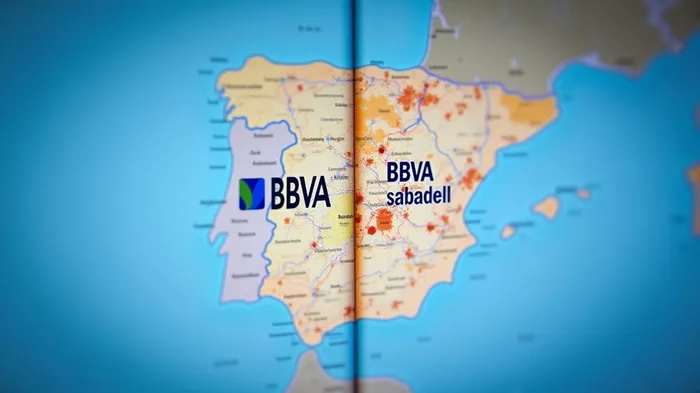
The Regulatory Tightrope
The CNMC’s approval came with stringent conditions to address competition concerns. Key measures include:
- Branch Preservation: BBVA must retain branches in underserved areas, including municipalities with fewer than 5,000 residents and regions where the merged entity’s market share exceeds 30%.
- Credit Protections: SMEs and self-employed individuals in dominant markets must retain existing credit terms for at least three years, with working capital lines extended to five years if needed.
- Divestiture: Remaining branch sales (213 of 513 total) must be finalized by Q2 2025 to avoid penalties.
Despite these safeguards, the Spanish government remains skeptical. Sánchez’s administration has framed the merger as a threat to financial stability and SME access to credit, citing “excessive concentration” in the banking sector. Under Spanish law, the government cannot block the takeover outright but retains authority to reject the merger under public interest criteria, including territorial cohesion and regional economic impact.
Political and Stakeholder Opposition
The consultation process will amplify voices from across Spain’s political and economic spectrum:
- Catalonia’s Pushback: The Catalan government, led by President Salvador Illa, views Sabadell as integral to the region’s financial ecosystem. Employers’ groups like Foment del Treball warn of a potential €70 billion reduction in SME credit availability, claiming the merger could close branches and shrink lending capacity in key regions.
- Employers’ Groups: Foment del Treball has condemned the CNMC’s analysis for excluding mid-sized businesses and limiting credit guarantees to just 1.4% of postcodes. They urge the government to invoke Article 10 of the Competition Law to block the deal.
- Shareholder Divide: While BBVA’s offer includes a 30% premium over Sabadell’s April 2024 share price (rising to 50% against a 90-day average), Sabadell’s board and small shareholders—who hold a majority stake—oppose the bid. CEO César González-Bueno has labeled the terms “insufficient,” emphasizing Sabadell’s standalone commitments, including a €2.9 billion shareholder remuneration plan through 2025.
The Timeline and Risks
The government now faces a tight schedule:
1. Ministry of Economy Review: The ministry has 15 working days to decide whether to escalate the case to the Council of Ministers.
2. Council of Ministers Decision: If referred, the council has one month to impose additional conditions or reject the merger entirely.
3. Shareholder Vote: Assuming regulatory hurdles are cleared, BBVA must secure 50.01% of voting shares to proceed.
Investment Implications
- Upside for BBVA: If approved, the merger creates a €1 trillion banking giant with €850 million in annual synergies by 2026, bolstering its position in Spain and Latin America.
- Downside Risks: A government rejection could trigger penalties, operational fragmentation, and lost value for both banks. BBVA’s stock has risen 18% year-to-date on merger optimism; a reversal could erase gains.
- Regional Impact: SMEs in Catalonia and Valencia—where the merged entity’s market share exceeds 30%—face heightened scrutiny. Foment del Treball’s claims of a 46% credit reduction highlight risks to local economies.
Conclusion
The BBVA-Sabadell merger stands at a crossroads, with its fate hinging on Spain’s political calculus and public sentiment. While the CNMC’s conditions aim to mitigate competition risks, the government’s consultation underscores the broader stakes: protecting regional financial ecosystems and SME access to credit.
Should the merger proceed, investors may benefit from scale and synergies. However, rejection could destabilize both banks, particularly in a low-growth environment where Spain’s 2025 GDP is projected to expand just 1.3%. With Catalan opposition, employer backlash, and shareholder skepticism, the odds of approval are far from guaranteed.
For now, the market waits: BBVA’s stock reflects merger optimism (), but Sabadell’s valuation lags its offer terms—a sign of lingering doubt. The final decision, expected by mid-2025, will determine whether Spain’s banking sector consolidates or preserves its competitive structure—and with it, the financial fortunes of millions of SMEs.







Comentarios
Aún no hay comentarios