
Spacsphere Acquisition Corp's IPO Filing: Strategic Positioning in the SPAC 2.0 Era
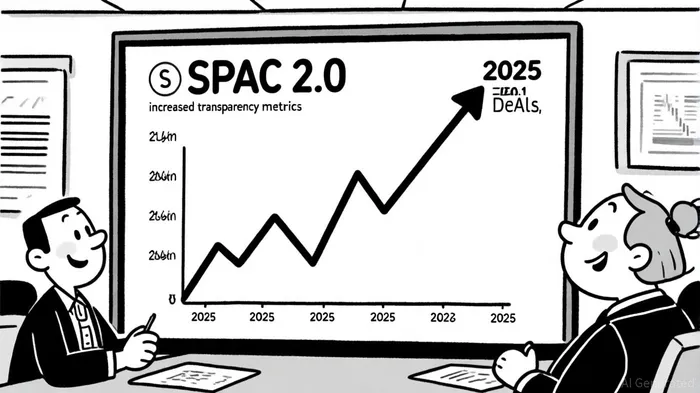
The Special Purpose Acquisition Company (SPAC) market has entered a new era of regulatory clarity and investor sophistication, marked by the emergence of "SPAC 2.0" in 2025. This evolution, driven by U.S. Securities and Exchange Commission (SEC) reforms and shifting market dynamics, has redefined the strategic landscape for SPACs like Spacsphere Acquisition Corp, which filed its S-1 registration on September 19, 2025[1]. To evaluate its market potential, it is critical to analyze how Spacsphere aligns with the post-2025 regulatory framework, economic conditions, and the broader SPAC 2.0 paradigm.
Regulatory Reinvention: SPAC 2.0 and Enhanced Investor Protections
The SEC's 2024 rule changes have fundamentally reshaped the SPAC model. These reforms mandate detailed disclosures on sponsor compensation, conflicts of interest, and financial projections, aligning SPACs with traditional IPO standards[2]. For instance, SPAC sponsors now face deferred compensation structures and performance-based earn-outs, ensuring their financial success is tied to long-term shareholder value[3]. Spacsphere's S-1 filing, which includes comprehensive disclosures on management compensation and governance, reflects compliance with these stringent requirements[1].
The regulatory overhaul has also addressed historical concerns about overvaluation and speculative practices. By requiring SPACs to treat de-SPAC transactions with the same rigor as traditional IPOs, the SEC has fostered greater transparency. For example, Spacsphere's S-1 discloses material contracts and financial statements, a hallmark of SPAC 2.0 compliance[1]. This alignment with investor protection standards positions Spacsphere to attract institutional capital, which has returned to the SPAC market with a focus on quality and governance[3].
Economic Headwinds and Opportunities in Q3 2025
The broader economic environment in 2025 presents both challenges and opportunities for SPACs. Macroeconomic turbulence, including President Trump's tariff announcements and inflationary pressures, has created volatility in capital markets[4]. However, SPACs remain a compelling alternative to traditional IPOs, particularly for companies seeking faster access to public markets during periods of uncertainty[4].
Spacsphere's timing is strategic. By filing in September 2025, it capitalizes on the SPAC 2.0 revival, which has seen 58 SPAC IPOs in the first four months of the year alone, generating $7.71 billion in deal volume[5]. While smaller deal sizes and conservative valuations are now the norm, the focus on profitability and operational track records—particularly in sectors like healthcare and renewable energy—aligns with Spacsphere's potential target criteria[5].
Strategic Positioning: Fundraising, Sponsorship, and Target Focus
Although Spacsphere's S-1 does not explicitly disclose its fundraising size, the SPAC 2.0 model emphasizes smaller, more targeted offerings. For comparison, Quantumsphere Acquisition Corp, a peer SPAC, recently filed for a $60 million IPO, targeting companies with enterprise values between $180 million and $1 billion[6]. Spacsphere's "blank check" structure suggests a similar focus on high-growth, defensible market positions, though its specific industry target remains undisclosed[1].
Sponsor strength is another critical factor. SPAC 2.0 requires sponsors to demonstrate credibility and long-term commitment. Spacsphere's management team, detailed in its S-1 filing, includes seasoned professionals with expertise in capital markets and corporate governance[1]. This aligns with the SPAC 2.0 emphasis on institutional-grade sponsorships, which are essential for attracting institutional investors.
Market Potential and Risks
Spacsphere's alignment with SPAC 2.0 principles enhances its market potential. The SEC's 2025 taxonomy draft, which mandates Inline XBRL tagging for SPAC filings, ensures that Spacsphere's disclosures meet the highest transparency standards[7]. This regulatory rigor reduces information asymmetry, a key concern during the SPAC boom of 2020–2021[2].
However, risks persist. High redemption rates and structural misalignments between sponsors and investors remain challenges[8]. Spacsphere must navigate these by leveraging PIPE (Private Investment in Public Equity) financing, a strategy adopted by SPAC 2.0 leaders to stabilize post-merger liquidity[3]. Additionally, the SPAC's success hinges on identifying a target with strong operational metrics, a task complicated by the current macroeconomic climate[4].
Conclusion
Spacsphere Acquisition Corp's S-1 filing positions it as a participant in the SPAC 2.0 renaissance, characterized by regulatory discipline, institutional credibility, and a focus on long-term value creation. While the post-2025 environment presents economic headwinds, the SPAC's alignment with SEC reforms and its potential to target high-quality, revenue-generating businesses in strategic sectors suggest a viable path to success. Investors should monitor Spacsphere's target selection and compliance with SPAC 2.0 standards as key indicators of its market potential.







Comentarios
Aún no hay comentarios