
SpaceX's Technical Turbulence and the Resilience of the Space Economy: Navigating Risks and Opportunities in 2025
The commercial space sector is at a crossroads, with SpaceX's recent technical setbacks and infrastructure advancements offering a dual lens through which to assess risk and opportunity. While the Starship program's second-quarter 2025 disruptions have raised questions about operational reliability, the broader satellite and launch markets continue to expand at a breakneck pace. For investors, the challenge lies in balancing these short-term hiccups with the long-term vision of a $1 trillion space economy.
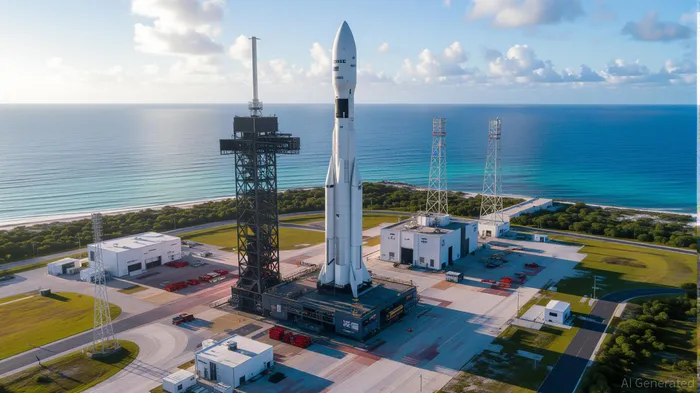
Operational Risks: The Starship Stumbles
SpaceX's Starship program has faced a string of setbacks in 2025, including a catastrophic explosion during a static fire test in June and a loss of attitude control during its ninth flight. The June incident, attributed to a failure in a nitrogen composite overwrapped pressure vessel (COPV), underscores the inherent complexity of developing a fully reusable heavy-lift system. Meanwhile, the ninth flight's inability to execute critical experiments—such as a Raptor engine relight in space and thermal protection system (TPS) testing—highlights the steep learning curve associated with orbital reusability.
These issues, combined with back-to-back failures in Q1, have delayed milestones for Mars missions and in-orbit refueling demonstrations. Yet, SpaceX's response has been telling: the company pivoted to an alternative testing strategy using modified hardware and accelerated production of Block 3 boosters. This adaptability suggests that while Starship's development is fraught, SpaceX's engineering culture remains resilient.
The Bigger Picture: A Satellite Market in Hyperdrive
Despite Starship's turbulence, the satellite and launch sectors are thriving. The global space economy is projected to grow from $415 billion in 2024 to $600–$1 trillion by 2030, driven by satellite communications (Satcom), Earth observation, and defense applications. SpaceX's Starlink constellation alone has contributed $6.2 billion in 2024 revenues, a 30% year-over-year increase. Meanwhile, the satellite manufacturing segment is booming, with smallsat production and reusable launch tech reducing costs and increasing accessibility.
The launch services market, dominated by SpaceX (95% of U.S. launches in 2024), is witnessing a wave of competition. Blue Origin's New Glenn and Rocket Lab's Neutron rockets aim to challenge SpaceX's cost advantages, while European and Chinese firms are testing reusable engines. This diversification could mitigate risks for investors reliant on a single provider, though SpaceX's first-mover advantage remains formidable.
Investor Sentiment: Confidence Amidst Chaos
Market confidence in SpaceX has remained robust despite its technical woes. A recent $153 million BitcoinBTC-- transfer from a dormant SpaceX wallet was interpreted as a strategic move rather than a distress signal, with no signs of liquidation. Analysts view this as a sign of institutional confidence in Bitcoin as a corporate treasury asset, particularly as Tesla's Q2 earnings loom. The broader space sector has also benefited from strong venture capital inflows, with $3.1 billion raised in Q2 2025 for space startups.
While no official IPO date for SpaceX or Starlink has been announced, speculation about a 2025–2026 public offering persists. This anticipation, combined with SpaceX's continued dominance in launch services, has fueled speculative trading and reinforced its role as a bellwether for the space economy.
Strategic Opportunities for Investors
For investors, the key is to differentiate between sector-specific growth and company-specific risks. Here's how to navigate the landscape:
Diversify Across Satellite Segments: The satellite manufacturing and communications markets are expanding rapidly, with non-U.S. players like Airbus, Thales, and Indian firms like Dhruva Space gaining traction. Firms leveraging AI for satellite analytics (e.g., Planet Labs) and miniaturization (e.g., CubeSat producers) offer compelling long-term exposure.
Bet on Reusability and Sustainability: The race to develop reusable launch systems and in-orbit servicing technologies is accelerating. Blue Origin, Rocket LabRKLB--, and European firms investing in reusable engines present opportunities in a sector poised to grow at a 10.9% CAGR.
Monitor Defense and Earth Observation Trends: Government spending on space-based security and Earth monitoring is surging, with the defense segment accounting for 54% of global space budgets in 2024. Companies like Axiom Space and Anduril, which integrate space data into defense systems, could see outsized growth.
Watch for IPO Catalysts: SpaceX's potential public offering—whether for the broader company or Starlink alone—could unlock new liquidity and valuation benchmarks. Investors should track Musk's broader financial strategy, including Bitcoin holdings and Tesla's crypto disclosures.
The Road Ahead
SpaceX's Starship setbacks are a reminder that the path to Mars—and to a trillion-dollar space economy—is anything but smooth. However, the company's ability to pivot, innovate, and dominate key markets suggests that its long-term potential outweighs its current challenges. For investors, the lesson is clear: the space economy is no longer a speculative bet but a maturing industry with diverse entry points. By focusing on resilient infrastructure, emerging technologies, and strategic diversification, investors can harness the sector's upside while managing its inherent risks.
In the end, the stars may be far away, but the opportunities here on Earth are closer than ever.





Comentarios
Aún no hay comentarios