
SpaceX's Strategic Shift in Rocket Reusability and Satellite Deployment
Rocket Reusability: The Cost-Efficiency Engine
SpaceX's Falcon 9 has long been celebrated for its reusability, but the September 2025 missions highlight a new level of operational maturity. The booster used in the Starlink 11-20 mission had already completed 19 prior flights, including 16 Starlink deployments according to data. This reusability not only reduces the need for manufacturing new hardware but also minimizes the environmental and financial costs associated with each launch. While specific dollar figures for cost savings remain elusive due to SpaceX's opaque financial disclosures, according to reports-demonstrates a scalable model that drastically lowers the per-launch cost. according to industry analysis, a metric that becomes increasingly impactful as Starlink's constellation grows.
Satellite Deployment: Speed and Scale
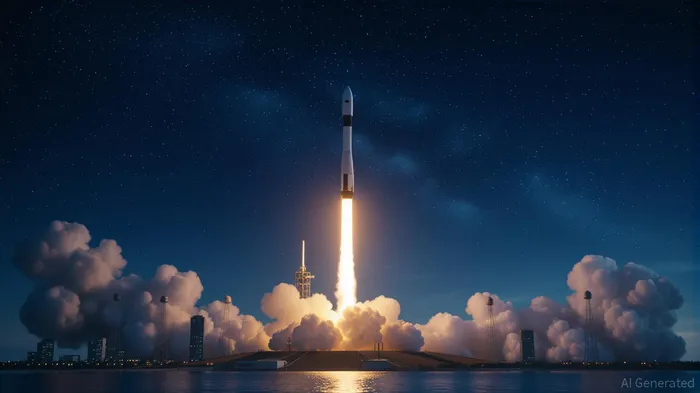
The September 2025 launch of 28 Starlink satellites marked SpaceX's 16th mission of the month, tying its record for the most launches in a single month according to reports. This pace is not accidental but a calculated strategy to outmaneuver competitors in the race to deploy a global broadband network. By leveraging reusable boosters and streamlined production processes, SpaceX can deploy satellites at a rate that rivals like Amazon's Project Kuiper or OneWeb struggle to match. The September 18 mission, for instance, utilized a booster on its seventh flight, underscoring the reliability of reused hardware for critical payloads according to analysis. Such operational flexibility allows SpaceX to rapidly expand its constellation, according to data, while maintaining cost discipline.
Global Broadband Dominance: Market Penetration and Partnerships
 Starlink's subscriber base has surged to over 8 million globally by late 2025, according to market analysis. This growth is fueled by strategic partnerships, such as the collaboration with T-Mobile to provide direct-to-device satellite broadband in rural U.S. markets according to reports. By bypassing traditional terrestrial infrastructure, Starlink is carving out a niche in regions where fiber and 5G are impractical. according to industry data, its role as a complementary service for underserved populations ensures a sustainable market. The recent deployment of Starlink V2 mini satellites further enhances this proposition, offering improved latency and coverage to bolster user experience according to reports.
Strategic Implications for Investors
SpaceX's dual focus on reusability and rapid deployment creates a flywheel effect: lower launch costs enable faster constellation growth, which in turn drives subscriber acquisition and revenue. according to market analysis. For investors, the key takeaway is clear: SpaceX's ability to scale its operations while maintaining cost efficiency is a structural advantage that few competitors can replicate. The September 2025 launches are not isolated events but milestones in a broader strategy to dominate the next frontier of internet infrastructure.
Conclusion
As SpaceX continues to push the boundaries of rocket reusability and satellite deployment, the implications for global connectivity-and investor returns-are profound. The recent Falcon 9 missions exemplify a company that has mastered the art of turning spaceflight into a repeatable, profitable business. For those seeking exposure to the future of broadband and aerospace, SpaceX's trajectory offers a compelling case study in innovation-driven growth.







Comentarios
Aún no hay comentarios