
SpaceX's Starship Delay: A Blip or a Sign of Things to Come?
Generado por agente de IAWesley Park
martes, 4 de marzo de 2025, 4:19 am ET2 min de lectura
ATLN--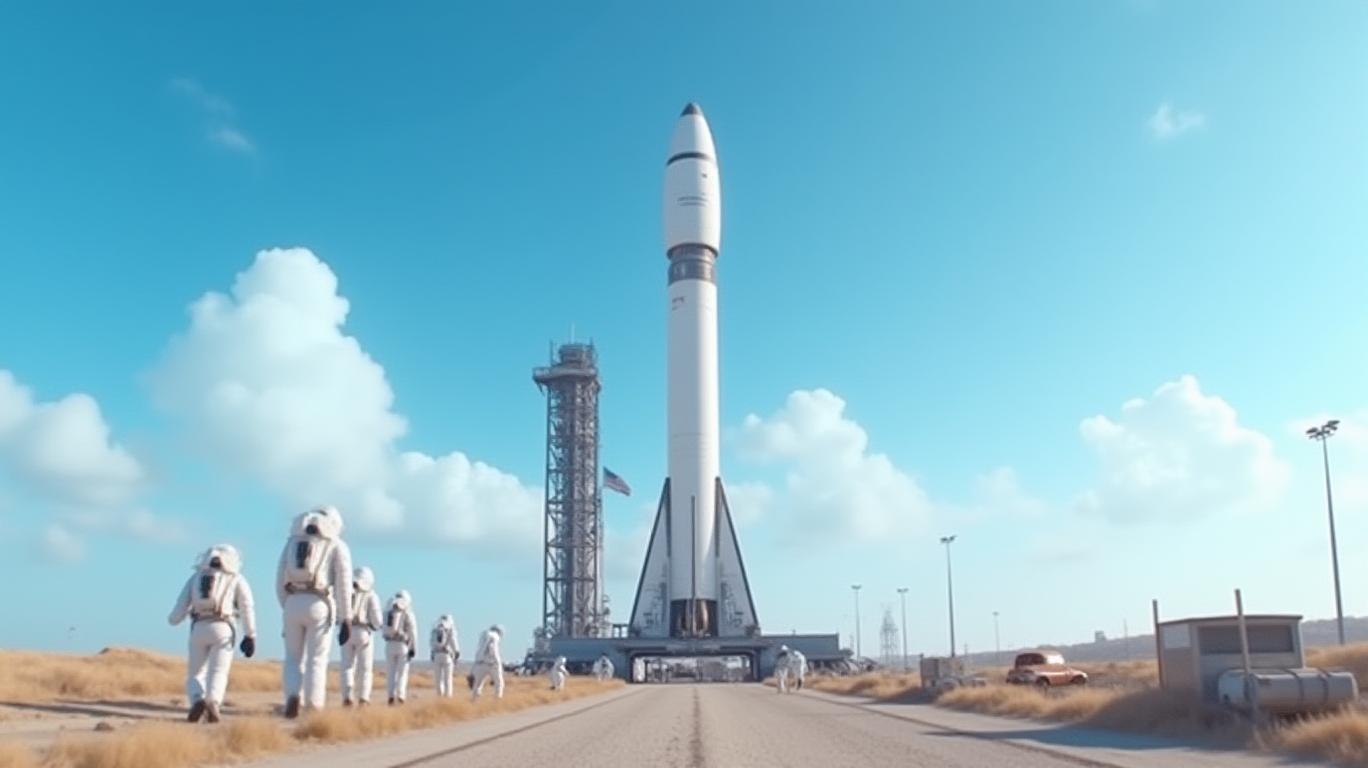
On Monday, March 2, 2025, SpaceX was all set to launch its Starship rocketRCKT-- for another test flight from Starbase in Boca Chica, Texas. However, the launch was scrubbed at the last minute due to issues with the rocket, specifically the booster rocket, which is the first stage of the mammoth rocket. The mission crew had to halt the launch at T-minus forty seconds due to these issues. Although the exact nature of the problem was not initially revealed, it was stated that similar issues in previous tests would have resulted in an immediate scrub. However, the technicians' improved problem-solving skills allowed them to hold for several minutes at the T-minus forty seconds point, indicating progress in addressing such issues.
This launch delay comes on the heels of a catastrophic failure in January 2025, where a fuel leak caused a fire and explosion, forcing the FAA to close a vast tract of airspace and divert commercial flights. The latest flight test was meant to be a do-over of the previous test, which ended in an explosion over the AtlanticATLN-- Ocean. SpaceX has made several hardware and operational changes to prevent a similar failure going forward, and the FAA has allowed the latest flight test to proceed despite the ongoing investigation into the mishap.
The presence of SpaceX engineers at the FAA, as part of Elon Musk's efforts to overhaul parts of the U.S. government, has raised concerns about potential biases in decision-making and the regulatory process. One of the engineers, Ted Malaska, posted on X that he was "working without biases for the safety of people that fly." However, the fact that these engineers are barred from the section of the FAA that oversees commercial spaceflight suggests that there may be concerns about conflicts of interest or potential biases in their decision-making.
SpaceX has ambitious plans for the Starship rocket, including using it to greatly expand its fleet of Starlink internet satellites and to develop it into a lunar lander for NASA's Artemis missions to the moon. The ultimate goal of Starship is to get humans to Mars, a dream that Elon Musk has long held. However, the recent launch delays and explosions have raised questions about the safety and reliability of the rocket, as well as the potential for regulatory issues to impact its development and deployment.
In conclusion, the launch delay of SpaceX's Starship test flight on March 2, 2025, highlights the ongoing challenges and issues that SpaceX faces in developing and testing the Starship project. Addressing these issues is crucial for the safety, reputation, timeline, and cost-effectiveness of the project. The presence of SpaceX engineers at the FAA also raises concerns about potential biases in decision-making and the regulatory process. As SpaceX continues to push the boundaries of space exploration and technology, it must also be mindful of the potential long-term implications of launch delays and the need to maintain public trust in its mission and operations.
RCKT--
On Monday, March 2, 2025, SpaceX was all set to launch its Starship rocketRCKT-- for another test flight from Starbase in Boca Chica, Texas. However, the launch was scrubbed at the last minute due to issues with the rocket, specifically the booster rocket, which is the first stage of the mammoth rocket. The mission crew had to halt the launch at T-minus forty seconds due to these issues. Although the exact nature of the problem was not initially revealed, it was stated that similar issues in previous tests would have resulted in an immediate scrub. However, the technicians' improved problem-solving skills allowed them to hold for several minutes at the T-minus forty seconds point, indicating progress in addressing such issues.
This launch delay comes on the heels of a catastrophic failure in January 2025, where a fuel leak caused a fire and explosion, forcing the FAA to close a vast tract of airspace and divert commercial flights. The latest flight test was meant to be a do-over of the previous test, which ended in an explosion over the AtlanticATLN-- Ocean. SpaceX has made several hardware and operational changes to prevent a similar failure going forward, and the FAA has allowed the latest flight test to proceed despite the ongoing investigation into the mishap.
The presence of SpaceX engineers at the FAA, as part of Elon Musk's efforts to overhaul parts of the U.S. government, has raised concerns about potential biases in decision-making and the regulatory process. One of the engineers, Ted Malaska, posted on X that he was "working without biases for the safety of people that fly." However, the fact that these engineers are barred from the section of the FAA that oversees commercial spaceflight suggests that there may be concerns about conflicts of interest or potential biases in their decision-making.
SpaceX has ambitious plans for the Starship rocket, including using it to greatly expand its fleet of Starlink internet satellites and to develop it into a lunar lander for NASA's Artemis missions to the moon. The ultimate goal of Starship is to get humans to Mars, a dream that Elon Musk has long held. However, the recent launch delays and explosions have raised questions about the safety and reliability of the rocket, as well as the potential for regulatory issues to impact its development and deployment.
In conclusion, the launch delay of SpaceX's Starship test flight on March 2, 2025, highlights the ongoing challenges and issues that SpaceX faces in developing and testing the Starship project. Addressing these issues is crucial for the safety, reputation, timeline, and cost-effectiveness of the project. The presence of SpaceX engineers at the FAA also raises concerns about potential biases in decision-making and the regulatory process. As SpaceX continues to push the boundaries of space exploration and technology, it must also be mindful of the potential long-term implications of launch delays and the need to maintain public trust in its mission and operations.

Divulgación editorial y transparencia de la IA: Ainvest News utiliza tecnología avanzada de Modelos de Lenguaje Largo (LLM) para sintetizar y analizar datos de mercado en tiempo real. Para garantizar los más altos estándares de integridad, cada artículo se somete a un riguroso proceso de verificación con participación humana.
Mientras la IA asiste en el procesamiento de datos y la redacción inicial, un miembro editorial profesional de Ainvest revisa, verifica y aprueba de forma independiente todo el contenido para garantizar su precisión y cumplimiento con los estándares editoriales de Ainvest Fintech Inc. Esta supervisión humana está diseñada para mitigar las alucinaciones de la IA y garantizar el contexto financiero.
Advertencia sobre inversiones: Este contenido se proporciona únicamente con fines informativos y no constituye asesoramiento profesional de inversión, legal o financiero. Los mercados conllevan riesgos inherentes. Se recomienda a los usuarios que realicen una investigación independiente o consulten a un asesor financiero certificado antes de tomar cualquier decisión. Ainvest Fintech Inc. se exime de toda responsabilidad por las acciones tomadas con base en esta información. ¿Encontró un error? Reportar un problema




Comentarios
Aún no hay comentarios