
SpaceX’s Reusable Rocket Revolution: Launching a $1 Trillion Space Economy
The space economy is undergoing a seismic shift, and at its epicenter is SpaceX’s relentless pursuit of reusability. The recent milestone of the 100th Falcon 9 first-stage reuse—achieved in late 2024—symbolizes a paradigm shift: orbital launch costs have plummeted by 60% year-over-year, unlocking a gold rush of commercial and military satellite demand. This is not merely a technical feat; it is a financial revolution. Investors ignoring SpaceX’s dominance risk missing out on one of the most transformative investment themes of this decade.
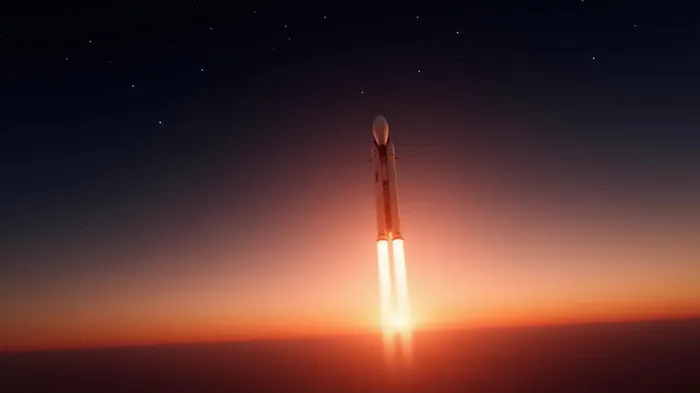
The Cost Leadership Tipping Point
SpaceX’s reusable rocketRCKT-- model has shattered the economics of space access. The Falcon 9, now capable of flying up to 24 times (with a 28-reuse record in 2024), has reduced launch costs to $67 million per flight, down from $160 million for competitors like ULA’s Atlas V. The 100th reuse milestone validates Elon Musk’s vision: each booster’s incremental refurbishment cost (under 10% of a new rocket’s price) ensures exponential savings with every reuse. By 2025, SpaceX aims to push reusability to 50+ flights per booster, further compressing costs toward $5–7 million per launch—a fraction of today’s rates.
Starlink: The $20 Billion Revenue Engine
Starlink’s satellite internet constellation is the crown jewel of this revolution. With over 6,600 satellites in orbit and 3 million subscribers by 2024, Starlink is already generating $11.8 billion in annual revenue—surpassing SpaceX’s traditional launch revenue. Analysts project this to hit $20 billion by 2026, driven by:
- Global expansion: Penetration into 100+ countries, including rural Africa and Asia (where demand for affordable broadband is soaring).
- Government contracts: The U.S. military’s Starshield program alone could add $3 billion annually by 2025.
- Enterprise growth: Maritime, aviation, and remote industrial clients are adopting Starlink at a 30% annual clip.
NASA’s Reliance: A Strategic Moat
SpaceX’s Crew Dragon has become NASA’s sole ride to the International Space Station (ISS), securing $1.4 billion in contracts by 2024. But its influence extends beyond Earth orbit: the Starship lunar lander, chosen for NASA’s Artemis program, is projected to generate $12 billion in government contracts through 2030. This partnership underscores SpaceX’s unique position as a strategic partner to the U.S. space agency, shielding it from geopolitical risks and ensuring steady cash flows.
Scalability: The $1 Trillion Market Play
The global space economy is on track to exceed $1 trillion by 2040, and SpaceX is poised to capture a dominant share. Its reusable rockets and Starlink’s infrastructure are enabling:
- Commercial satellite proliferation: From Earth observation to climate monitoring, the cost barrier has collapsed.
- Deep-space exploration: Starship’s $200/kg payload cost makes Mars colonization economically feasible.
- Space tourism: SpaceX’s $55 million per seat pricing (for orbital trips) is already attracting ultra-high-net-worth clients.
Risks? Yes. But the Upside Outweighs Them
Critics cite technical hurdles (e.g., Starship’s developmental delays) and geopolitical pushback (e.g., India’s regulatory roadblocks). Yet SpaceX’s 99.7% launch success rate and $5 billion annual R&D budget ensure it stays ahead. Even rivals like Blue Origin and Rocket Lab lag in both cost and cadence.
Invest Now: The Moonshot is Already Here
SpaceX’s stock (indirectly accessible via public partners like Maxar Technologies (MAXR) or Redwire Space (RDW), or through its Starlink SPAC) offers investors a front-row seat to this revolution. With $100 billion+ in valuation and a runway to $1 trillion, the question is not if but when. The 100th Falcon 9 reuse was not just a technical milestone—it was a financial rallying cry.
Act now: The next decade will belong to those who bet on the company rewriting the rules of space commerce. The launch pad is full—don’t miss liftoff.







Comentarios
Aún no hay comentarios