
SpaceX's Accelerated Launch Cadence and Its Implications for the Space Economy
Accelerated Launch Cadence: A Catalyst for Market Growth
SpaceX's 2025 launch schedule underscores its dominance in the global launch market. , with multiple Falcon 9 missions dedicated to Starlink satellite deployments. For instance, December 2025 alone features three Starlink missions, including a December 1 launch of 29 Starlink V2 Mini satellites from Kennedy Space Center. These missions are part of a broader strategy to expand Starlink's global coverage, with .
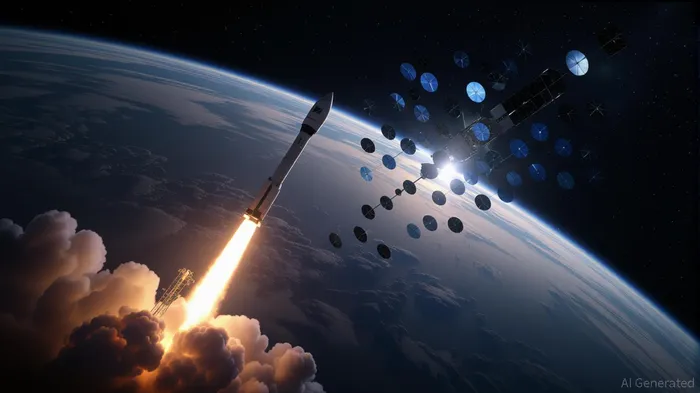 Simultaneously, SpaceX is advancing its Starship program, , including six successes. The upcoming Starship Flight Test 7 on January 15, 2025, and future in-space propellant transfer demonstrations signal progress toward interplanetary logistics-a capability that could redefine space commerce.
Fleet Expansion: Scaling for a $1.8 Trillion Economy
SpaceX's infrastructure investments are poised to amplify its impact. The Gigabay, a new production facility in Texas, aims to , while Florida's Launch Complex 39A is being upgraded to support Starship launches by mid-2026 according to NASAspaceflight.com. These efforts align with the company's goal of reducing launch costs by 90% through reusability, a factor that has already lowered barriers for satellite operators and defense contractors.
The economic implications are profound. By 2035, the space economy is , driven by commercialization and technological advancements. SpaceX's vertical integration and cost efficiencies are not only accelerating this timeline but also creating a flywheel effect: lower costs enable more launches, which in turn drive demand for satellite services and infrastructure.
Strategic Entry Points for Investors
For investors, the key lies in aligning with sectors directly influenced by SpaceX's momentum.
Space ETFs and Diversified Exposure
The Procure Space ETF (UFO) and Ark Space Exploration & Innovation ETF (ARKX) offer broad access to the sector, with . These funds include holdings like Rocket LabRKLB-- (RKLB) and AST SpaceMobileASTS-- (ASTS), which have , respectively. For risk-averse investors, ETFs mitigate volatility while capturing growth across satellite internet, launch services, and space infrastructure.Satellite Internet and Defense Sectors
SpaceX's Starlink constellation, now operating , is a cornerstone of the satellite internet boom. With , companies supplying ground infrastructure or integrating Starlink into consumer devices (e.g., automotive, aviation) present compelling opportunities.
In defense, and its role in initiatives like the U.S. "Golden Dome" missile defense program highlight its growing strategic value. Defense-focused firms leveraging SpaceX's launch capabilities or AI-driven space systems could benefit from rising global defense budgets.
- Timing the Market
Q4 2025 offers strategic entry points. For example, pullbacks in overperforming stocks like Kratos Defense (KTOS). Additionally, the launch of new ETFs or regulatory milestones (e.g., Starship's first crewed mission) may catalyze sector-wide rallies.
Conclusion: A New Era of Space Investment
SpaceX's accelerated launch cadence and fleet expansion are not just operational milestones-they are economic accelerants. By reducing costs, enabling new applications, and scaling infrastructure, the company is reshaping the space economy's trajectory. For investors, the path forward lies in capitalizing on ETFs, satellite internet, and defense sectors while timing entry points around SpaceX's key milestones. As the private space market approaches , those who align with SpaceX's vision stand to reap outsized rewards.







Comentarios
Aún no hay comentarios