
SpaceX's 2026 IPO: A Gateway to Space-Based AI and Trillion-Dollar Valuation Potential
The market is abuzz with one name: SpaceX. 's rocket ship to the stars is preparing to launch its most audacious move yet-a 2026 IPO , . This isn't just another tech IPO; it's a seismic shift in how we think about capital allocation, high-growth tech investing, and the future of space-based artificial intelligence (AI). Let's break down why this could be the most consequential IPO since the dot-com boom-and why investors need to pay attention now.
The Capital Allocation Playbook: Fueling the Next Frontier
SpaceX's IPO isn't about raising capital for survival-it's about accelerating a vision that could redefine global infrastructure. The company plans to deploy the IPO proceeds into three pillars: Starlink, space-based data centers, and Starship rocket development .
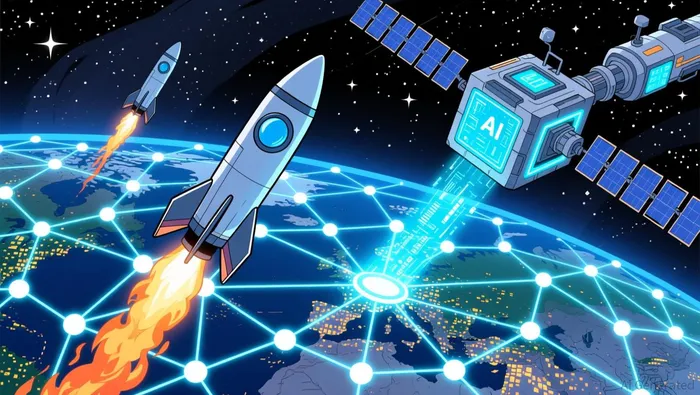
Starlink, , is the cash engine. But the real magic lies in the future. SpaceX aims to integrate AI into its satellite network, creating a decentralized, low-latency computing grid that could outperform Earth-based data centers according to market research. This isn't just speculative-it's a response to the through 2032.
 Meanwhile, signals confidence in its valuation. , SpaceX is already trading at a premium to its peers. But the IPO could push that to stratospheric levels, leveraging public market liquidity to fund projects that private capital alone cannot sustain.
High-Growth Tech Investing: The AI Arms Race in Orbit
The market is the new frontier in capital allocation. Hyperscalers like Amazon and Microsoft are pouring billions into Earth-based AI infrastructure, but SpaceX is betting on a smarter move: . By eliminating the need for cooling systems and reducing latency, according to industry analysis.
Consider the numbers: The AI in space operations market, , is . SpaceX's recent collaboration with Nvidia-training an AI model in orbit using an H100 GPU-has already proven the feasibility of orbital computing according to market research. This isn't just a tech demo; according to industry analysis.
according to their valuation models. That's not just a valuation-it's a roadmap. The company's Mars colonization goals, while decades away, are now backed by a revenue stream (Starlink) that could sustain its ambitions.
Risks and Realities: Can the Market Handle This?
Of course, no investment thesis is complete without addressing the risks. SpaceX's IPO faces regulatory hurdles, market volatility, and the ever-present question of execution risk. The AI arms race is crowded, with Google's Project Suncatcher and Blue Origin's lunar ambitions all vying for dominance.
But here's the kicker: SpaceX isn't just competing in one market-it's creating new ones. The company's ability to monetize Starlink and pioneering orbital AI infrastructure gives it a dual-revenue engine. Even if Starship development falters, .
The Bottom Line: A Once-in-a-Generation Opportunity
SpaceX's 2026 IPO isn't just about buying shares-it's about investing in a paradigm shift. The company is positioning itself at the intersection of , , and , .
For investors, the question isn't whether SpaceX can hit its valuation targets-it's whether they can stomach the wait. , this IPO could redefine what's possible in high-growth tech investing.
As Musk himself put it: "The timing is right." Now it's up to the market to decide if it's ready for the next great leap.







Comentarios
Aún no hay comentarios