
The Space Race's Delicate Balance: Innovation vs. Safety in SpaceX's Starship Journey
The commercial space race is entering a critical phase, driven by Elon Musk's vision of humanity becoming a multiplanetary species. At the forefront is SpaceX's Starship program, a $5 billion endeavor to build the world's most powerful rocket. Yet, recurring test failures since 2023—11 out of 13 launches have ended in catastrophic explosions—highlight the precarious balance between rapid innovation and operational safety. This article examines how Starship's setbacks are reshaping investor sentiment, regulatory frameworks, and the broader space industry's trajectory, while offering insights into opportunities amid the turbulence.
The Operational Risks: A Timeline of Failure and Adaptation
SpaceX's "fail fast, learn fast" ethos has accelerated Starship's development, but the cost is steep. Since 2023, failures have exposed systemic challenges:
- Engine Reliability: Multiple launches have been derailed by engine outages (Flight Test 1, 2023) and fires caused by harmonic vibrations (Flight Test 7, 2024).
- Propulsion Control: Propellant leaks during reentry (Flight Test 8, 2024) and mid-flight disintegration (May 2025 over the Indian Ocean) underscore unresolved thermal and structural weaknesses.
- Reusability Hurdles: While 3 of 15 boosters have been successfully caught midair by "chopsticks," upper-stage recovery remains elusive.
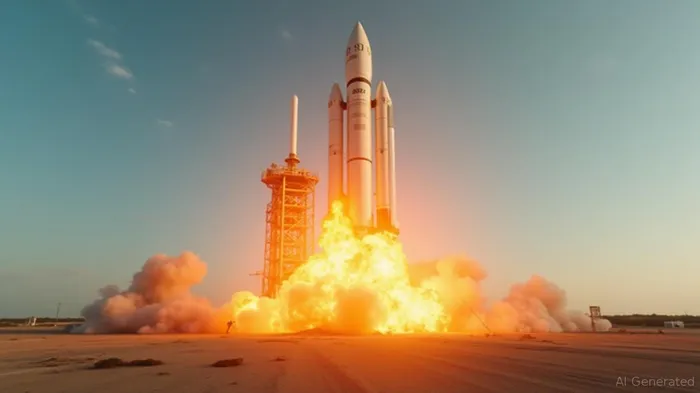
The most recent failure—a June 2025 static fire test explosion at Starbase—destroyed the $100 million Ship 36 prototype, delaying plans for the 10th orbital test flight. Each incident forces SpaceX to pivot resources from progress to damage control, raising questions about whether the "fail fast" model can sustain investor patience.
Investor Concerns: Cost, Timeline, and Leadership Risks
The financial toll of Starship's failures is mounting. Each test costs $50–100 million, with cumulative losses exceeding $1 billion since 2019. For investors, the risks are twofold:
1. Technical Debt: Unresolved engine and thermal issues could push NASA's $2.8 billion lunar lander contract beyond its 2027 deadline, risking penalties or contract reallocation to competitors like Lockheed Martin's SLS rocket.
2. Leadership Scrutiny: Musk's alleged noncompliance with FAA directives, erratic management style, and reported financial missteps threaten SpaceX's security clearances and access to government contracts.
This visualization would show how aerospace sector ETFs have outperformed SpaceX's capital requirements, reflecting investor caution toward high-risk ventures.
Regulatory Crossroads: Safety vs. Innovation
The FAA's response to Starship's failures has become a litmus test for commercial space regulation:
- Expanded Debris Zones: Post-June 2025, the FAA mandated a 1,841-mile hazard zone for future launches, increasing logistical costs and delaying flight approvals.
- Environmental Backlash: Debris from mid-air explosions has landed in sensitive ecosystems (e.g., Turks and Caicos), prompting lawsuits under the National Environmental Policy Act.
While the FAA approved a license to increase annual launches from 5 to 25 in 2025, this decision came with stringent conditions, including real-time debris tracking and post-launch environmental audits. The message is clear: innovation must align with accountability.
Winners in the Wings: Competitors and Alternatives
Starship's stumbles have created openings for rivals:
1. Blue Origin: Its lunar lander, New Glenn rocket, and partnerships with NASA's VIPER mission position it to capitalize on delays in Starship's lunar ambitions.
2. Rocket Lab: The Electron small-satellite launcher offers cost-effective alternatives for companies seeking rapid orbital access without betting on SpaceX's high-risk trajectory.
3. Arianespace: Europe's Vega-C rocket, now operational, targets the growing market for institutional and government launches.
Investors seeking exposure to the space sector without SpaceX's volatility can look to:
- ETFs: The XAR ETF tracks aerospace giants like Lockheed Martin (LMT) and Raytheon (RTX).
- Stocks: Boeing (BA) and Northrop Grumman (NOC) benefit from NASA's continued reliance on traditional contractors.
Investment Takeaways: Proceed with Caution
The Starship saga underscores the high-risk, high-reward dynamic of commercial space ventures. For investors:
- Hold SpaceX equity only if you're prepared for prolonged volatility. Success hinges on resolving engine and thermal issues before 2027's lunar deadline.
- Diversify into sector ETFs (e.g., XAR) to mitigate overexposure to any single player.
- Monitor competitors: Blue Origin (via Amazon's AMZN stock) and Rocket Lab (RKLB) offer lower-risk exposure to space innovation.
The road to Mars is paved with technical hurdles and regulatory hurdles alike. While SpaceX's vision remains unmatched, the path forward demands a balance between Musk's "fail fast" ethos and the discipline to learn from failure—before investors and regulators lose patience altogether.
Final note: The commercial space race is a marathon, not a sprint. Investors should prioritize firms with proven execution over those betting everything on a single audacious bet.







Comentarios
Aún no hay comentarios