
U.S. Space Force Launches L3Harris-Built NTS-3 Satellite with United Launch Alliance Vulcan Rocket.
PorAinvest
miércoles, 13 de agosto de 2025, 9:13 pm ET2 min de lectura
LHX--
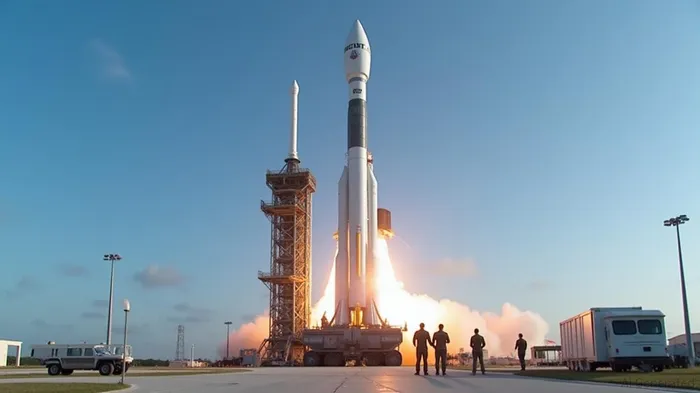
The NTS-3 satellite, which was built by L3Harris Technologies (NYSE: LHX), launched on August 12, 2025, from the Cape Canaveral Space Force Station. The satellite is equipped with advanced technologies that will allow it to perform a variety of experiments, including testing on-orbit, next-generation technologies that assist warfighters in contested environments. This marks the first experimental navigation satellite system for the Department of Defense in nearly 50 years.
Ed Zoiss, President of Space and Airborne Systems at L3Harris, emphasized the importance of accurate and uninterrupted PNT for modern warfare. "The need for accurate and uninterrupted PNT has never been more essential to our warfighters who operate in GPS-denied environments," he said. "The successful launch of the NTS-3 system is the first step in updating 20th century technology to help address current threats to our national security."
L3Harris delivered the NTS-3 satellite three times faster and at a lower cost than similar programs by leveraging industry standard form factors and interfaces. The satellite is also smaller and lighter than traditional PNT satellites and will operate at a higher altitude. Once on-orbit, the satellite will perform experiments to shape the future of U.S. space-based PNT capabilities.
The ULA Vulcan rocket used for this launch was critical in delivering the NTS-3 satellite to a precise orbit. The rocket used two L3Harris RL10 engines, providing a combined total thrust of nearly 48,000 pounds. The rocket also used 12 MR-107 thrusters to help steer the upper stage and helium tanks that are essential to the rocket’s operation. Key company spaceflight avionics include controllers, data acquisition units, and the T-740U Transmitter, which are crucial for vehicle control and data relay during launch.
The successful launch of the NTS-3 satellite is a significant milestone for the U.S. Space Force and L3Harris Technologies. It marks the end of a decade-long transition away from Russian-made engines and solidifies ULA's role alongside SpaceX in securing U.S. space access. The mission also underscores the importance of investing in advanced technologies to enhance GPS precision and resilience, supporting strategic advancements in navigation and space-based infrastructure protection.
References:
[1] https://www.morningstar.com/news/business-wire/20250811400089/us-space-force-successfully-launches-l3harris-built-nts-3-satellite
[2] https://www.l3harris.com/newsroom/press-release/2025/08/us-space-force-successfully-launches-l3harris-built-nts-3-satellite
[3] https://www.ainvest.com/news/vulcan-rocket-set-launch-ussf-106-mission-reliance-russian-engines-2508/
The US Space Force has successfully launched the L3Harris-built Navigation Technology Satellite-3 (NTS-3) on a United Launch Alliance Vulcan rocket from Cape Canaveral Space Force Station. The satellite aims to provide accurate and uninterrupted positioning, navigation, and timing (PNT) in GPS-denied environments, addressing current threats to national security. This is the first step in updating 20th-century technology to support warfighters in these environments.
The US Space Force has successfully launched the L3Harris-built Navigation Technology Satellite-3 (NTS-3) on a United Launch Alliance (ULA) Vulcan rocket from Cape Canaveral Space Force Station. The satellite aims to provide accurate and uninterrupted positioning, navigation, and timing (PNT) in GPS-denied environments, addressing current threats to national security. This is the first step in updating 20th-century technology to support warfighters in these environments.The NTS-3 satellite, which was built by L3Harris Technologies (NYSE: LHX), launched on August 12, 2025, from the Cape Canaveral Space Force Station. The satellite is equipped with advanced technologies that will allow it to perform a variety of experiments, including testing on-orbit, next-generation technologies that assist warfighters in contested environments. This marks the first experimental navigation satellite system for the Department of Defense in nearly 50 years.
Ed Zoiss, President of Space and Airborne Systems at L3Harris, emphasized the importance of accurate and uninterrupted PNT for modern warfare. "The need for accurate and uninterrupted PNT has never been more essential to our warfighters who operate in GPS-denied environments," he said. "The successful launch of the NTS-3 system is the first step in updating 20th century technology to help address current threats to our national security."
L3Harris delivered the NTS-3 satellite three times faster and at a lower cost than similar programs by leveraging industry standard form factors and interfaces. The satellite is also smaller and lighter than traditional PNT satellites and will operate at a higher altitude. Once on-orbit, the satellite will perform experiments to shape the future of U.S. space-based PNT capabilities.
The ULA Vulcan rocket used for this launch was critical in delivering the NTS-3 satellite to a precise orbit. The rocket used two L3Harris RL10 engines, providing a combined total thrust of nearly 48,000 pounds. The rocket also used 12 MR-107 thrusters to help steer the upper stage and helium tanks that are essential to the rocket’s operation. Key company spaceflight avionics include controllers, data acquisition units, and the T-740U Transmitter, which are crucial for vehicle control and data relay during launch.
The successful launch of the NTS-3 satellite is a significant milestone for the U.S. Space Force and L3Harris Technologies. It marks the end of a decade-long transition away from Russian-made engines and solidifies ULA's role alongside SpaceX in securing U.S. space access. The mission also underscores the importance of investing in advanced technologies to enhance GPS precision and resilience, supporting strategic advancements in navigation and space-based infrastructure protection.
References:
[1] https://www.morningstar.com/news/business-wire/20250811400089/us-space-force-successfully-launches-l3harris-built-nts-3-satellite
[2] https://www.l3harris.com/newsroom/press-release/2025/08/us-space-force-successfully-launches-l3harris-built-nts-3-satellite
[3] https://www.ainvest.com/news/vulcan-rocket-set-launch-ussf-106-mission-reliance-russian-engines-2508/
Divulgación editorial y transparencia de la IA: Ainvest News utiliza tecnología avanzada de Modelos de Lenguaje Largo (LLM) para sintetizar y analizar datos de mercado en tiempo real. Para garantizar los más altos estándares de integridad, cada artículo se somete a un riguroso proceso de verificación con participación humana.
Mientras la IA asiste en el procesamiento de datos y la redacción inicial, un miembro editorial profesional de Ainvest revisa, verifica y aprueba de forma independiente todo el contenido para garantizar su precisión y cumplimiento con los estándares editoriales de Ainvest Fintech Inc. Esta supervisión humana está diseñada para mitigar las alucinaciones de la IA y garantizar el contexto financiero.
Advertencia sobre inversiones: Este contenido se proporciona únicamente con fines informativos y no constituye asesoramiento profesional de inversión, legal o financiero. Los mercados conllevan riesgos inherentes. Se recomienda a los usuarios que realicen una investigación independiente o consulten a un asesor financiero certificado antes de tomar cualquier decisión. Ainvest Fintech Inc. se exime de toda responsabilidad por las acciones tomadas con base en esta información. ¿Encontró un error? Reportar un problema


SOBRE NOSOTROS
Nuestra historiaAutores de noticiasBase de conocimientosPolítica de privacidadTérmino de usoDescargo de responsabilidad de corretaje de tercerosTérminos de uso de AIMEDivulgaciones de riesgos de AInvest AICarrerasCONTÁCTENOS
Email: support@ainvest.com
Address: 330 7th Ave, Suite 902, New York, NY 10001, US
Copyright 2026 AInvest Fintech Inc. All rights reserved.


Comentarios
Aún no hay comentarios