
SPAC Market Rebound and Range Capital Acquisition Corp II (RNGTU) as a Strategic Opportunity
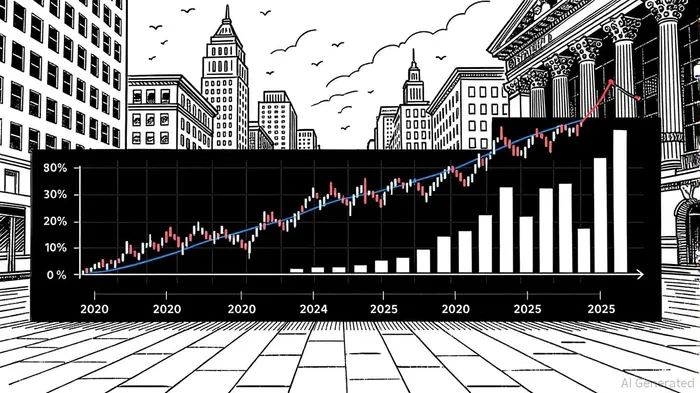
The SPAC market is undergoing a nuanced revival in 2025, marked by a shift from speculative fervor to a more fundamentals-driven approach. While the number of SPAC IPOs remains below the 2020–2021 peak, the market has stabilized through regulatory reforms, institutional re-engagement, and the emergence of the SPAC 2.0 model. According to a report by the Boston Institute of Analytics, SPACs now emphasize transparency, structured governance, and stronger company fundamentals, addressing many of the criticisms from the earlier era [2]. This evolution is critical, as investor sentiment has improved significantly compared to the 2022–2024 period, when underperformance and regulatory scrutiny led to a sharp decline in activity [1].
SPAC 2.0 and Investor Sentiment: A New Paradigm
The SPAC 2.0 model has redefined market dynamics. Regulatory clarity introduced by the SEC in 2023, including stricter disclosure requirements, has aligned SPACs more closely with traditional IPO standards [2]. Institutional investors, once wary of SPACs due to their historical underperformance, are now prioritizing quality over hype. For instance, the increased use of PIPE (Private Investment in Public Equity) financing has provided stability and credibility to SPAC transactions, reducing dilution risks and enhancing investor confidence [2].
This shift is evident in the broader capital markets. The global IPO market raised $29.3 billion in Q1 2025 alone, with 291 IPOs, signaling renewed appetite for credible, fundamentals-driven deals [3]. Meanwhile, the U.S. IPO market saw a 16% increase in the number of deals in Q2 2025 compared to the same period in 2024, despite a 20% decline in gross proceeds, reflecting a focus on quality over quantity [5]. Technology, media, and telecommunications led the charge, accounting for 24% of deals and nearly half of total proceeds [5].
Range Capital Acquisition Corp II (RNGTU): A Case Study in Strategic Niche
Against this backdrop, Range CapitalRANG-- Acquisition Corp II (RNGTU) emerges as a compelling case study. As a SPAC focused on the commercial real estate and real estate services sector, RNGTU operates in a niche that aligns with broader economic trends. Its historical activities, such as the acquisition of HFF, Inc. by Jones Lang LaSalleJLL-- Inc., highlight its expertise in capital markets and real estate services [1]. While specific 2025 targets remain undisclosed, the SPAC’s sector focus positions it to capitalize on the growing demand for infrastructure and real estate solutions in a post-pandemic economy.
However, RNGTU faces significant challenges. Recent SEC filings reveal limited operating funds, with management expressing substantial doubt about the company’s ability to continue as a going concern [4]. As of June 30, 2025, RNGTU held $529,232 in cash and $483,417 in working capital, with a June 2026 deadline to complete a business combination [4]. These constraints underscore the urgency for RNGTU to identify a viable target and secure additional financing, potentially through PIPEs or strategic partnerships.
Strategic Opportunities and Risks
The SPAC 2.0 environment offers RNGTU a unique opportunity to leverage its sector expertise while navigating the challenges of a more discerning market. The real estate sector, in particular, has shown resilience amid macroeconomic volatility, driven by demand for industrial and logistics assets, as well as sustainable infrastructure projects. According to PwC’s 2025 midyear capital markets outlook, sectors with clear value propositions—such as real estate—are likely to attract investor interest, especially if they align with ESG (Environmental, Social, and Governance) trends [3].
Nevertheless, RNGTU’s path forward is not without risks. The de-SPAC process remains complex, with only 16 mergers completed year-to-date in 2025 compared to 36 in the same period in 2024 [5]. Additionally, RNGTU’s limited liquidity and the need to meet its 2026 deadline create operational pressures. A survey of SPAC market professionals, however, reveals cautious optimism: 61% expect significant improvement in de-SPAC performance in 2025 compared to 2024 [4]. This suggests that while challenges persist, the market is beginning to reward well-structured, sector-specific SPACs like RNGTU.
Conclusion: Balancing Caution and Opportunity
The SPAC market’s 2025 rebound reflects a maturing ecosystem where transparency, governance, and fundamentals take precedence. For RNGTU, success hinges on its ability to leverage its real estate expertise in a sector poised for growth while addressing its liquidity constraints. While the road to a de-SPAC merger is fraught with challenges, the SPAC 2.0 framework provides a more robust foundation for long-term value creation. Investors considering RNGTU should weigh its niche focus and sector potential against its operational risks, recognizing that the SPAC’s strategic value lies in its alignment with broader economic trends and the evolving SPAC landscape.
Source:
[1] SPAC Statistics for 2025, [https://www.fool.com/research/spac-statistics-ipos/]
[2] Decoding SPAC 2.0: What's Different In The 2025 Revival, [https://bostoninstituteofanalytics.org/blog/decoding-spac-2-0-whats-different-in-the-2025-revival/]
[3] Q2 2025 US IPO market trends, [https://www.ey.com/en_us/insights/ipo/ipo-market-trends]
[4] RANGU SEC Filings - Range Capital Acquisition 10-K ..., [https://www.stocktitan.net/sec-filings/RANGU/]
[5] Capital markets 2025 midyear outlook, [https://www.pwc.com/us/en/services/consulting/deals/us-capital-markets-watch.html]





Comentarios
Aún no hay comentarios