
Soy Futures and Global Supply Chain Shifts: Assessing Risks and Opportunities in Commodity Trading
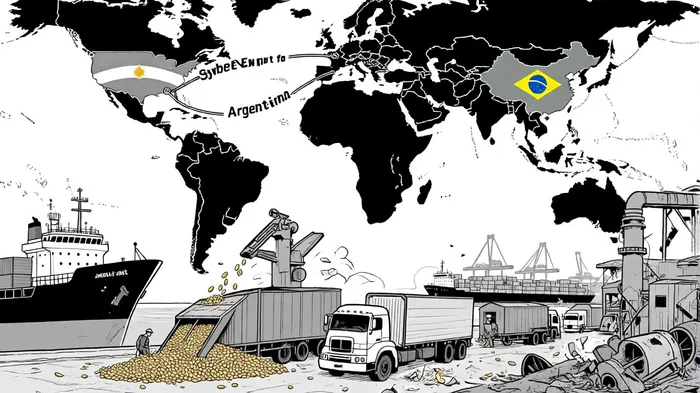
Argentina's soybean export resurgence in 2025 has become a linchpin in global commodity markets, reshaping trade flows, futures pricing, and investment strategies. With June 2025 export commitments hitting a record 6.1 million tonnes—22% above the five-year average—the country's strategic tax cuts and favorable production conditions have positioned it as a dominant player in a shifting global soybean landscape[1]. This surge, driven by China's diversification away from U.S. imports amid trade tensions, has triggered a cascade of effects on soy futures, geopolitical dynamics, and industrial competitiveness.
Argentina's Export Surge: A Double-Edged Sword
The 2024/25 season has seen Argentina's soybean production reach 50.3 million tonnes, the highest since 2021[1]. Temporary export tax reductions, including a suspension of duties on soybeans, oil, and meal until October 2025 or $7 billion in exports, have incentivized front-loaded shipments[2]. These policies have enabled Argentina to secure a significant share of China's soybean demand, with unprocessed exports hitting a six-year high of 8.81 million tonnes[3]. However, this focus on raw soybean exports has come at a cost: domestic crushing capacity utilization has plummeted to 69%, with idle plants exceeding 30% in July 2025[3]. The trade-off between short-term export revenue and long-term value-added processing highlights a critical vulnerability in Argentina's export model.
Global Soy Futures: Volatility Amid Surplus Supply
Argentina's export surge has exacerbated global soybean supply gluts, particularly as Brazil's 2025/26 harvest projections also hit record highs[4]. By September 2025, soybean futures had fallen to $1,007.34 per bushel, a 0.41% decline, reflecting oversupply concerns and reduced U.S. demand from China[4]. The U.S. soy market, already strained by trade war dynamics, now faces intensified competition from Argentina's aggressive pricing—soybean meal and oil exports are often discounted by 40–45 cents per bushel[5]. Meanwhile, China's stockpiling of South American soybeans has reduced its reliance on U.S. imports, further depressing prices and futures volatility[1].
Geopolitical and Industrial Implications
The U.S.-China trade war remains a wildcard, but Argentina's role as a supplier to China's soybean needs has created a new axis of influence. China's preference for raw soybeans over processed derivatives has weakened Argentina's domestic crushing industry, which now faces declining margins and job losses[3]. Additionally, the European Union's potential restrictions on U.S. soybeans due to pesticide regulations could further tilt demand toward South American suppliers, amplifying Argentina's competitive edge[5]. However, logistical bottlenecks, currency fluctuations, and policy reversals (such as the July 2025 tax hikes) pose risks to sustained export growth[1].
Investment Considerations: Navigating the Soybean Landscape
For investors, Argentina's soybean export dynamics present both opportunities and risks. The country's strategic tax policies and production resilience offer a hedge against U.S. market volatility, particularly if trade tensions escalate. However, domestic processing challenges and reliance on China's shifting demand patterns introduce uncertainty. Key metrics to monitor include Argentina's export tax policies, currency stability, and global soybean price trends. Diversified portfolios might balance exposure to Argentina's soy sector with hedging against U.S. and Brazilian supply shifts.
In conclusion, Argentina's soybean export resurgence underscores the interconnectedness of global commodity markets. While the country's aggressive export strategies have bolstered its market share, the long-term sustainability of these gains depends on balancing domestic industrial needs with global demand. For traders and investors, the path forward requires vigilance in navigating policy shifts, geopolitical tensions, and the delicate equilibrium between raw commodity exports and value-added processing.







Comentarios
Aún no hay comentarios