
Southwest Airlines: Navigating Activist Pressure and Demand Shifts for Long-Term Viability
Southwest Airlines (LUV) has long been synonymous with low-cost, no-frills travel, but its recent transformation—driven by activist investors, shifting passenger preferences, and economic headwinds—has sparked debate about its long-term viability. As the airline undergoes governance reforms, cost-cutting initiatives, and strategic pivots, investors must weigh whether these changes position Southwest to thrive or if they signal a retreat from its core strengths.
Governance Overhaul: A Double-Edged Sword
The arrival of activist investor Elliott Investment Management in 2023 marked a turning point for Southwest. The firm's push for board refreshment and leadership changes has led to a dramatic overhaul: six directors, including Senator Roy Blunt and Jill Soltau, will exit by late 2024, with three new seats potentially filled by Elliott-aligned candidates. The goal is to reduce average director tenure from 7.3 years to 2.5 years by 2025, aiming to modernize decision-making and prioritize shareholder returns.
While this shakeup could inject urgency into profit-driven strategies, it also risks destabilizing Southwest's culture. The airline's legendary employee morale and operational reliability—key to its "Southwest Spirit" brand—have been built over decades. Replacing long-tenured leaders with outsiders could dilute this ethos. The board's unanimous support for CEO Bob Jordan, however, offers some continuity. Jordan's 36-year tenure at Southwest, including steering the company through the pandemic, underscores his deep institutional knowledge.
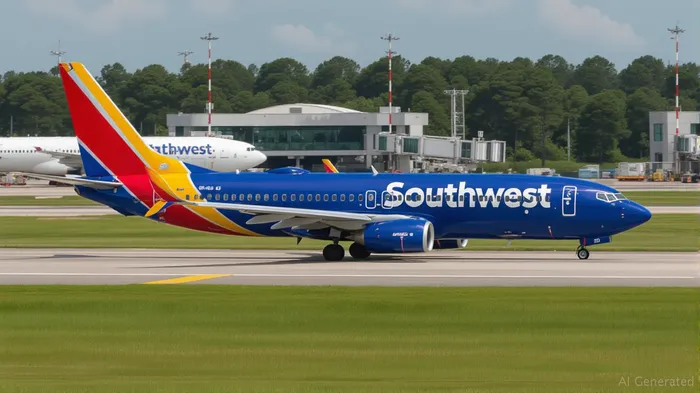
Strategic Shifts: Balancing Innovation and Identity
Southwest's product transformation—introducing assigned seating, premium seating options, and baggage fees for non-loyal travelers—reflects a bid to align with evolving passenger preferences. Research cited in the search results shows 80% of Southwest's customers prefer assigned seats, and the airline aims to roll out this feature by early 2026. Meanwhile, its "Bags Fly Free" policy, a cornerstone of its appeal, now faces exceptions for basic economy fares, a move critics argue risks alienating budget-conscious travelers.
The airline's financial targets amplify the stakes: $4 billion in incremental EBIT by 2027, driven by $500 million in annualized cost savings and new revenue streams. However, these changes come with risks. Competitors like FrontierULCC-- Airlines have already undercut Southwest with aggressive promotions, including free checked bags and seat assignments. Southwest's move to mimic these tactics could erode its differentiation, while its workforce—long a source of pride—may resist new cost-cutting measures like reduced hiring and voluntary time-off programs.
Financial Crossroads: Cost Discipline vs. Demand Volatility
Southwest's financial performance in 2024–2025 reveals a company at a crossroads. While operating revenues hit record highs ($27.5 billion in 2024), net income dropped to $465 million, or 1.7% of revenue—a stark contrast to its 6.2% net margin in 2021. Key drivers:
- Cost Pressures: Non-fuel CASM rose 11% year-over-year in Q1 2025 due to labor and maintenance costs, despite fuel efficiency gains from newer aircraft.
- Capacity Adjustments: Southwest reduced capacity by 4.4% in Q4 2024 and plans 1–2% growth in 2025, aiming to avoid oversupply in a weakening demand environment.
Investors should note that Southwest's stock has underperformed peers, trading at a forward P/E of 7.8x—well below its 5-year average of 11.2x. This discount reflects concerns about margin compression, but it also hints at a potential rebound if cost cuts and network optimization bear fruit.
Risks and Uncertainties
- Fuel Price Volatility: Southwest's decision to abandon fuel hedging exposes it to rising crude oil prices. With 53% of 2025 fuel consumption unhedged, even a modest price increase could squeeze margins.
- Operational Risks: The Orlando runway incident in 2024 and ongoing IT modernization efforts highlight vulnerabilities. A repeat of such disruptions could further strain customer trust.
- Competitive Landscape: Frontier's aggressive pricing and Spirit's low-cost model threaten Southwest's market share, especially in secondary markets.
Investment Thesis: Hold for the Long Game, But Mind the Risks
Southwest's transformation is a high-stakes gamble. On the positive side:
- Its liquidity ($9.7 billion) and disciplined capital allocation—evidenced by a $2.5 billion share buyback—provide a cushion.
- Fleet modernization and turn-time reductions could boost efficiency, while assigned seating may unlock incremental revenue.
However, investors must remain cautious:
- Near-term profitability is clouded by cost inflation and weak demand.
- The risk of losing its customer-centric identity could alienate loyal travelers.
Recommendation: Investors with a long-term horizon (3+ years) might consider accumulating shares at current depressed valuations, particularly if Southwest's cost discipline and network adjustments stabilize margins. However, those focused on short-term gains should wait for clearer signs of execution success. Monitor Q3 2025 results for progress on CASM-X reduction and assigned seating adoption.
Final Verdict
Southwest Airlines is at a pivotal juncture. Its governance reforms and strategic shifts aim to rebalance shareholder returns and operational resilience, but the execution will determine whether it can sustain its iconic status—or become a cautionary tale of overreach. For now, the jury is out, but the stakes have never been higher.





Comentarios
Aún no hay comentarios