
Southeast Asia Manufacturing: The New Safe Haven Amid U.S. Tariff Turmoil
The U.S. tariffs on Japan and South Korea, set to fully take effect this August, have thrown global supply chains into disarray. But for investors, this chaos presents a clear path to profit: Southeast Asia's manufacturing sector is primed for a boom as companies flee tariff-ridden markets. From Vietnam's cost advantages to Malaysia's tech prowess, the region is rapidly becoming the go-to destination for manufacturers seeking to dodge U.S. protectionism while capitalizing on proximity to China.
Why Southeast Asia?
The tariffs—25% on Japanese and South Korean autos, textiles, and tech components—are forcing firms to reorient production to countries with lower trade barriers. Vietnam, Thailand, and Malaysia offer a trifecta of benefits:
- Cost Efficiency: Labor costs in these countries are 30-50% lower than in Japan and South Korea. Vietnam's manufacturing wage is just $200/month, compared to $2,500 in Japan.
- Geographic Proximity: Located near China's industrial hubs, Southeast Asia allows companies to stay close to suppliers while avoiding U.S. punitive tariffs.
- Bilateral Deals: Vietnam secured exemptions for textiles and electronics in its trade framework with the U.S., while Malaysia's tech sector benefits from a 20% tariff cap on exports.
Sector Breakdown: Where to Invest
1. Automotive: Thailand and Vietnam Lead the Charge
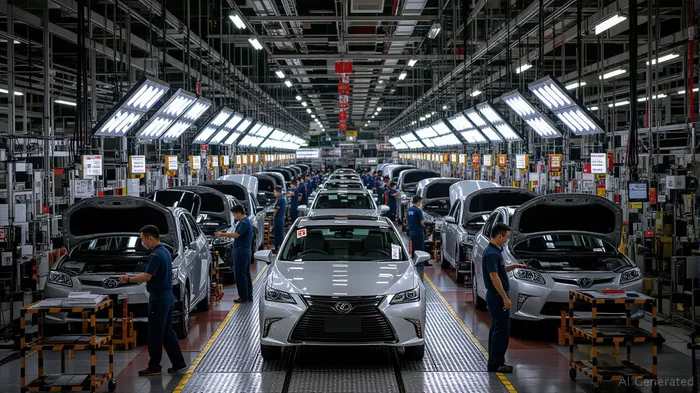
Japanese automakers like ToyotaTM-- and HondaHMC-- are already moving production to Thailand to sidestep the 25% U.S. auto tariff. Thailand's automotive exports to the U.S. rose 17% in 2024, while its labor costs are half Japan's.
Investment Play:
- Thai auto suppliers: Companies like PTT Global Chemical (PTTGC), which supplies materials to Toyota, are likely to see rising demand.
- Vietnam's assembly sector: Foreign direct investment (FDI) in Vietnamese automotive manufacturing hit $4.2B in 2024, up 60% from 2023.
2. Textiles: Vietnam's Golden Opportunity
Vietnam's textile industry is set to capture $12B in displaced Japanese and South Korean exports. The U.S. exempted Vietnamese textiles from the 25% tariff under its bilateral framework, making it a no-brainer for firms like Uniqlo and NikeNKE--.
Investment Play:
- Vietnamese textile giants: Masan Group (MSN) and Vietnam Textile and Apparel (VTA) are well-positioned to scale.
- ETFs: The iShares MSCIMSCI-- Vietnam ETF (VNM) tracks the region's broader manufacturing boom.
3. Tech Components: Malaysia's Quiet Rise
Malaysia's semiconductor and electronics sectors are benefiting from U.S. tariffs on South Korean components. The country's Penang Technology Park hosts 500+ tech firms, including IntelINTC-- and Samsung, which now see Malaysia as a safer bet than facing U.S. levies.
Investment Play:
- Malaysian semiconductor stocks: Malaysia Microelectronics (MME) and Unisem (7107) are key beneficiaries.
- Supply chain plays: Companies like Flex Ltd. (FLEX), which outsource to Malaysia, could see margin improvements.
The Clock Is Ticking
The urgency to act is clear: capacity constraints are tightening fast. Vietnam's industrial zones are already 85% occupied, with land prices in key manufacturing hubs like Bac Ninh rising 40% since 2023. Meanwhile, Thailand's automotive factories are operating at near-maximum capacity.
Investment Advice:
- Act now on undervalued stocks in Southeast Asia's manufacturing sector before prices surge.
- Avoid overexposure to Japan/South Korea: Their manufacturing stocks (e.g., Toyota (TM), Hyundai (HYMTF)) face prolonged headwinds.
- Watch for U.S. policy shifts: The August 1 deadline is looming, but further delays or exemptions could alter the landscape.
Conclusion: The New Manufacturing World Order
The U.S.-Japan/South Korea tariff war isn't just a geopolitical squabble—it's a massive reallocation of capital toward Southeast Asia. Investors who pivot now can lock in gains as companies scramble to secure cheaper, safer production hubs. The region's growth won't be temporary; it's the start of a structural shift in global manufacturing.
Act before the window closes.







Comentarios
Aún no hay comentarios