
South Korean Tech and Biotech Stocks in a Global Recovery Narrative: Sector Momentum Driven by Samsung and SK Hynix
In 2025, South Korea's tech and biotech sectors have emerged as twin engines of global economic recovery, driven by the meteoric rise of SK Hynix in memory chips and the resilience of Samsung's diversified innovation strategy. As artificial intelligence (AI) infrastructure demand surges, these companies are not only reshaping their industries but also catalyzing broader economic momentum, with ripple effects extending into the biotech sector.
Tech Sector Momentum: SK Hynix's AI-Driven Dominance
SK Hynix has seized the AI memory boom, dethroning Samsung as the global leader in DRAM for the first time in their shared history. In Q2 2025, the company reported record revenues of 22.23 trillion won and operating profit of 9.21 trillion won ($6.7 billion), reflecting a 35% year-over-year revenue increase and a 68% surge in profitability, according to SK Hynix's Q2 2025 financial results. This success stems from its 70% share of the high-bandwidth memory (HBM) market, a critical component for AI training systems, as noted in a TechWireAsia analysis.
The company's aggressive capital expenditure plans, including the expansion of its M15X fabrication plant in Cheongju and the development of HBM4 by late 2025, underscore its commitment to maintaining leadership, according to Techovedas coverage. Diversification efforts, such as securing partnerships with OpenAI and reducing reliance on NvidiaNVDA--, further insulate SK Hynix from customer concentration risks. Analysts note that its SoCAMM (Small Outline Compression Attached Memory) module, designed for low-power AI servers, could unlock new markets in edge computing.
Samsung's Strategic Rebalancing
While Samsung's chip business faced headwinds-its Device Solutions division saw a 93.8% year-over-year operating profit decline-its broader ecosystem demonstrated resilience, according to a FoneArena report. The company's Mobile eXperience (MX) division achieved 3.1 trillion won in operating profit, driven by Galaxy S25 and A-series sales in emerging markets. Samsung's long-term strategy hinges on AI integration, with plans to expand its Galaxy ecosystem into extended reality (XR) and TriFold devices.
In semiconductors, Samsung aims to regain ground by scaling 8th-generation V-NAND and high-density DDR5 products. However, SK Hynix's HBM dominance poses a challenge, as the latter's 42% HBM revenue contribution (vs. Samsung's 19%) highlights a strategic divergence noted earlier. Samsung's "herbivorous dinosaur" metaphor-emphasizing agility over size-signals a cultural shift to adapt to AI-driven market dynamics.
Biotech Synergies: Export Growth and Global Partnerships
The biotech sector has mirrored the tech industry's momentum, with Samsung Biologics and SK Biopharm leading a global recovery narrative. In Q1 2025, Samsung Biologics reported 1.3 trillion won in revenue and a 119.9% year-over-year operating profit increase, driven by expanded production capacity at Plants 4 and 5, according to Samsung Biologics' Q1 results. Its ADC facility, operational in 2025, positions the company to capitalize on the $10 billion antibody-drug conjugate market.
South Korea's biotech industry as a whole saw a 40% surge in exports in the first half of 2025, fueled by demand for biosimilars and partnerships with global pharma giants like Eli Lilly and AstraZeneca, a BusinessKorea report noted. Government initiatives, including the National Bio Committee established in January 2025, have accelerated drug development timelines and reduced costs, reinforcing the country's status as a biopharma hub.
Challenges and Opportunities
Despite robust growth, both sectors face risks. Tariff pressures on U.S. pharmaceutical exports and regulatory complexities could dampen biotech gains, according to an AI.skill analysis. In tech, SK Hynix's reliance on AI infrastructure demand and Samsung's chip division struggles highlight the need for balanced innovation. However, the interplay between these industries-such as AI-driven drug discovery and semiconductor advancements-creates a virtuous cycle of growth.
Investment Outlook
For investors, South Korea's tech and biotech sectors offer compelling opportunities. SK Hynix's stock, up 25% year-to-date, reflects confidence in its HBM roadmap. Samsung's focus on AI-enhanced consumer electronics and advanced semiconductors suggests long-term value. In biotech, Samsung Biologics' expansion and the government's 2027 blockbuster drug targets signal a high-growth trajectory.
As global supply chains diversify and AI reshapes industries, South Korea's dual expertise in cutting-edge technology and biopharma innovation positions it as a key player in the post-pandemic recovery. The synergy between SK Hynix's memory leadership and Samsung's ecosystem strategy, coupled with biotech's export-driven momentum, underscores a resilient and forward-looking market.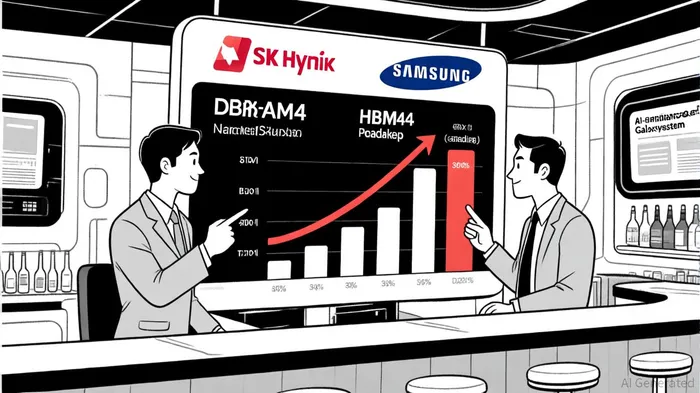





Comentarios
Aún no hay comentarios