
South Korean Stocks Slide, Won Dips as Political Crisis Deepens
Generado por agente de IAWesley Park
domingo, 8 de diciembre de 2024, 7:54 pm ET2 min de lectura
The political turmoil in South Korea has sent shockwaves through its financial markets, with the Kospi index and the Korean won both taking a hit. On Dec. 4, 2024, the Kospi index fell by 2% and the Kosdaq by 2.38% following President Yoon Suk Yeol's declaration and subsequent lifting of martial law. The Bank of Korea intervened, boosting short-term liquidity and deploying measures to stabilize the FX market. The South Korean won also depreciated, trading at 1,416.94 against the dollar on Dec. 4, 2024, after hitting its weakest level since late 2022.

The widening trade deficit in South Korea has significantly contributed to the depreciation of the Korean won against the U.S. dollar. According to the Bank of Korea, the won depreciated by 7.4% in February 2023, more than double the average depreciation of other major currencies. This was largely attributed to Korea's widening trade deficit, which has persisted for 15 consecutive months as of May 2023. The trade balance shock accounted for 40% of the unexpected appreciation of the won in February, highlighting the substantial impact of trade imbalances on the currency's value.
Interest rate differentials between the U.S. and Korea significantly impact the won's exchange rate. According to AMRO, a widening three-year interest rate differential encourages capital outflows to U.S. markets, exerting depreciation pressure on the won. In 2022, the KRW depreciated by 17.4% against the USD due to the U.S. Federal Reserve's hawkish policy stance, which strengthened the USD. This demonstrates the sensitivity of the KRW to interest rate differentials and global economic conditions.
The performance of the Korean equity market is also a significant factor in the won's depreciation against the U.S. dollar. A vector autoregression (VAR) model and historical decomposition over a sample of 1999-2022 estimated that the KRW is highly responsive to the buying and selling of stocks by investors. Foreign investors owned more than 30% of Korean stocks at the end of 2022, and as they buy and sell equities in the Korean market and reallocate money in and out of the country, the exchange rate reacts. This correlation is evident in the recent political crisis, where the slide in South Korean stocks has contributed to the won's depreciation.
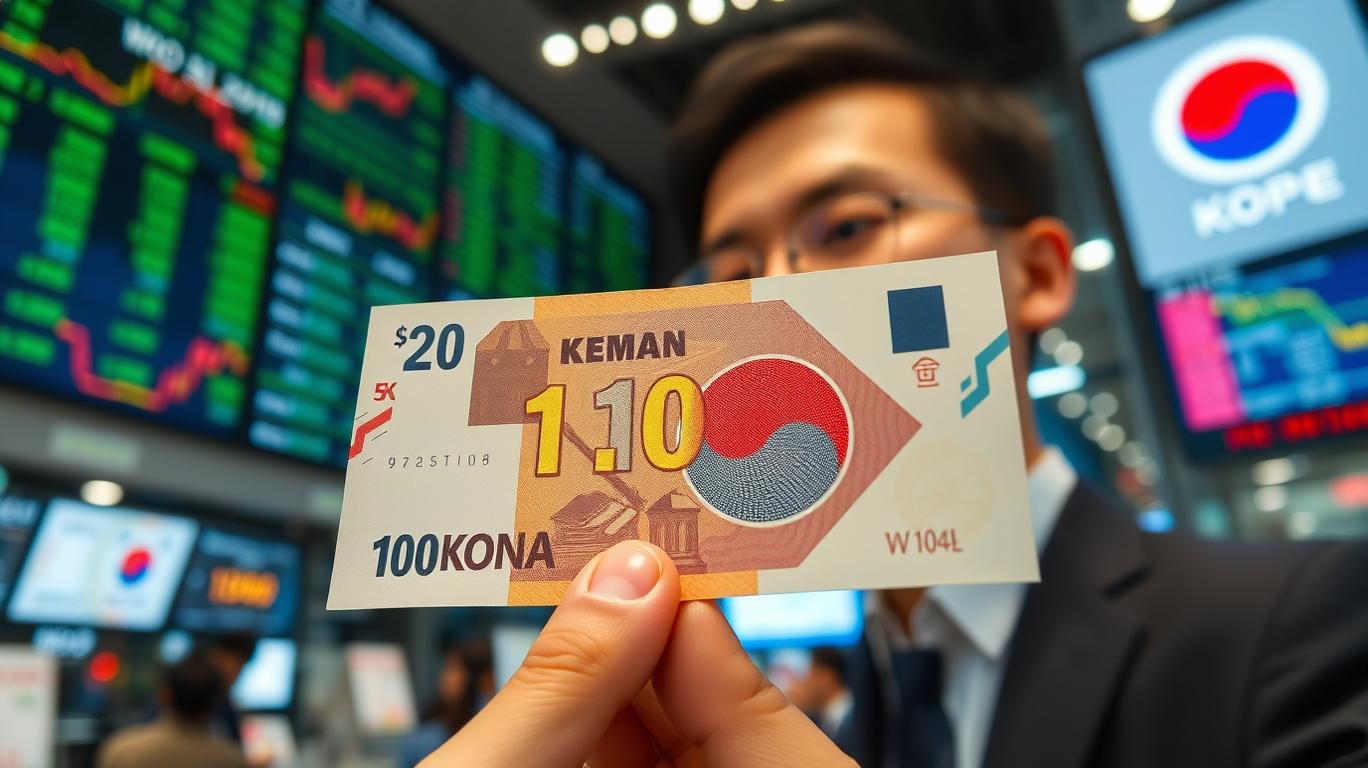
Changes in global investor sentiment and risk perception also affect the Korean won's exchange rate. According to AMRO, the KRW is responsive to the VIX index, which proxies global investor sentiment. When risk aversion increases, the KRW depreciates. Additionally, the KRW is sensitive to changes in risk perception, with widening interest rate differentials between the U.S. and Korea leading to capital outflows and depreciation pressure on the exchange rate.
The Bank of Korea (BOK) and the government can take several measures to stabilize the currency and stock market during the ongoing political crisis in South Korea. Firstly, the BOK can boost short-term liquidity and deploy measures to stabilize the FX market, as it has already announced. This includes making available any special loans needed to inject funds into the market. Secondly, the government can reassure investors by swiftly addressing the political turmoil and restoring confidence in the country's leadership. This could involve a quick resolution to the impeachment process and a clear plan for economic recovery. Lastly, the government can work with financial authorities to monitor and manage capital outflows, which have been a significant factor in the won's depreciation. By taking these steps, the BOK and the government can help to stabilize the currency and stock market during this challenging period.
In conclusion, the political crisis in South Korea has led to a slide in its stock market and a depreciation of the Korean won. The widening trade deficit, interest rate differentials, and changes in global investor sentiment have all contributed to the won's depreciation. The BOK and the government must take decisive action to stabilize the currency and stock market during this challenging period. Investors should remain cautious and monitor the situation closely as it unfolds.



Divulgación editorial y transparencia de la IA: Ainvest News utiliza tecnología avanzada de Modelos de Lenguaje Largo (LLM) para sintetizar y analizar datos de mercado en tiempo real. Para garantizar los más altos estándares de integridad, cada artículo se somete a un riguroso proceso de verificación con participación humana.
Mientras la IA asiste en el procesamiento de datos y la redacción inicial, un miembro editorial profesional de Ainvest revisa, verifica y aprueba de forma independiente todo el contenido para garantizar su precisión y cumplimiento con los estándares editoriales de Ainvest Fintech Inc. Esta supervisión humana está diseñada para mitigar las alucinaciones de la IA y garantizar el contexto financiero.
Advertencia sobre inversiones: Este contenido se proporciona únicamente con fines informativos y no constituye asesoramiento profesional de inversión, legal o financiero. Los mercados conllevan riesgos inherentes. Se recomienda a los usuarios que realicen una investigación independiente o consulten a un asesor financiero certificado antes de tomar cualquier decisión. Ainvest Fintech Inc. se exime de toda responsabilidad por las acciones tomadas con base en esta información. ¿Encontró un error? Reportar un problema


SOBRE NOSOTROS
Nuestra historiaAutores de noticiasBase de conocimientosPolítica de privacidadTérmino de usoDescargo de responsabilidad de corretaje de tercerosTérminos de uso de AIMEDivulgaciones de riesgos de AInvest AICarrerasCONTÁCTENOS
Email: support@ainvest.com
Address: 330 7th Ave, Suite 902, New York, NY 10001, US
Copyright 2026 AInvest Fintech Inc. All rights reserved.


Comentarios
Aún no hay comentarios