
South Korea vice fin min: discussing FX with the U.S.
South Korea aims to win MSCI's developed market index, reviewing to further extend FX trading hours South Korea vice fin min: closely monitoring FX markets, will act to stabilize FX markets if needed South Korea vice fin min: risks from global bond selloff looks contained for Korea for now South Korea vice fin min says $350 bln U.S. package likely to be led by policy financial institutions, on case-by-case basis South Korea vice fin min: discussing FX with the U.S. South Korea aims to win MSCI's developed market index, reviewing to further extend FX trading hours South Korea vice fin min: closely monitoring FX markets, will act to stabilize FX markets if needed South Korea vice fin min: risks from global bond selloff looks contained for Korea for now South Korea vice fin min says $350 bln U.S. package likely to be led by policy financial institutions, on case-by-case basis
South Korea's economy showed unexpected resilience in the second quarter, with gross domestic product (GDP) expanding 0.7% from the previous quarter, up from an initial estimate of 0.6% [1]. This growth was driven by a sharper-than-expected 4.5% increase in exports, primarily due to strong global demand for semiconductors and petrochemicals. The Bank of Korea (BOK) attributed this solid export performance to Korean companies' efforts to front-load shipments before anticipated US tariff hikes.Construction investment also proved more resilient than initially thought, although facility investment declined more steeply. This improvement followed a 0.2% contraction in the first quarter, ending South Korea’s longest stretch of near-stagnant growth since the 1997 Asian financial crisis [1]. The BOK raised its full-year growth forecast for 2025 to 0.9% from 0.8%, citing the impact of two supplementary budgets worth 45.6 trillion won ($32.9 billion) aimed at bolstering household consumption [1].
Global investment banks remain optimistic about South Korea's economic prospects. Goldman Sachs expects the economy to expand 1.2% this year, while JPMorgan and Citi raised their forecasts to 0.7% and 0.9%, respectively [1]. Despite these positive signs, policymakers remain cautious, keeping the benchmark interest rate steady at 2.5% to mitigate risks from rising household debt and housing prices, as well as global economic headwinds [1].
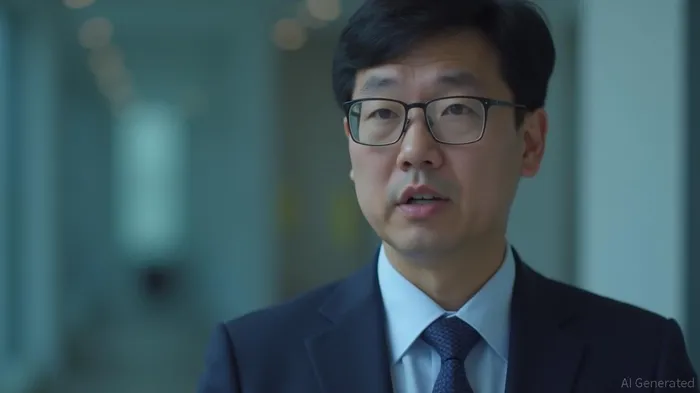
South Korea's vice minister of finance is closely monitoring FX markets and is prepared to act if needed to stabilize them [2]. The vice minister also noted that risks from a global bond selloff appear contained for Korea for now. The vice minister stated that the $350 billion U.S. package is likely to be led by policy financial institutions on a case-by-case basis, aligning with Korea’s emphasis on minimizing upfront commitments [2].
South Korea is also aiming to win inclusion in MSCI's developed market index by reviewing further extensions to FX trading hours. Discussions with the U.S. regarding FX markets are ongoing [2]. The vice minister highlighted that Korea National Oil Corporation (KNOC) is pursuing investment partnerships for the East Sea deepwater gas field, known as the "Great Whale Project," despite the lack of government funding [2].
References:
[1] https://www.kedglobal.com/economy/newsView/ked202509030002
[2] http://www.koreapost.com/news/articleView.html?idxno=45961






Comentarios
Aún no hay comentarios