
South Korea-U.S. Trade Deal: Navigating Automotive, Agriculture, and Tech Risks for August 2025
The clock is ticking for South Korea and the U.S. to avert a trade disaster. With a 25% tariff threat looming over $140 billion in South Korean exports, the outcome of negotiations by August 1, 2025, will reshape industries, investor portfolios, and global supply chains. For equity investors, this is a high-stakes moment to capitalize on sector-specific opportunities or avoid costly pitfalls. Here's how to navigate the risks and rewards.
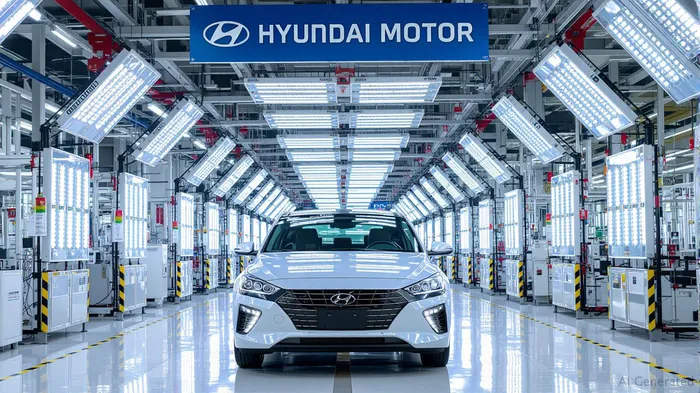
Automotive Sector: Ground Zero for Tariff Fallout
The automotive industry is the most immediate battleground. South Korea's auto exports to the U.S.—including Hyundai (KRX:005380) and Kia—account for $34.7 billion annually, or a third of total exports. A 25% tariff would cripple margins: GM Korea, which exports 90% of its production to the U.S., faces up to $2 billion in profit losses.
Investors should monitor two scenarios:
- Deal reached: Hyundai and Kia stocks could rebound as tariffs are suspended, with U.S. assembly plants (e.g., Hyundai's Georgia factory) shielding domestic production.
- No deal: Automakers may shift production to Vietnam or Mexico to bypass tariffs, hurting South Korean parts suppliers like Hyundai Mobis (KRX:011200).
Steel and Manufacturing: A 50% Tax on Global Overcapacity
South Korea's steel industry, dominated by POSCO (KRX:005490), faces a 50% Section 232 tariff on exports. While global steel oversupply already pressures margins, U.S. tariffs could force further production cuts. POSCO's earnings dropped 15% in 2024 due to weak demand, and tariffs could worsen this trend.
Investment Takeaway: Steel stocks are vulnerable to both tariffs and global demand. Short positions or hedging via inverse ETFs (e.g., USWE) could be prudent until clarity emerges.
Semiconductors and Tech: The Hidden Tariff Wildcard
South Korea's $10.7 billion semiconductor exports—led by Samsung (KRX:005930) and SK Hynix (KRX:000660)—face indirect risks. While not directly targeted yet, Section 232 investigations into semiconductors could impose new tariffs. Even transshipped goods (e.g., Samsung phones made in Vietnam) face a 20% tariff risk under U.S.-Vietnam deals.
Investors should favor diversified tech giants like Samsung, which derive only 15% of revenue from U.S. sales, versus U.S.-exposed peers.
Agriculture: A Bargaining Chip with Limits
South Korea may offer concessions in agriculture to secure auto/steel exemptions. The U.S. seeks access to its $1.2 billion dairy market and restrictions on high-precision geographic data exports. However, politically sensitive sectors like rice (with a 513% tariff on excess imports) remain untouchable.
Opportunity Alert: U.S. agribusiness stocks (e.g., DE, MON) could benefit from South Korean market access, but gains are likely modest unless the deal includes major structural reforms.
Strategic Investment Playbook for August 2025
- Go Long on a Deal: If an agreement is reached by August 1, auto and tech stocks (HYMTF, SMDSY) could rally. Focus on companies with U.S. production hubs or diversified revenue streams.
- Short Tariff-Sensitive Exports: If negotiations fail, bet against South Korean equities tied to autos (e.g., Hyundai Mobis) and steel (POSCO).
- Hedge with ETFs: Use the iShares MSCIMSCI-- South Korea ETF (EWY) to track broad market sentiment or the Direxion Daily South Korea Bull 3x Shares (KORL) for leveraged bets.
- Monitor Supply Chain Shifts: Companies like Samsung or LG (KRX:066570) expanding in Southeast Asia could gain long-term advantages.
Conclusion: A Crossroads for Trade and Investment
The August 1 deadline is a binary moment for South Korea-U.S. ties. Investors must assess whether the deal's terms will stabilize trade or trigger a prolonged standoff. While the automotive and steel sectors face the sharpest risks, tech and agriculture offer nuanced opportunities. Stay agile: the final agreement's details—and its enforcement—will determine which equities thrive and which falter in this high-stakes game.
Final Call to Action: Position portfolios now. For bulls on a deal, overweight tech and auto stocks. For bears, lean into U.S. manufacturing alternatives or short South Korean tariff-exposed equities. The clock is ticking—investors must act swiftly.





Comentarios
Aún no hay comentarios