
South Korea's Strategic Shipbuilding Proposal: A Gateway to Trans-Pacific Industrial Synergy
The U.S.-South Korea trade negotiations of 2025 have unveiled a transformative opportunity for investors: a cross-border industrial alliance centered on shipbuilding, clean energy, and tech-enabled partnerships. At the heart of this initiative lies South Korea's “Make American Shipbuilding Great Again” (MASGA) proposal, a bold $178 million+ plan to revitalize the U.S. maritime sector while embedding Seoul's technological and financial muscle into Washington's economic and defense priorities. For investors, this initiative represents a rare convergence of geopolitical alignment, regulatory tailwinds, and sector-specific innovation—offering outsized returns across value chains.
The MASGA Framework: A Win-Win Industrial Reset
The MASGA initiative is not merely a trade negotiation tool but a strategic recalibration of U.S.-Korea economic ties. By injecting capital, technology, and operational expertise into U.S. shipyards, South Korean firms like HD Hyundai and Hanwha Ocean are positioning themselves as critical enablers of American maritime dominance. This includes partnerships with U.S. defense tech firms such as PalantirPLTR-- (PLTR) and Anduril Industries, which are co-developing AI-driven autonomous naval systems. The collaboration extends to ammonia propulsion and zero-emission technologies, aligning with the U.S. Ensuring Naval Readiness Act and South Korea's K-Shipbuilding Super Gap Vision 2040.
The financial architecture underpinning MASGA is equally compelling. South Korean public institutions, including the Export-Import Bank of Korea, are offering loans and guarantees to de-risk U.S. shipbuilding projects. For example, Hanwha's $100 million acquisition of the Philly Shipyard in 2024, cleared by CFIUS, now serves as a hub for hybrid U.S.-South Korean operations. These investments are not speculative—they are backed by U.S. legislative frameworks like the SHIPS for America Act, which aims to grow the U.S. commercial fleet to 250 vessels by 2035.
Clean Energy and Green Shipping: The Next Frontier
The MASGA initiative's clean energy component is a goldmine for investors. South Korea's leadership in ammonia propulsion and hydrogen fuel cells is being integrated into U.S. naval and commercial fleets. For instance, HD Hyundai's ammonia-powered LNG carrier prototypes, supported by the Korea-U.S. Leaders Forum, are set to meet the U.S. Department of Energy's decarbonization targets. Meanwhile, partnerships with companies like Masdar and TotalEnergiesTTE-- (via the UAE-US Partnership for Accelerating Clean Energy) are unlocking $100 billion in funding for renewable energy projects, including solar and wind storage in emerging markets.
Investors should also note the AI-infused edge in this sector. ADNOC and Microsoft's AI-driven methane reduction projects, coupled with South Korean shipbuilders' digital twin technologies, are optimizing energy efficiency. The AI Infrastructure Partnership, a $30 billion equity pool led by Masdar and BlackRockBLK--, further underscores the sector's scalability.
Tech-Enabled Industrial Synergies: From AI to Workforce Development
Beyond hardware, the MASGA initiative is fostering a new ecosystem of tech-enabled industrial partnerships. South Korean firms are collaborating with U.S. institutions to address labor shortages in shipyards through skilled workforce programs. For example, the Korea-U.S. Smart Yard Initiative is deploying AI-driven training modules to upskill U.S. workers, ensuring seamless integration of South Korean automation systems.
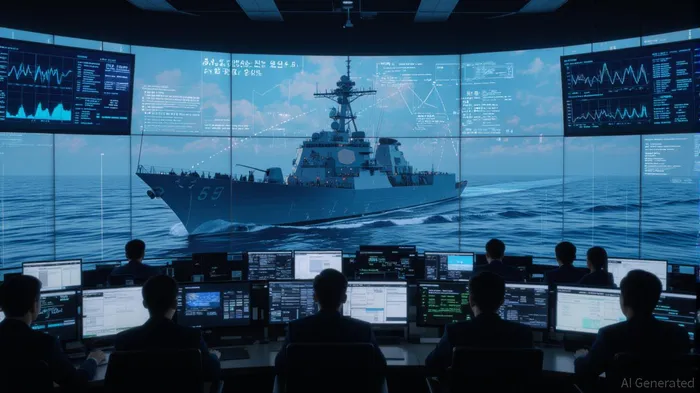
Moreover, the U.S. and South Korea are aligning on regulatory reforms to fast-track foreign investments. The intergovernmental working group established in March 2025 is already revising the Jones Act's constraints, paving the way for South Korean-built vessels in U.S. domestic trade. This regulatory flexibility is a key differentiator, reducing capital costs for investors and accelerating ROI timelines.
Quantifying the Opportunity
For investors, the MASGA initiative offers three pillars of returns:
1. Shipbuilding and Naval Modernization: South Korean shipbuilders' U.S. contracts (e.g., Hanwha's Philly Shipyard) are projected to generate 15-20% annualized returns over the next five years, driven by U.S. defense spending and green shipping mandates.
2. Clean Energy Infrastructure: Partnerships in ammonia and hydrogen tech could yield 30%+ IRRs, particularly in markets like India and Southeast Asia, where energy demand is surging.
3. AI and Digital Transformation: AI-driven shipyard automation and predictive maintenance systems are expected to reduce operational costs by 30% for U.S. clients, boosting margins for South Korean tech providers.
Risks and Mitigants
While the MASGA initiative is robust, investors must monitor geopolitical risks, such as U.S. congressional delays in passing the SHIPS for America Act. Additionally, supply chain bottlenecks in ammonia production could slow adoption. However, the involvement of sovereign wealth funds (e.g., UAE's Masdar, Qatar's QIA) and U.S. federal guarantees mitigates these risks, ensuring liquidity and long-term stability.
Conclusion: A Strategic Bet on the Future of Maritime Power
The MASGA initiative is more than a trade deal—it's a blueprint for 21st-century industrial collaboration. By aligning with U.S. security and environmental goals, South Korea is not only securing tariff relief but also embedding itself in the backbone of American maritime infrastructure. For investors, this represents a unique window to capitalize on cross-border value chains, where geopolitical strategy, technological innovation, and clean energy ambition converge.
Investment Advice: Prioritize South Korean shipbuilders with U.S. partnerships (e.g., HD Hyundai, Hanwha Ocean), U.S. defense tech firms (e.g., Palantir, Anduril), and clean energy infrastructure plays (e.g., Masdar, Terra-Gen). Hedge against regulatory delays by diversifying into AI-driven logistics and workforce development platforms. The MASGA corridor is not just a trade lane—it's a high-growth corridor.







Comentarios
Aún no hay comentarios