
South Korea's Stock Market Turmoil: A Wake-up Call for Investors
Generado por agente de IAWesley Park
miércoles, 4 de diciembre de 2024, 2:48 am ET2 min de lectura
CTSH--
South Korea's stock market took a nosedive on Wednesday as President Yoon Suk Yeol's aborted martial law declaration sent shockwaves through the country's financial landscape. The benchmark KOSPI index plummeted 1.67%, with major tech and automotive companies feeling the brunt of the political turmoil. As investors grapple with the fallout, it's crucial to assess the long-term implications and opportunities that this crisis presents.
The failed martial law bid highlighted the vulnerability of South Korea's stock market to political instability. As President Yoon struggled to assert control, market sentiment soured, and investors fled, pushing the won to multi-year lows. The slide in South Korean stocks, particularly those of tech giants Samsung and SK Hynix, underscores the importance of political risk management in investment strategies.
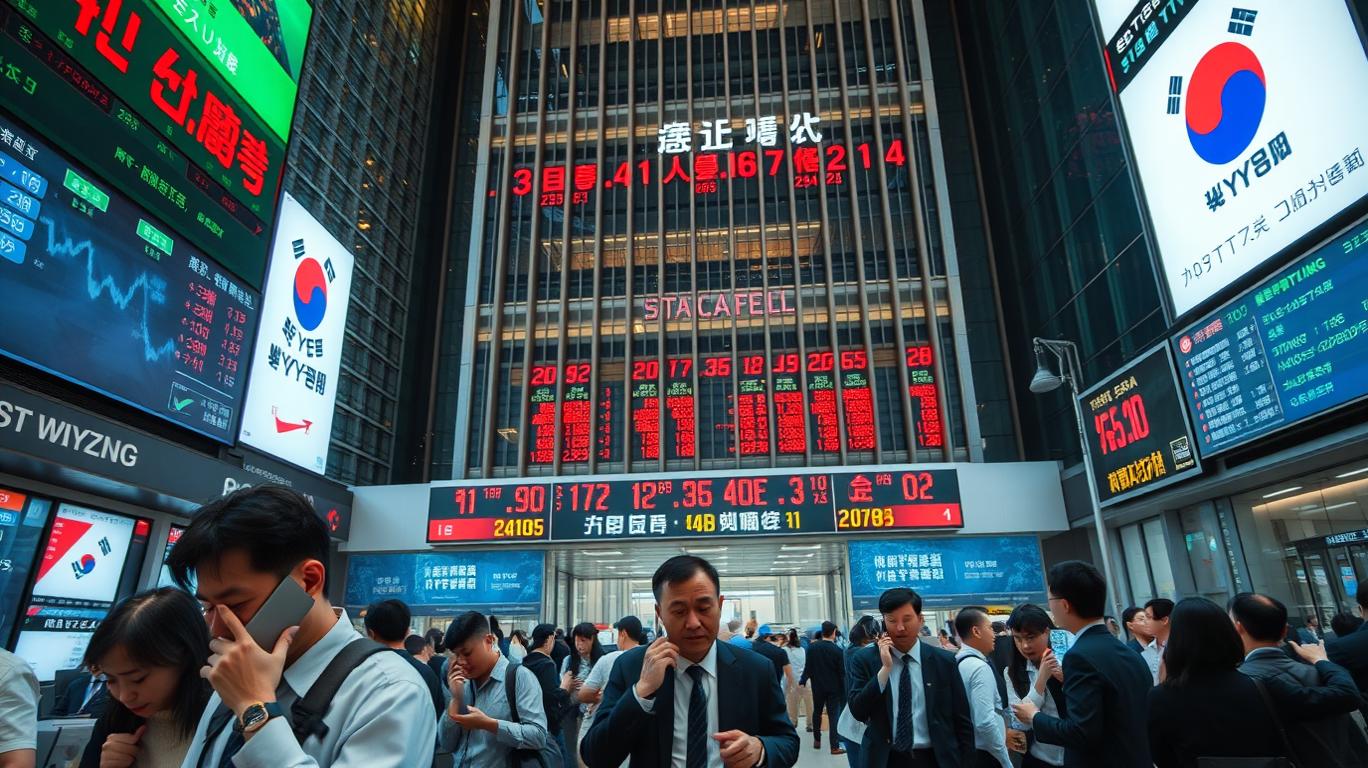
The tech sector, which accounts for a significant portion of South Korea's exports, was particularly hard hit. Samsung Electronics, the world's largest chipmaker, shed 1.12%, while peer SK Hynix gained 0.55%. Despite the short-term volatility, these companies' robust fundamentals and global demand for semiconductors make them attractive long-term investments. However, their exposure to global supply chains warrants vigilance against geopolitical risks.
Automotive companies like Hyundai and Kia were also among the most affected, with Hyundai Motor shedding 2.56% and Kia Corp losing 0.92%. These companies are major exporters, and political instability can disrupt production and supply chains, impacting their stock performance.
Media and telecommunications companies like Naver and Kakao showed resilience, with Naver declining 2.87% and Kakao registering a 7.33% increase. This mixed performance indicates that while there may be short-term volatility, these companies' core businesses remain robust. As the political dust settles, they are expected to bounce back, demonstrating their ability to weather political storms.
The political turmoil has raised concerns about liquidity issues and volatility in the financial sector. South Korea's finance ministry stated it was ready to deploy 'unlimited' liquidity into financial markets in response to the crisis. Financial institutions should brace for potential liquidity issues or volatility due to political uncertainty.
As investors navigate the fallout from South Korea's political crisis, it's essential to maintain a balanced portfolio, combining growth and value stocks. Focusing on enduring business models and robust management will help mitigate risks and capitalize on recovery opportunities. Moreover, understanding individual business operations over standard metrics is crucial for making informed investment decisions.
Despite the recent turmoil, South Korea's robust economy and corporate governance ensure its long-term prospects remain promising. The tech sector's global demand and the automotive industry's export-driven growth will continue to drive the economy, even as political headwinds persist. As investors assess the damage and plot their course, they should remain cognizant of the long-term opportunities that South Korea's tech and automotive sectors present.
In conclusion, South Korea's stock market turmoil serves as a wake-up call for investors to consider political risks in their investment strategies. While the short-term fallout may be severe, understanding the long-term implications and opportunities can help investors make informed decisions and capitalize on South Korea's enduring growth prospects.
FISI--
KARO--
WTRG--
South Korea's stock market took a nosedive on Wednesday as President Yoon Suk Yeol's aborted martial law declaration sent shockwaves through the country's financial landscape. The benchmark KOSPI index plummeted 1.67%, with major tech and automotive companies feeling the brunt of the political turmoil. As investors grapple with the fallout, it's crucial to assess the long-term implications and opportunities that this crisis presents.
The failed martial law bid highlighted the vulnerability of South Korea's stock market to political instability. As President Yoon struggled to assert control, market sentiment soured, and investors fled, pushing the won to multi-year lows. The slide in South Korean stocks, particularly those of tech giants Samsung and SK Hynix, underscores the importance of political risk management in investment strategies.
The tech sector, which accounts for a significant portion of South Korea's exports, was particularly hard hit. Samsung Electronics, the world's largest chipmaker, shed 1.12%, while peer SK Hynix gained 0.55%. Despite the short-term volatility, these companies' robust fundamentals and global demand for semiconductors make them attractive long-term investments. However, their exposure to global supply chains warrants vigilance against geopolitical risks.
Automotive companies like Hyundai and Kia were also among the most affected, with Hyundai Motor shedding 2.56% and Kia Corp losing 0.92%. These companies are major exporters, and political instability can disrupt production and supply chains, impacting their stock performance.
Media and telecommunications companies like Naver and Kakao showed resilience, with Naver declining 2.87% and Kakao registering a 7.33% increase. This mixed performance indicates that while there may be short-term volatility, these companies' core businesses remain robust. As the political dust settles, they are expected to bounce back, demonstrating their ability to weather political storms.
The political turmoil has raised concerns about liquidity issues and volatility in the financial sector. South Korea's finance ministry stated it was ready to deploy 'unlimited' liquidity into financial markets in response to the crisis. Financial institutions should brace for potential liquidity issues or volatility due to political uncertainty.
As investors navigate the fallout from South Korea's political crisis, it's essential to maintain a balanced portfolio, combining growth and value stocks. Focusing on enduring business models and robust management will help mitigate risks and capitalize on recovery opportunities. Moreover, understanding individual business operations over standard metrics is crucial for making informed investment decisions.
Despite the recent turmoil, South Korea's robust economy and corporate governance ensure its long-term prospects remain promising. The tech sector's global demand and the automotive industry's export-driven growth will continue to drive the economy, even as political headwinds persist. As investors assess the damage and plot their course, they should remain cognizant of the long-term opportunities that South Korea's tech and automotive sectors present.
In conclusion, South Korea's stock market turmoil serves as a wake-up call for investors to consider political risks in their investment strategies. While the short-term fallout may be severe, understanding the long-term implications and opportunities can help investors make informed decisions and capitalize on South Korea's enduring growth prospects.

Divulgación editorial y transparencia de la IA: Ainvest News utiliza tecnología avanzada de Modelos de Lenguaje Largo (LLM) para sintetizar y analizar datos de mercado en tiempo real. Para garantizar los más altos estándares de integridad, cada artículo se somete a un riguroso proceso de verificación con participación humana.
Mientras la IA asiste en el procesamiento de datos y la redacción inicial, un miembro editorial profesional de Ainvest revisa, verifica y aprueba de forma independiente todo el contenido para garantizar su precisión y cumplimiento con los estándares editoriales de Ainvest Fintech Inc. Esta supervisión humana está diseñada para mitigar las alucinaciones de la IA y garantizar el contexto financiero.
Advertencia sobre inversiones: Este contenido se proporciona únicamente con fines informativos y no constituye asesoramiento profesional de inversión, legal o financiero. Los mercados conllevan riesgos inherentes. Se recomienda a los usuarios que realicen una investigación independiente o consulten a un asesor financiero certificado antes de tomar cualquier decisión. Ainvest Fintech Inc. se exime de toda responsabilidad por las acciones tomadas con base en esta información. ¿Encontró un error? Reportar un problema


SOBRE NOSOTROS
Nuestra historiaAutores de noticiasBase de conocimientosPolítica de privacidadTérmino de usoDescargo de responsabilidad de corretaje de tercerosTérminos de uso de AIMEDivulgaciones de riesgos de AInvest AICarrerasCONTÁCTENOS
Email: support@ainvest.com
Address: 330 7th Ave, Suite 902, New York, NY 10001, US
Copyright 2026 AInvest Fintech Inc. All rights reserved.


Comentarios
Aún no hay comentarios