
South Korea's Regulatory Shifts and the Reshaping of Global Pharmaceutical Investment
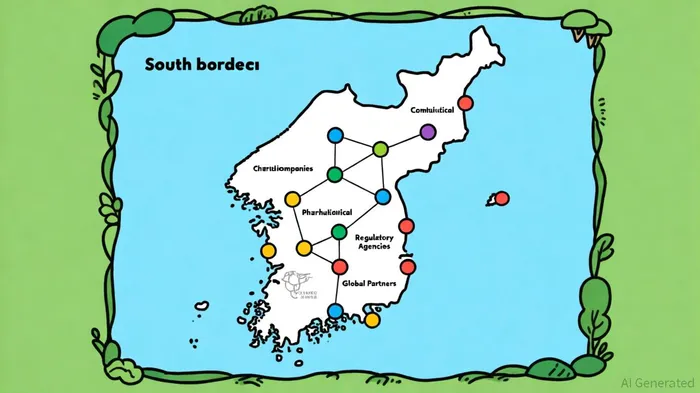
South Korea's pharmaceutical sector is undergoing a transformative phase, driven by regulatory reforms that align with U.S. standards and a strategic pivot toward innovation. These changes are not only redefining the country's role in global drug development but also recalibrating cross-border investment flows in the pharma sector. As the U.S. intensifies scrutiny of drug pricing and regulatory practices, South Korea's proactive alignment with American frameworks—and its responses to trade pressures—offer a nuanced lens through which to assess emerging opportunities and risks for investors.
Regulatory Convergence: A Catalyst for Global Competitiveness
South Korea's regulatory landscape has evolved rapidly in 2024–2025, with the Ministry of Food and Drug Safety (MFDS) implementing reforms that mirror U.S. FDA standards. For instance, stringent adverse reaction reporting requirements for cutting-edge therapies like CAR T-cell treatments have been introduced, ensuring patient safety while fostering trust among international partners [1]. These measures are part of a broader strategy to reduce drug approval timelines—cutting the average period from 420 to 295 days—and streamline processes to align with ICH (International Council for Harmonisation) guidelines [2].
The impact is already evident. In 2025, innovator drug licensing agreements surged by 113% year-to-date, with deal values reaching $7.86 billion, driven by partnerships between South Korean firms and global giants like GSKGSK-- and Eli LillyLLY-- [3]. This growth is underpinned by South Korea's transition from a generic drug producer to a hub for advanced therapies, including antibody-drug conjugates (ADCs) and mRNA-based treatments. For example, Yuhan's lung cancer drug, lazertinib, became the first South Korea-originated oncology therapy to receive FDA approval in 2024, signaling the country's rising influence in global R&D [4].
U.S. Trade Pressures: Navigating Tariffs and Regulatory Scrutiny
While regulatory alignment has bolstered South Korea's appeal, U.S. trade pressures pose a counterweight. The U.S. Trade Representative (USTR) launched an investigation in 2025 into whether South Korea's drug pricing policies unfairly disadvantage foreign firms, particularly U.S. companies [5]. Critics argue that South Korea's low drug prices, designed to ensure patient access and sustain national insurance systems, may distort global markets. This scrutiny has raised concerns about potential tariffs, with the Trump administration threatening to impose 25% tariffs on South Korean pharmaceutical exports as early as 2026 [6].
South Korean firms are adapting. Companies like Samsung Biologics and Celltrion have stockpiled inventory and secured U.S. manufacturing contracts to mitigate risks. For instance, Samsung Biologics inked $1.3 billion in biologics production deals, while Celltrion expanded its export of drug substances, which face lower tariff rates [7]. The government has also pledged policy support, including subsidies and tax relief, to cushion the sector against trade shocks [8].
Investment Trends: Balancing Opportunities and Risks
The interplay of regulatory alignment and trade pressures is reshaping cross-border investment dynamics. South Korea's streamlined approval processes and government-backed initiatives—such as the National Bio Committee—have attracted high-value partnerships. For example, the country's focus on early R&D and cell and gene therapies has positioned it as a top destination for clinical trials, with activity surging 9% in 2023 despite a global decline [9].
However, challenges persist. Small biotech firms face funding constraints, and political uncertainties could disrupt long-term growth [10]. Additionally, the U.S. investigation into South Korea's Innovative Pharmaceutical Company Certification system has highlighted the need for transparency reforms, which are expected by mid-2025 [11].
Strategic Implications for Investors
For investors, South Korea's pharmaceutical sector presents a dual narrative. On one hand, regulatory convergence with the U.S. and a surge in innovative therapies create a fertile ground for partnerships and licensing deals. On the other, U.S. trade pressures necessitate a cautious approach, particularly for firms reliant on export markets.
Key opportunities lie in South Korea's biosimilars sector, where companies like Samsung Bioepis and Celltrion are expanding their global footprint. The U.S. FDA's proposed draft guidance on biosimilars in 2024—aimed at reducing the need for costly switching studies—could further amplify this trend [12]. Conversely, investors should monitor the U.S.-South Korea trade negotiations, as delays in resolving tariff disputes could introduce volatility.
Conclusion
South Korea's regulatory reforms and strategic investments in biopharma innovation are redefining its role in the global pharmaceutical ecosystem. While U.S. trade pressures introduce short-term uncertainties, the country's alignment with international standards and robust R&D infrastructure position it as a critical player in the sector. For investors, the path forward requires balancing the promise of South Korea's innovation-driven growth with the risks of geopolitical and regulatory shifts.





Comentarios
Aún no hay comentarios