
"South Korea's Medical Education Freeze: A Double-Edged Sword"
Generado por agente de IAMarcus Lee
viernes, 7 de marzo de 2025, 12:54 am ET3 min de lectura
HCSG--
South Korea is on the brink of a significant decision that could reshape its healthcare landscape. The government is prepared to freeze new medical student numbers, a move that has sparked intense debate and speculation. This decision comes at a critical juncture, as the country grapples with a profound medicalPROF-- crisis fueled by massMASS-- resignations of trainee residents and an abrupt increase in medical school admission quotas. The freeze, while aimed at stabilizing the healthcare workforce, presents a complex web of potential benefits and drawbacks that could have far-reaching implications for both the healthcare sector and the broader economy.
The Crisis Unfolds
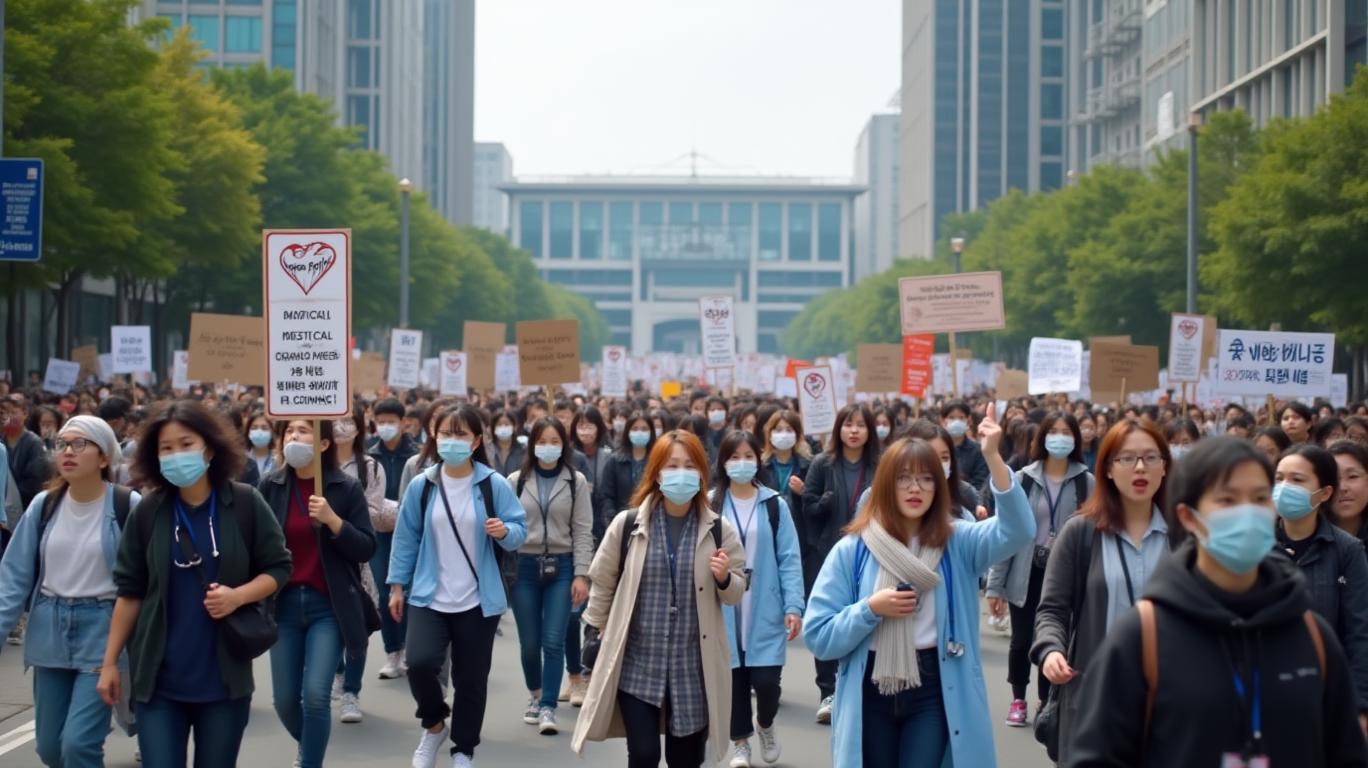
The South Korean healthcare system, once hailed as one of the best in the world, is now facing an unprecedented crisis. The government's decision to increase medical school places by 65% in 2025 was met with fierce resistance from medical students and doctors. Almost 14,000 medical students have boycotted classes, and 12,000 doctors have resigned en masse, highlighting the deep-seated issues within the system. The mass resignations and boycotts are acts of professional resistance, driven by a systemic pattern of doctor exploitation and threats to their professional autonomy.
The Freeze: A Necessary Evil?
The decision to freeze new medical student numbers is a double-edged sword. On one hand, it aims to prevent an oversupply of physicians, which could exacerbate existing inefficiencies and undermine the quality of medical education. By aligning workforce growth with actual demand, the government hopes to avoid sudden shocks to the system and ensure a more sustainable healthcare workforce. This cautious approach could lead to improved job satisfaction and retention rates among physicians, reducing the risk of mass resignations and boycotts in the future.
On the other hand, the freeze could lead to short-term shortages of physicians, particularly in rural and underserved areas. This could result in longer wait times, reduced access to specialists, and diminished overall health outcomes. The decision could also strain the healthcare infrastructure, as the current system may not be equipped to handle the sudden freeze in new medical student admissions. This could lead to a backlog of patients and increased pressure on existing healthcare providers.
Economic Implications
The freeze on new medical student numbers could have significant short-term and long-term economic impacts on both the healthcare sector and the broader economy. In the short term, the decision could lead to increased healthcare costs, as fewer physicians available could result in longer wait times and potential overcrowding in hospitals. This could result in higher healthcare costs for both patients and the government, as more resources would be needed to manage the increased demand.
In the long term, the freeze could lead to an improvement in the quality of healthcare. By reducing the number of new physicians entering the workforce, the government could focus on providing better training and resources to existing physicians, leading to improved patient outcomes and a more sustainable healthcare system. A more stable and sustainable healthcare system could contribute to economic growth in the long term, as it could attract more foreign investment and tourism, leading to increased economic activity and job creation in other sectors.
Investment Opportunities
The freeze on new medical student numbers could also create investment opportunities in areas such as telemedicine, healthcare technology, and alternative healthcare servicesHCSG--. As the demand for healthcare services continues to grow, investors may look for innovative solutions to address the shortage of physicians and improve the efficiency of the healthcare system. The freeze could also encourage investment in improving the quality and efficiency of medical education and healthcare services, including advanced training programs, research and development, and the implementation of new technologies to enhance patient care and outcomes.
The Road Ahead
The decision to freeze new medical student numbers is a complex and multifaceted issue that requires careful consideration and planning. While the freeze aims to prevent an oversupply of physicians and improve the quality of medical education, it could also lead to short-term shortages and strain on the healthcare infrastructure. Investors will need to carefully consider these factors when evaluating investment opportunities in the healthcare sector.
In conclusion, the government's decision to freeze new medical student numbers presents a double-edged sword with both potential benefits and drawbacks. While the decision aims to prevent an oversupply of physicians and improve the quality of medical education, it could also lead to short-term shortages and strain on the healthcare infrastructure. Investors will need to carefully consider these factors when evaluating investment opportunities in the healthcare sector. The road ahead is fraught with challenges, but with careful planning and execution, South Korea can navigate this crisis and emerge with a more sustainable and resilient healthcare system.
MASS--
PROF--
South Korea is on the brink of a significant decision that could reshape its healthcare landscape. The government is prepared to freeze new medical student numbers, a move that has sparked intense debate and speculation. This decision comes at a critical juncture, as the country grapples with a profound medicalPROF-- crisis fueled by massMASS-- resignations of trainee residents and an abrupt increase in medical school admission quotas. The freeze, while aimed at stabilizing the healthcare workforce, presents a complex web of potential benefits and drawbacks that could have far-reaching implications for both the healthcare sector and the broader economy.
The Crisis Unfolds
The South Korean healthcare system, once hailed as one of the best in the world, is now facing an unprecedented crisis. The government's decision to increase medical school places by 65% in 2025 was met with fierce resistance from medical students and doctors. Almost 14,000 medical students have boycotted classes, and 12,000 doctors have resigned en masse, highlighting the deep-seated issues within the system. The mass resignations and boycotts are acts of professional resistance, driven by a systemic pattern of doctor exploitation and threats to their professional autonomy.
The Freeze: A Necessary Evil?
The decision to freeze new medical student numbers is a double-edged sword. On one hand, it aims to prevent an oversupply of physicians, which could exacerbate existing inefficiencies and undermine the quality of medical education. By aligning workforce growth with actual demand, the government hopes to avoid sudden shocks to the system and ensure a more sustainable healthcare workforce. This cautious approach could lead to improved job satisfaction and retention rates among physicians, reducing the risk of mass resignations and boycotts in the future.
On the other hand, the freeze could lead to short-term shortages of physicians, particularly in rural and underserved areas. This could result in longer wait times, reduced access to specialists, and diminished overall health outcomes. The decision could also strain the healthcare infrastructure, as the current system may not be equipped to handle the sudden freeze in new medical student admissions. This could lead to a backlog of patients and increased pressure on existing healthcare providers.
Economic Implications
The freeze on new medical student numbers could have significant short-term and long-term economic impacts on both the healthcare sector and the broader economy. In the short term, the decision could lead to increased healthcare costs, as fewer physicians available could result in longer wait times and potential overcrowding in hospitals. This could result in higher healthcare costs for both patients and the government, as more resources would be needed to manage the increased demand.
In the long term, the freeze could lead to an improvement in the quality of healthcare. By reducing the number of new physicians entering the workforce, the government could focus on providing better training and resources to existing physicians, leading to improved patient outcomes and a more sustainable healthcare system. A more stable and sustainable healthcare system could contribute to economic growth in the long term, as it could attract more foreign investment and tourism, leading to increased economic activity and job creation in other sectors.
Investment Opportunities
The freeze on new medical student numbers could also create investment opportunities in areas such as telemedicine, healthcare technology, and alternative healthcare servicesHCSG--. As the demand for healthcare services continues to grow, investors may look for innovative solutions to address the shortage of physicians and improve the efficiency of the healthcare system. The freeze could also encourage investment in improving the quality and efficiency of medical education and healthcare services, including advanced training programs, research and development, and the implementation of new technologies to enhance patient care and outcomes.
The Road Ahead
The decision to freeze new medical student numbers is a complex and multifaceted issue that requires careful consideration and planning. While the freeze aims to prevent an oversupply of physicians and improve the quality of medical education, it could also lead to short-term shortages and strain on the healthcare infrastructure. Investors will need to carefully consider these factors when evaluating investment opportunities in the healthcare sector.
In conclusion, the government's decision to freeze new medical student numbers presents a double-edged sword with both potential benefits and drawbacks. While the decision aims to prevent an oversupply of physicians and improve the quality of medical education, it could also lead to short-term shortages and strain on the healthcare infrastructure. Investors will need to carefully consider these factors when evaluating investment opportunities in the healthcare sector. The road ahead is fraught with challenges, but with careful planning and execution, South Korea can navigate this crisis and emerge with a more sustainable and resilient healthcare system.

Divulgación editorial y transparencia de la IA: Ainvest News utiliza tecnología avanzada de Modelos de Lenguaje Largo (LLM) para sintetizar y analizar datos de mercado en tiempo real. Para garantizar los más altos estándares de integridad, cada artículo se somete a un riguroso proceso de verificación con participación humana.
Mientras la IA asiste en el procesamiento de datos y la redacción inicial, un miembro editorial profesional de Ainvest revisa, verifica y aprueba de forma independiente todo el contenido para garantizar su precisión y cumplimiento con los estándares editoriales de Ainvest Fintech Inc. Esta supervisión humana está diseñada para mitigar las alucinaciones de la IA y garantizar el contexto financiero.
Advertencia sobre inversiones: Este contenido se proporciona únicamente con fines informativos y no constituye asesoramiento profesional de inversión, legal o financiero. Los mercados conllevan riesgos inherentes. Se recomienda a los usuarios que realicen una investigación independiente o consulten a un asesor financiero certificado antes de tomar cualquier decisión. Ainvest Fintech Inc. se exime de toda responsabilidad por las acciones tomadas con base en esta información. ¿Encontró un error? Reportar un problema


SOBRE NOSOTROS
Nuestra historiaAutores de noticiasBase de conocimientosPolítica de privacidadTérmino de usoDescargo de responsabilidad de corretaje de tercerosTérminos de uso de AIMEDivulgaciones de riesgos de AInvest AICarrerasCONTÁCTENOS
Email: support@ainvest.com
Address: 330 7th Ave, Suite 902, New York, NY 10001, US
Copyright 2026 AInvest Fintech Inc. All rights reserved.


Comentarios
Aún no hay comentarios